
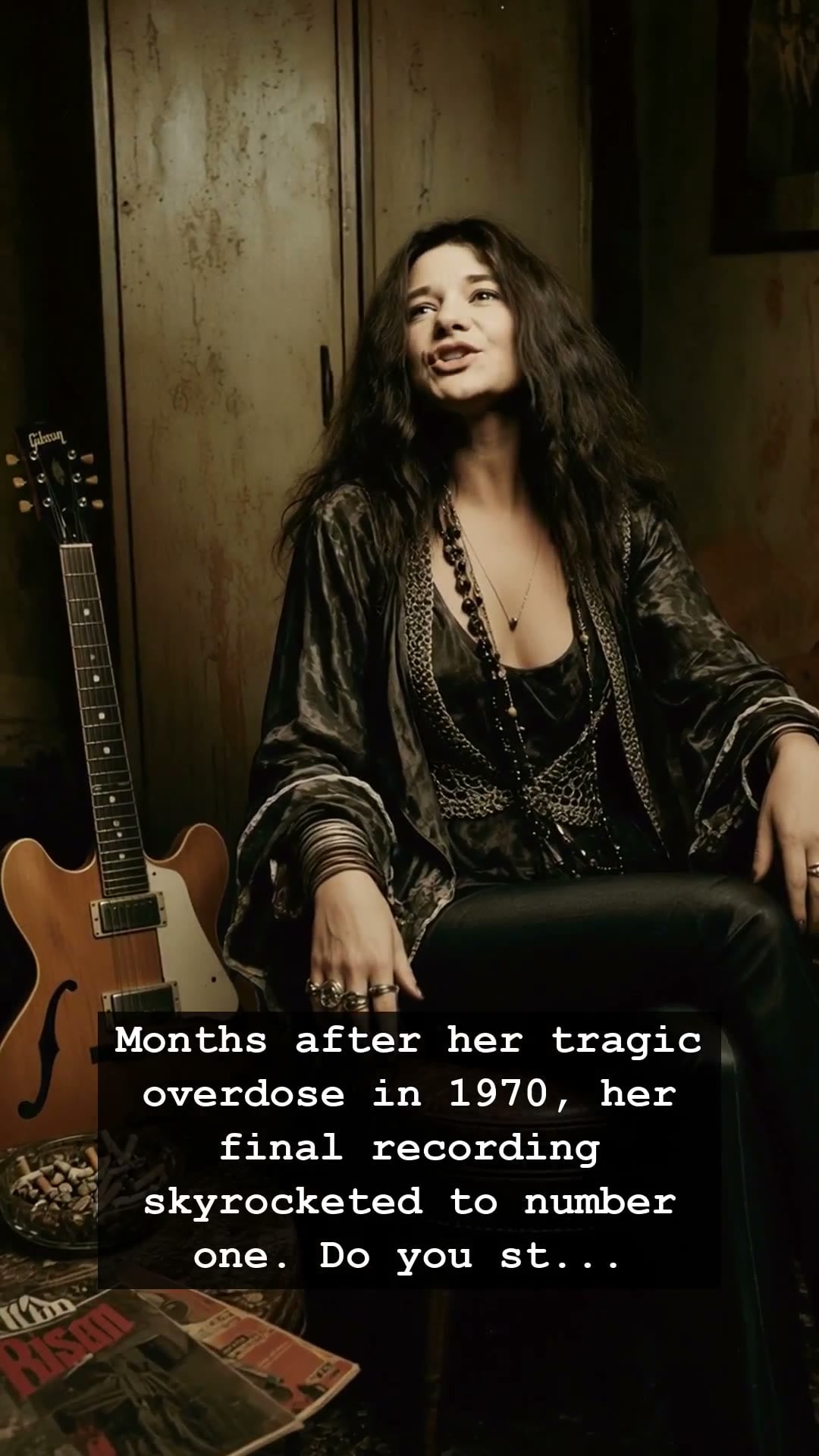
The year was 1970, a time when the haze of Woodstock had begun to clear, revealing a darker, more jagged landscape in the music world. In the neon-lit shadows of the industry, Janis Joplin stood as the raw, unpolished voice of a generation trapped between the hope of the sixties and the cynical reality of the new decade. She was a hurricane of blues and southern grit, a woman who sang with the kind of soul that only comes from deep, unrelenting heartbreak. Yet, behind the raspy screams and the iconic feathered boas, Janis was fighting a war against the darkness that would eventually claim her life inside a lonely Hollywood hotel room that October.
Months after her tragic overdose, when the world was still reeling from the sudden silence left by her absence, a haunting melody began to climb the charts. It was Me and Bobby McGee, a song that felt like a bittersweet goodbye note from beyond the grave. As the track skyrocketed to number one in 1971, fans everywhere found themselves clutching their portable radios, listening to the woman who had given everything to her craft. It was a bizarre, haunting victory; the artist was gone, but her voice had never sounded more alive, filling the airwaves of a nation mourning its lost queen of rock.
To understand the magnitude of this moment, one must remember the era. This was the dawn of a new cultural shift, where the intimacy of a vinyl record playing on a turntable was the only connection many had to the stars they idolized. Janis Joplin had managed to capture the nomadic, restless spirit of the late sixties in that single performance. Her delivery was not just singing; it was a desperate, authentic plea for freedom that resonated with anyone who had ever felt like an outsider. The song became a bridge, connecting the shattered dreams of the flower-power movement to the more grounded, introspective rock that was beginning to take shape.
Beyond the chart success, the backstory of the song remains one of music history’s most poignant dramas. Written by Kris Kristofferson, the track became synonymous with Janis Joplin the moment she infused it with her signature blend of country-soul pain. Her ability to turn a simple song about travel and loss into a monumental anthem of longing remains unmatched. It was the sound of a woman who had lived a hundred lives in a short twenty-seven years, leaving behind nothing but the echoes of her struggle and the sheer power of her untamed talent.
Even decades later, hearing that iconic voice still feels like a jolt to the heart. It serves as a reminder of the price of genius and the fragile beauty of the rock and roll dream. Janis Joplin remains a permanent fixture in our collective memory, a symbol of the raw vulnerability that defines the very best of classic American music. Whenever those first chords strike, we are transported back to that pivotal moment in time, reminded once again why her legacy—and her final masterpiece—will never truly fade away.