
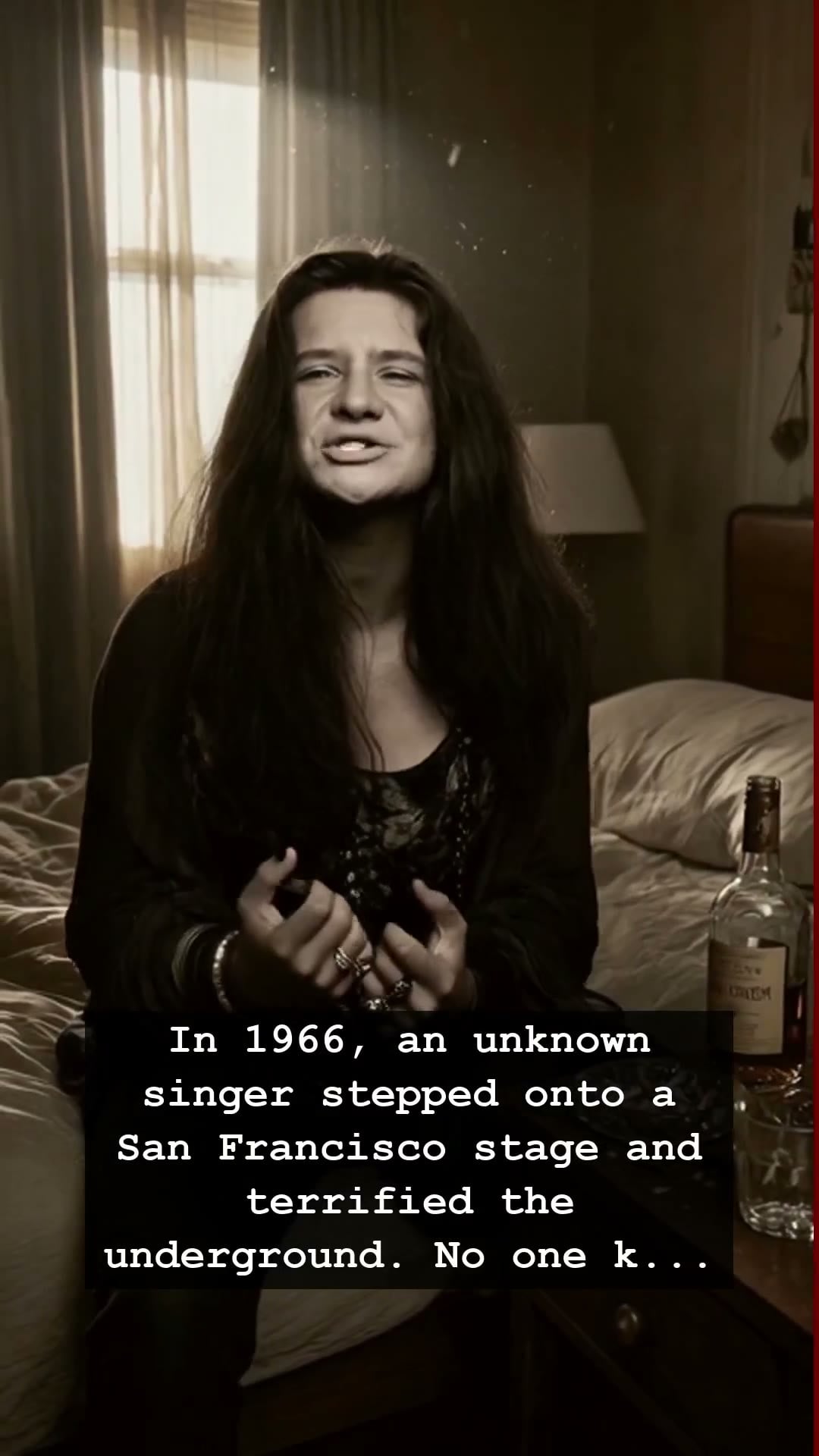
In 1966, the air inside San Francisco’s Avalon Ballroom was thick with the scent of patchouli and the hazy promises of a counterculture revolution. The underground scene was accustomed to the trippy, experimental sounds of the era, but nothing prepared them for what happened when an unknown, wild-haired singer stepped toward the microphone. She was not the polished pop starlet of the radio waves; she was a storm of raw, jagged emotion. With one ferocious delivery, Janis Joplin shattered the fragile equilibrium of the psychedelic movement, leaving the crowd in a state of absolute, paralyzed awe. It was the moment rock and roll realized it had finally found its soul.
Before that night, the music scene was dominated by calculated melodies and structured harmonies. But Janis Joplin brought a scorched-earth intensity that felt like a direct transmission from the depths of her own private suffering. She didn’t just sing; she bled into the microphone, channeling the ghost of every blues woman who had ever been forgotten by history. Her voice was a paradox—both a caress and a weapon—carving out a space in the male-dominated rock landscape that no one else dared to occupy. For those who witnessed it, it was a terrifyingly intimate glimpse into the heart of a woman who felt too much for the world to contain.
Behind the blinding stage lights and the burgeoning fame of the late 1960s, Janis Joplin was a woman constantly running from her own demons. Her rise was meteoric, fueled by a deep, aching need for connection and a desperate attempt to drown out the pressures of a stardom she never quite felt worthy of. She was a fixture of the era’s excesses, living in the shadow of the velvet-curtained studios and the frantic energy of the Haight-Ashbury scene. Her life became a tragic tightrope walk between the transcendent highs of her musical performances and the crushing loneliness that awaited her in every empty hotel room after the applause faded.
Even decades later, the legacy of Janis Joplin remains a haunting force in American music. She became the archetype of the tortured artist, a symbol of the price paid for authentic expression in a world that often demands conformity. Her songs were not just tracks; they were chapters of a life lived at full throttle, without a safety net. Whether you recall the crackle of a worn vinyl record or the grainy black-and-white photos of her legendary Woodstock appearance, her presence is undeniable. She captured the beautiful, terrifying restlessness of a generation that was searching for meaning in the smoke and the feedback.
Today, when we listen to her raspy, powerful wail, we aren’t just hearing a song from the past. We are hearing the echo of a woman who dared to be entirely, unflinchingly herself. Janis Joplin taught us that rock music isn’t about being perfect; it is about being real. As the needle drops on a classic Joplin record, we are reminded that some flames burn so brightly that they can never truly be extinguished, long after the music has stopped playing.