
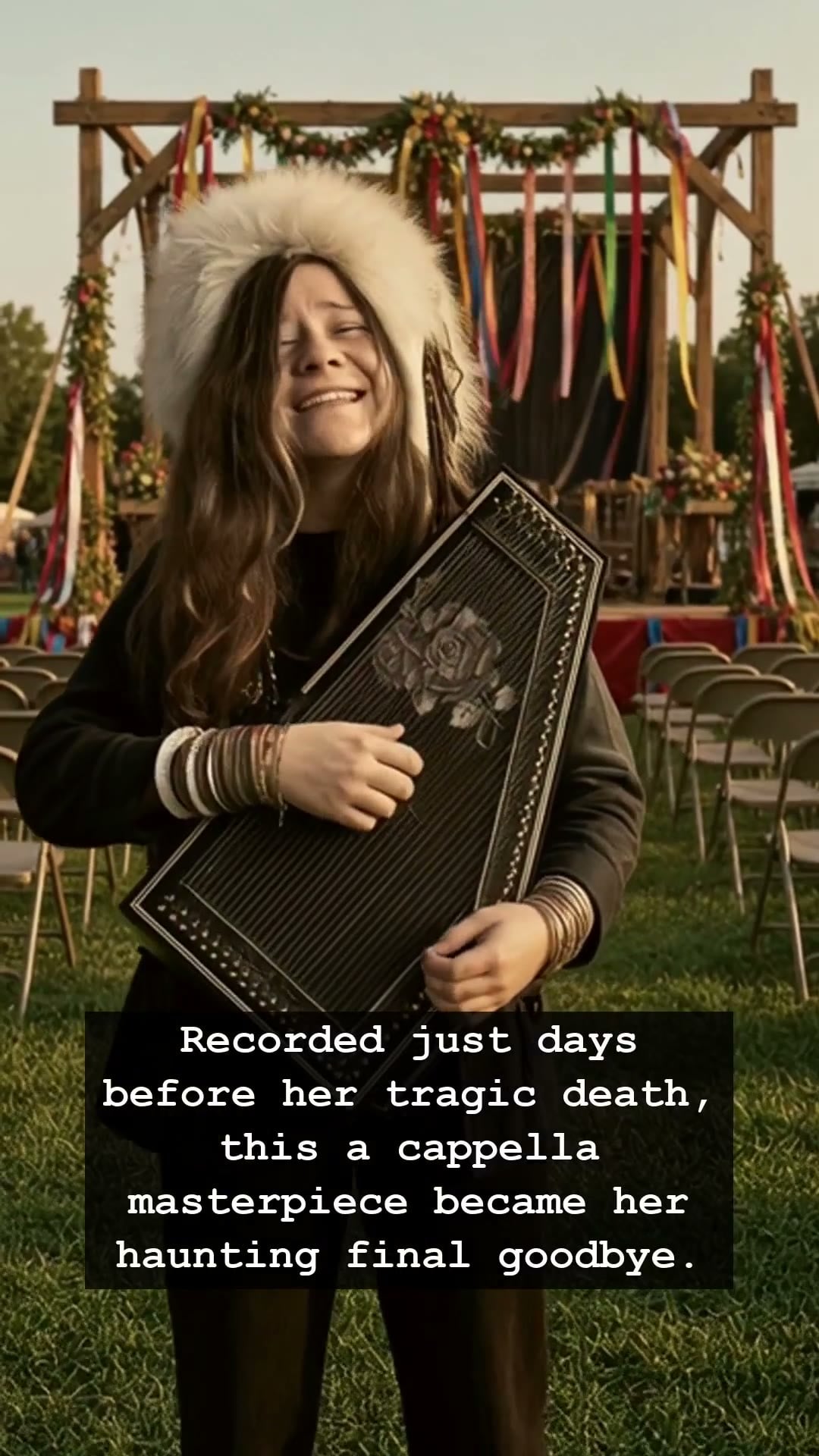
The studio was cold, the hour was late, and the air was thick with a silence that felt heavy enough to shatter. Just three days before her final, lonely breath in a Hollywood hotel room, Janis Joplin stepped up to the microphone for what would become one of the most haunting farewells in music history. It was a simple a cappella take of Mercedes Benz, a song that captured not just the wit of the blues queen, but the raw, unfiltered isolation of a woman who had given everything to a world that never quite understood her soul. There was no band, no heavy instrumentation, and no studio wizardry—just the ragged, beautiful voice of a legend standing at the very edge of eternity.
To understand the gravity of that moment, one must look back at the chaotic, psychedelic landscape of the late 1960s. Janis Joplin was the firebrand of the counterculture, a woman who broke the glass ceiling of rock and roll with a voice that sounded like whiskey and gravel. From her legendary performance at Woodstock to the wild, sweat-drenched nights at the Fillmore, she lived a life at double speed. But behind the curtain of fame lay a cavernous loneliness, fueled by the relentless pressure of a music industry that chewed up stars and spat them out. By the autumn of 1970, the psychedelic dream was turning into a gray reality for many, and Janis was feeling the weight of it all.
That session at Sunset Sound Recorders felt like a fever dream. When Janis Joplin laid down those vocal tracks, she was laughing, almost teasing the darkness that was closing in on her. The song, a satirical prayer for a Porsche and a night on the town, became an unintended eulogy. It is a chilling experience to listen to it today, knowing that her physical voice would be silenced in less than seventy-two hours. It serves as a reminder of the fragility of the icons we put on pedestals. The song remains a testament to her genius—an ability to turn a simple, improvised melody into an enduring anthem of longing that transcended the trends of the era.
Decades later, when the crackle of a dusty vinyl record hits the needle or the soft hum of an old jukebox plays a Joplin classic, we are transported back to that era of discovery and despair. Her story is a cautionary tale of the dark side of stardom, where the applause often masked a desperate need for connection. Janis Joplin did not just sing songs; she bled into them, leaving behind a legacy that refused to fade away even as the world around her shifted from the haze of the sixties to the gloss of the coming decade.
Today, we look back at the life of Janis Joplin not just as a tragedy, but as a brilliant, flickering light that burned too bright. Her final studio moments remain a haunting bridge between the myth and the human being. As the final notes of that unaccompanied vocal fade out, we are left to wonder about the songs she never got to sing. Do you still remember the heartbreak of her final goodbye?