
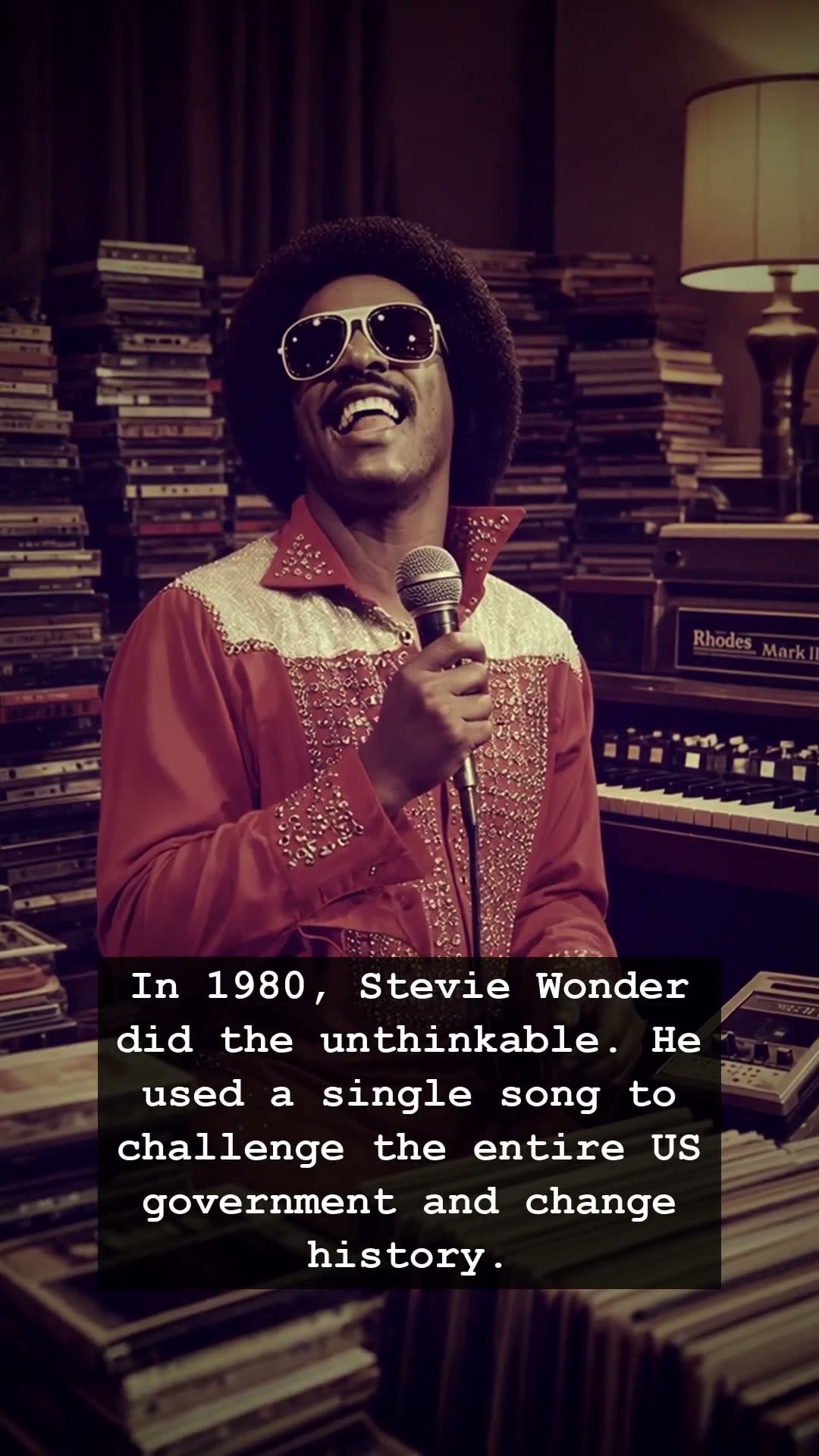
In the golden era of the 1980s, when the world was glued to MTV and the rhythmic hum of a Walkman was the soundtrack of youth, one man dared to turn a simple melody into a political weapon. Stevie Wonder, the musical genius who had already conquered the charts with his soul-stirring melodies, decided to pivot from love songs to something much more dangerous: a crusade for truth. It was 1980, and the American political landscape was stiff, resistant to change, and deeply divided. While most artists were focused on disco fever and the neon glare of Studio 54, Stevie Wonder had his eyes set on a singular, monumental goal that would eventually force a United States President to surrender to the will of the people.
Stevie Wonder was not just an artist; he was a cultural force. By 1980, he had grown tired of the government’s refusal to recognize the birthday of Dr. Martin Luther King Jr. as a national holiday. The resistance was stubborn, fueled by racial tensions and bureaucratic indifference. Stevie Wonder knew that traditional lobbying would get him nowhere. Instead, he took the issue to the airwaves. He channeled his frustration into his music, crafting a campaign that was as melodic as it was persistent. He didn’t just sing; he mobilized a movement that echoed from the streets of Detroit to the halls of the White House.
He released the song Happy Birthday, a track that would soon become a global anthem. It wasn’t just a celebratory tune; it was a clever, calculated hook designed to make the exclusion of Dr. King’s legacy feel impossible to justify. The melody was infectious, but the subtext was an ultimatum. For years, Stevie Wonder toured, spoke, and refused to let the issue fade into the background. He became the face of a movement that transformed a simple song into a legislative mandate. His dedication was total, and his influence was undeniable, proving that true artistry could dismantle even the most stubborn political barriers.
The drama behind the scenes was intense. Opponents labeled him a troublemaker, but Stevie Wonder remained undeterred. He leveraged his massive celebrity status, refusing to play at venues or participate in events until his demands for equality were taken seriously. The pressure grew so immense that even the most conservative leaders began to feel the heat. By the time President Ronald Reagan finally signed the bill into law in 1983, it felt less like a political victory and more like an inevitable surrender to the sheer weight of Stevie Wonder’s unwavering moral conviction.
Looking back, the story of Stevie Wonder and his fight for a national holiday serves as a haunting reminder of the power of music during the 1980s. It was a time when musicians held the conscience of the nation. Stevie Wonder proved that the right song, at the right time, could change the course of history forever. As we listen to those classic chords today, we are reminded that some melodies are far more than just sound; they are the living, breathing legacy of a hero who dared to stand up when everyone else chose to sit down.