
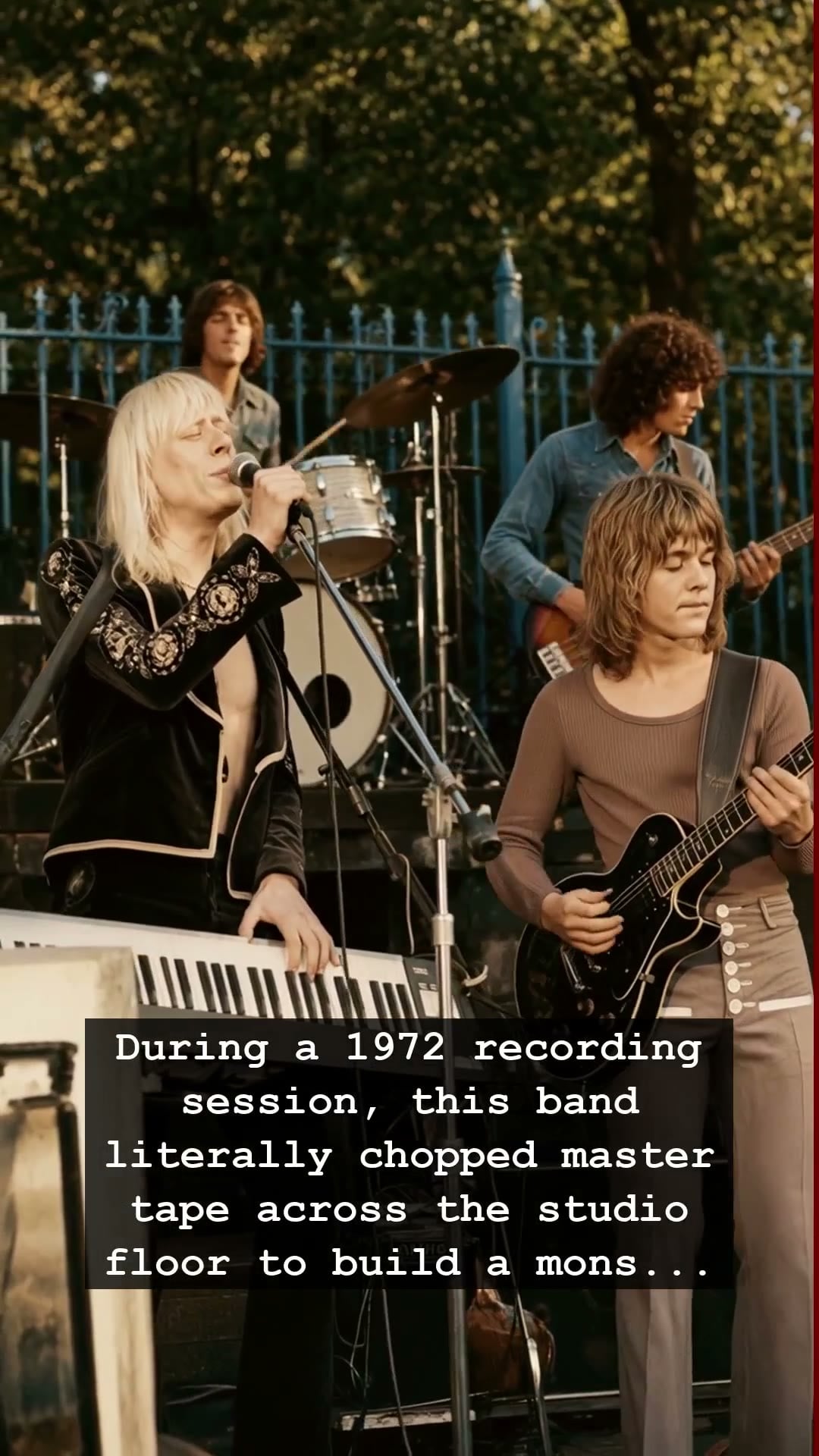
It was 1972, and the air in the recording studio was thick with the scent of stale coffee and the palpable tension of creative desperation. The Edgar Winter Group was huddled in the studio, grappling with a sprawling, chaotic instrumental track that refused to behave. What happened next wasn’t just a technical fix; it was a surgical procedure on rock and roll history. In a moment of pure, frantic genius, the band members took a pair of scissors to the master tape. They literally chopped yards of magnetic ribbon and scattered them across the studio floor, piecing together a sonic puzzle that would soon shake the foundations of 1970s rock radio.
At the time, the band was struggling to capture the raw, electrifying energy of their live performances. Edgar Winter, a musical prodigy with an unparalleled vision, knew they had something special, but it was buried under miles of tape. As they crawled across the floor, frantically splicing sections together, they weren’t just editing a song; they were stitching together a Frankenstein’s monster of sound. Little did they know that this jagged, high-voltage instrumental would transform into their massive chart-topping anthem, aptly titled Frankenstein.
This era was defined by excess and experimentation, a time when the Jukebox reigned supreme and studio walls held the secrets of legends. The Edgar Winter Group stood at the crossroads of jazz fusion and hard rock, pushing boundaries that most of their contemporaries were afraid to approach. The creation of Frankenstein became an urban legend in the music industry, a testament to the fact that sometimes, the most iconic art is born from total, unadulterated chaos. It was the antithesis of the polished, over-produced pop that would later dominate the airwaves as the decade marched toward the neon glow of the disco era.
When the track finally hit the airwaves, it was unlike anything listeners had ever heard. The synthesized moans, the driving percussion, and that iconic, crushing riff became an instant staple of the decade’s auditory landscape. It captures a specific, gritty magic—the feeling of a smoke-filled concert hall where the crowd is lost in a rhythmic trance. For those who remember the crackle of a vinyl needle dropping, Edgar Winter and his band provided a soundtrack that felt both dangerous and exhilaratingly new.
Decades later, the legacy of this 1972 experiment remains untouched. It serves as a haunting reminder of an era where musicians relied on hands-on craft rather than digital perfection to create their hits. Every time those distorted synths kick in, you can almost see the band members on their knees, scissors in hand, building a monster that would live forever. The story of the Edgar Winter Group and their floor-taped masterpiece is more than just trivia; it is a vital piece of the American rock tapestry that still resonates with anyone who hears the thrill of true musical rebellion.