
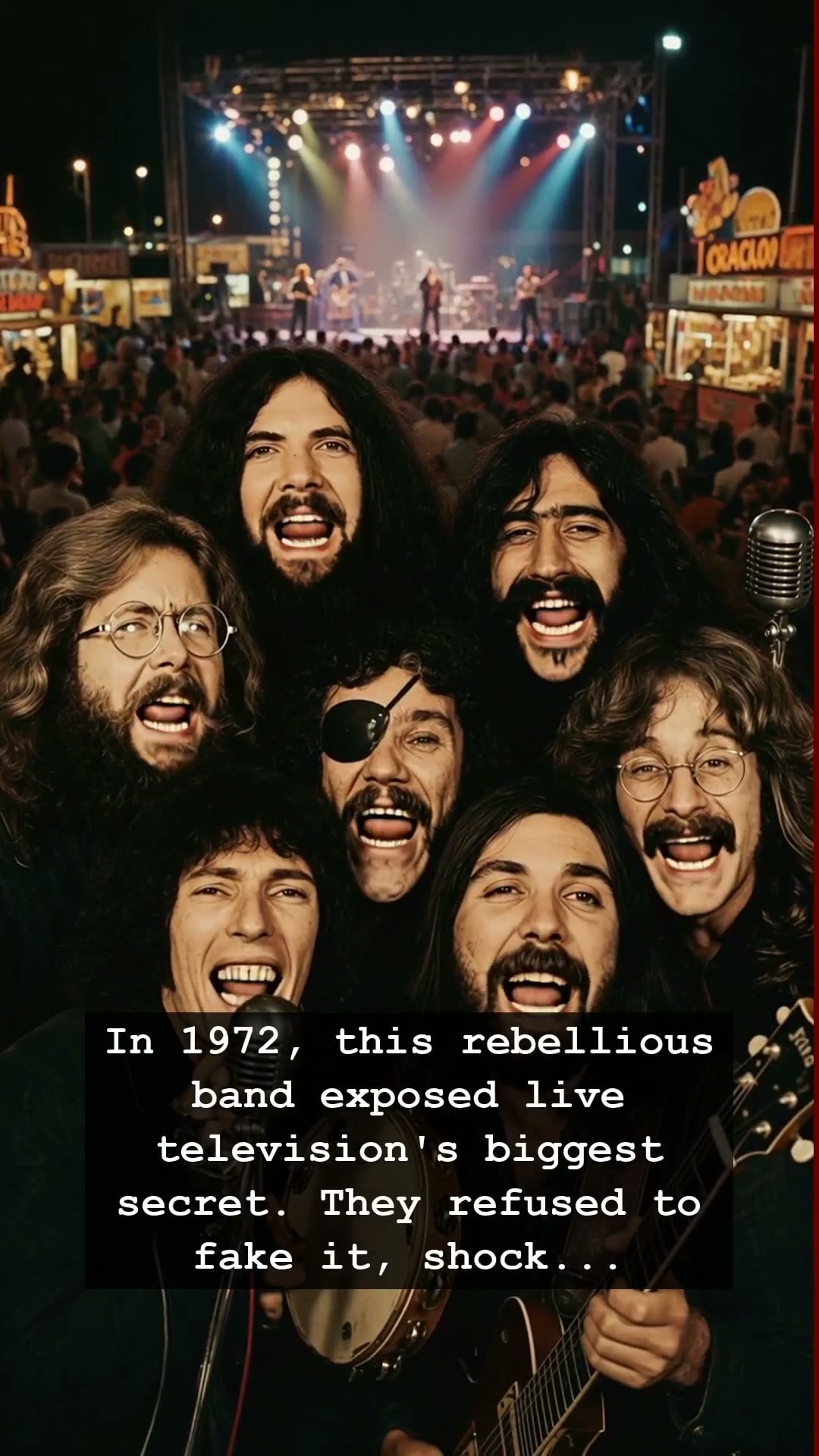
Picture the scene: It is 1972, the golden age of Top of the Pops. Millions of families across Britain are huddled around their flickering television sets, waiting to be entertained by the latest chart-topping hits. In those days, the standard industry practice was simple and rigid: musicians were required to mime to their records. It was a broadcast charade, a polished illusion designed to keep the rhythm steady and the performance perfect. But then, Dr. Hook and the Medicine Show stepped onto the stage, and the carefully crafted facade of live television began to crumble right before the viewers’ eyes.
The eccentric, mustachioed frontman Ray Sawyer and the rest of the band were never ones to play by the rules. As the opening notes of their hit song began to play, the audience expected the usual lip-syncing performance. Instead, Dr. Hook decided they had reached their limit with the industry’s artifice. In a moment of raw, unscripted rebellion, they made it blatantly obvious that they were not miming. They treated the live broadcast as a playground, openly mocking the requirement to fake their performance. By refusing to play along with the industry’s scripted charade, Dr. Hook delivered a jolt of genuine rock and roll energy that shocked the producers and thrilled the viewers at home who were tired of the plastic perfection of the era.
This incident was more than just a playful prank; it was a defiant statement against the manufactured nature of the music industry in the early 1970s. Dr. Hook and the Medicine Show were known for their humorous, sometimes irreverent, and deeply soulful brand of rock music. Their hit, The Cover of Rolling Stone, famously poked fun at the very idea of rock stardom, and this television stunt was a natural extension of that rebellious ethos. They weren’t just musicians; they were provocateurs who believed that if you were going to show up to play, you had to actually play.
For a generation that grew up with the Jukebox and the crackle of vinyl, this moment remains a legendary piece of music folklore. It captures the tension between the polished commercialism of the music business and the raw, unpredictable spirit of the artists who fueled it. In an age before digital filters and pre-recorded sets, the risk of failure was real, and that is exactly what made moments like this so electric. Dr. Hook reminded the public that music is a human endeavor, often messy, frequently loud, and best experienced without a safety net.
Today, as we look back at the 1970s through the lens of nostalgia, the act of Dr. Hook and the Medicine Show serves as a reminder of a time when rock music felt dangerous and authentic. It was an era where the lines between performance and reality were constantly tested. Their refusal to mime was a small act of defiance that continues to resonate with fans of classic American music who crave the truth behind the melody. Do you remember the chaos of those live broadcasts, where anything could happen and the music felt truly alive? Even decades later, the spirit of Dr. Hook remains a testament to the power of being unapologetically real in a world obsessed with appearances.