
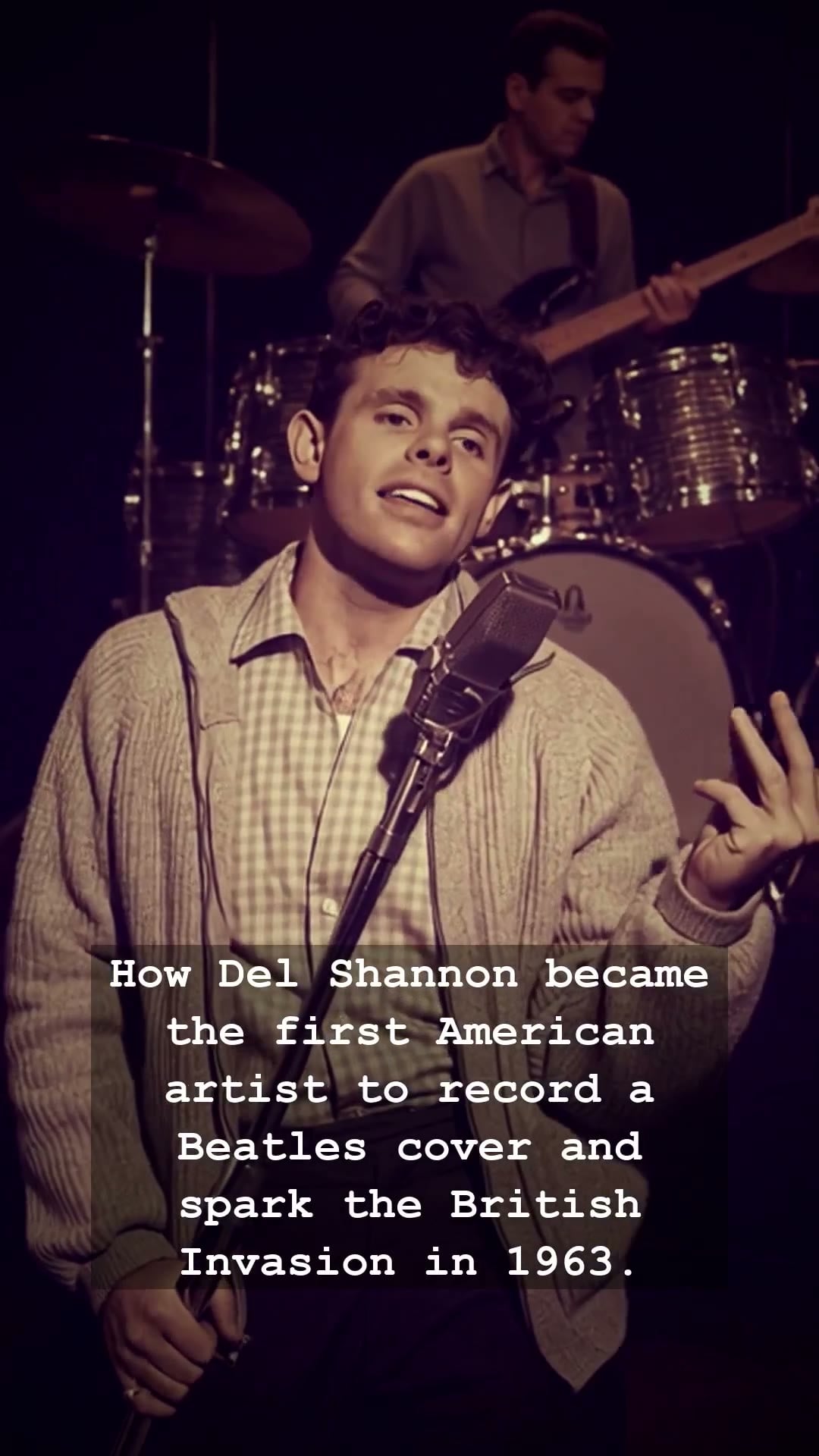
In the spring of 1963, the airwaves of America were saturated with the polished sounds of surf rock and the fading echoes of doo-wop. Most of the world was still blissfully unaware of a brewing hurricane from Liverpool. Yet, in a quiet recording session that would alter the course of music history forever, Del Shannon, the man behind the haunting falsetto of Runaway, found himself in a position that no other American artist had dared to touch. While touring the United Kingdom, Del Shannon heard a rough, driving track that had not yet crossed the Atlantic: From Me to You by a scrappy quartet called The Beatles.
At the time, the idea of an American star covering a British act was virtually unthinkable. The music industry was a one-way street, with the United States exporting its culture to the rest of the globe. But Del Shannon was never one to follow the conventional path. Captivated by the raw energy and the infectious melody of the song, he decided to record his own version of From Me to You. It was a risky gamble that defied the professional advice of his peers. Little did he know, by hitting the recording studio, he was unknowingly lighting the fuse that would eventually ignite the massive British Invasion.
When Del Shannon released his cover, the American public was perplexed. They were listening to a familiar voice singing an unfamiliar, rhythmic sound that lacked the traditional gloss of homegrown radio hits. This specific act by Del Shannon serves as a fascinating footnote in the archives of rock and roll. It was a bridge built across the ocean long before the Beatles stepped onto the tarmac at JFK International Airport to face a sea of screaming teenagers. The boldness of Del Shannon provided a subconscious blueprint for the change that was about to upend the charts and change the cultural landscape forever.
Beyond the studio lights and the frantic pacing of the touring life, there was a sense of profound loneliness that often followed Del Shannon. Like many stars of that golden era, he struggled with the pressures of maintaining his place in a fickle industry that valued the latest trend over genuine artistic evolution. His decision to embrace The Beatles was perhaps an intuitive recognition that the world was moving toward something more chaotic and vibrant than the era of the Jukebox had prepared them for. He became a herald of a new age, even if the history books often overlook his crucial role in that transition.
Today, we look back at the legacy of Del Shannon with a mix of reverence and melancholy. His life remains a testament to the risks taken in the name of musical passion. As the needle drops on his records, we are transported back to a time when music felt dangerous, mysterious, and alive. His contribution to the British Invasion is a powerful reminder that history is often written by those who are willing to listen to the sounds of the future while the rest of the world remains rooted in the past.