
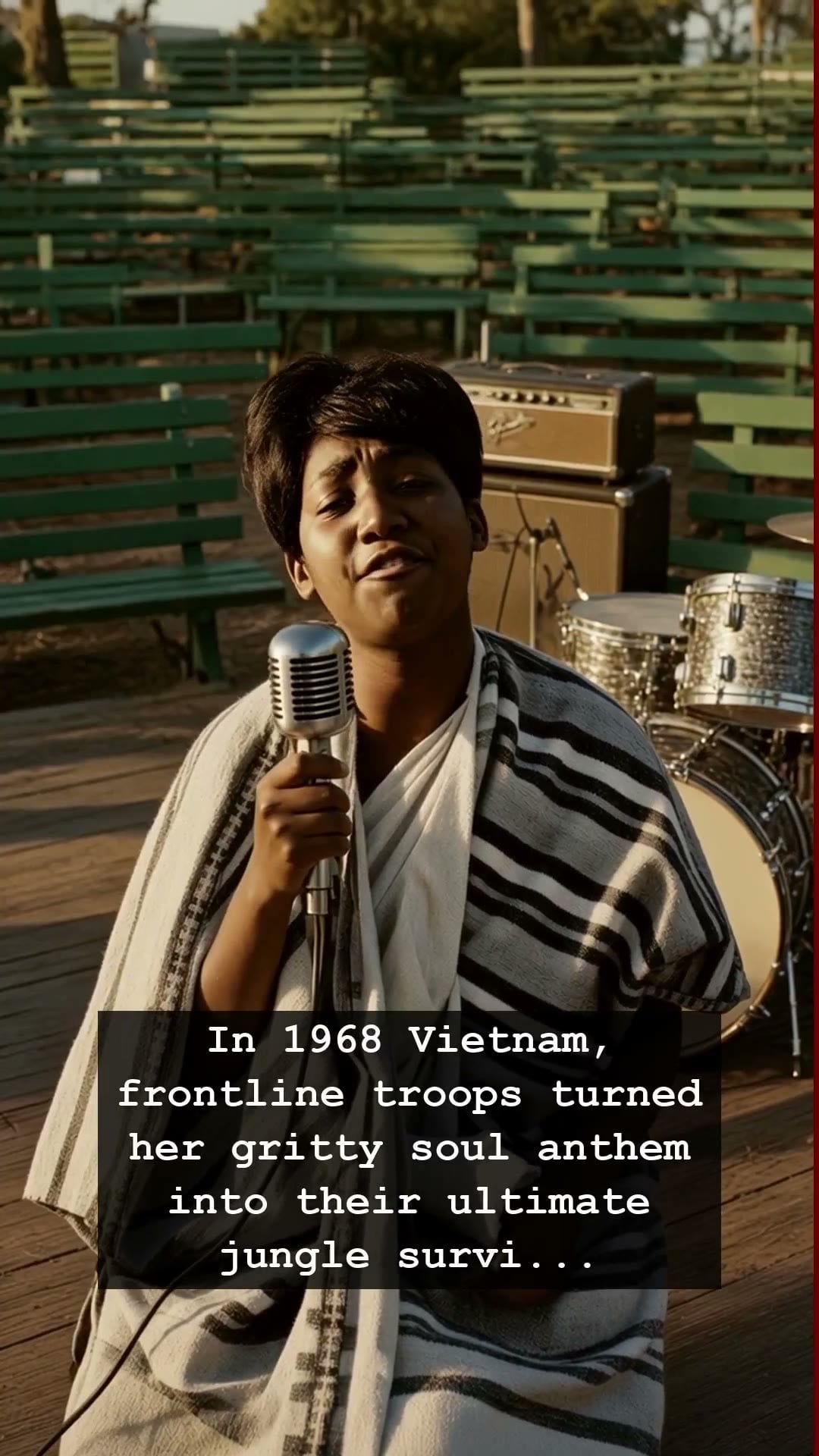
The year was 1968, and the humid, suffocating canopy of the Vietnamese jungle was a world away from the gleaming recording studios of Muscle Shoals. For the young soldiers hunkered down in foxholes, the world was measured in bursts of gunfire and the relentless, soul-crushing mud of the monsoon season. Yet, amidst the chaos of death and the terrifying uncertainty of the frontlines, there was one tether to their humanity: a portable cassette player and the indomitable voice of Aretha Franklin. As the Queen of Soul belted out her raw, defiant anthems, the jungle air seemed to vibrate with a different kind of power, transforming the trauma of combat into a desperate, rhythmic prayer for survival.
Aretha Franklin was not just a singer in those days; she was a cultural phenomenon whose reach stretched far beyond the airwaves of Motown or the urban centers of America. Her music, characterized by an unshakable gospel grit and a voice that could crack a heart in two, provided a sense of home for those who felt entirely abandoned by it. When soldiers heard her songs crackling through the static of a battery-operated radio or echoing off the bunker walls, it was as if a piece of the American dream had been parachuted into their desperate situation. The sheer force of her vocal delivery, often described as an earthquake of emotion, cut through the numbness of war like a knife.
It is truly haunting to consider how Aretha Franklin became the unofficial companion of the infantry. While the domestic front was tearing itself apart with anti-war protests and political upheaval, these men were finding solace in the same tracks that were dominating the charts back in the States. Her music didn’t demand politics; it demanded truth. When she sang, there was no room for artificiality, and in an environment defined by the grotesque lies of military operations, her honesty was the only thing that felt real. The connection between the soul of Aretha and the spirits of these exhausted soldiers remains one of the most poignant, untold stories of the sixties.
Beyond the jungle, the late sixties were defined by the crackle of vinyl and the rapid evolution of technology, from the birth of the Walkman culture to the fading influence of the Jukebox. Yet, for the soldiers in Vietnam, none of that mattered. They didn’t need the glamor of the era; they needed the Queen of Soul to remind them that they were still alive. Those nights spent in the dark, listening to the golden voice of Aretha Franklin, forged a bond that lasted long after the helicopters left the landing zones. It is a testament to the power of music that it can act as a shield, protecting the psyche when everything else has collapsed.
Today, we look back at the career of Aretha Franklin and see a legendary artist who transformed the landscape of modern music. But we must also remember her as the woman who was there, in spirit, for those who faced the unthinkable. Whenever you hear those iconic piano chords begin to swell, take a moment to remember the soldiers who found their courage in her song. The Queen of Soul didn’t just top the charts; she helped carry a generation through their darkest hour. Do you remember the first time her voice stopped you in your tracks?