
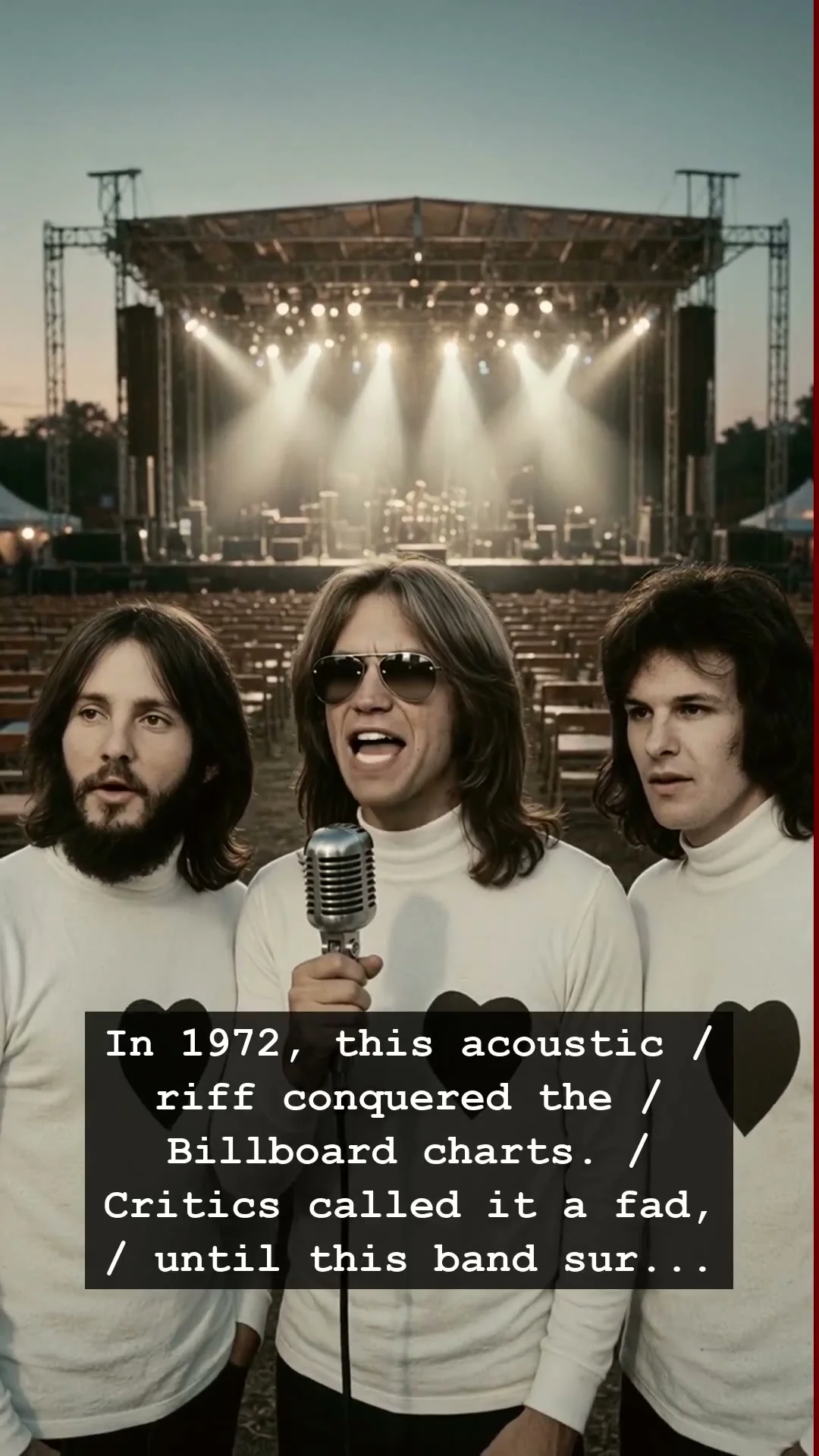
It was 1972, and the airwaves were crowded with the heavy, blues-driven riffs of the classic rock era. Suddenly, a haunting, stripped-back acoustic guitar melody cut through the noise, carried by a mysterious desert imagery that felt like a fever dream. That song was A Horse With No Name, and it propelled the band America to instant, polarizing stardom. While the public fell in love with its ethereal, folk-rock simplicity, the music critics of the time were far less forgiving. They mocked the lyrics, labeled the band a cheap bubblegum fad, and predicted their immediate descent into obscurity. Yet, like a phantom in the wind, the band America defied the gatekeepers and surged all the way to the number four spot on the Billboard charts, cementing a legacy that would echo for decades.
To understand the phenomenon of America, one must step back into the unique cultural landscape of the early seventies. This was an era transitioning from the radical experimentation of the sixties into a more introspective, singer-songwriter phase. The trio of Gerry Beckley, Dewey Bunnell, and Dan Peek were sons of American servicemen stationed in London, and they brought a trans-Atlantic sensibility to their music. While they were heavily influenced by the harmonic genius of Crosby, Stills & Nash, they carved out a sonic space that felt both expansive and lonely. Their debut album was a masterclass in acoustic atmosphere, capturing the essence of a generation that was beginning to trade the idealism of Woodstock for the isolation of the open road.
Despite the hostility from the press, the song became a massive cultural touchstone. There was something undeniably magnetic about that rhythmic, droning bassline and the way the vocal harmonies seemed to float above the track. Critics often accused America of being mere copycats, but the band possessed an authentic charm that resonated deeply with listeners sitting in their living rooms, adjusting their radio dials. It was the perfect soundtrack for the burgeoning era of the Walkman, providing a meditative escape for those weary of the political turmoil of the previous decade. By ignoring the biting reviews, the band proved that the connection between an artist and their audience is far more powerful than the opinion of any high-brow music critic.
The journey of the band America is a quintessential tale of resilience in the face of industry doubt. Throughout the seventies, they continued to produce hits like Ventura Highway and Sister Golden Hair, refining a sound that would define the soft-rock movement. Their story reminds us that music is not just about technical complexity or critical approval; it is about capturing a feeling, a moment in time that defines our shared experiences. Even today, hearing those first few chords of A Horse With No Name instantly transports listeners back to a sun-drenched, melancholic haze of the past.
Decades later, the band America remains a staple of classic rock radio, a testament to the enduring power of a well-crafted song. While the critics may have once dismissed them as a fleeting trend, the music itself has outlasted every negative headline. They were never just a fad; they were architects of a sound that still resonates with anyone who has ever felt the pull of the horizon. As you revisit these melodies today, it is worth remembering that the most iconic songs are often the ones that critics told us not to love. Tell us, does this track still transport you back to the golden era of the seventies?