
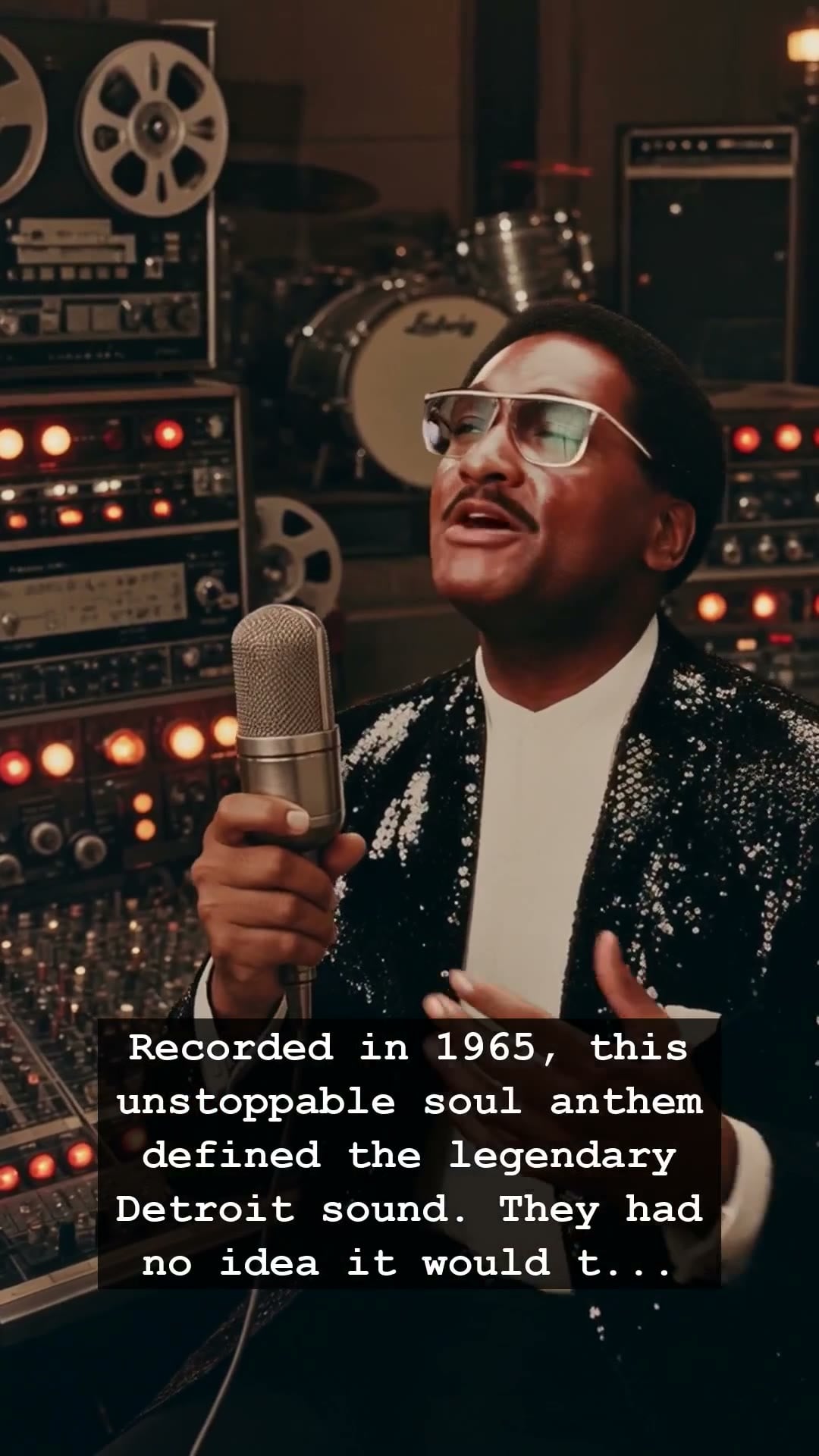
In the sweltering summer of 1965, the air inside Hitsville U.S.A. in Detroit was thick with cigarette smoke, ambition, and the relentless hum of vacuum tubes. Four men, their voices honed by years of late-night club circuits and road-weary resilience, stepped into a cramped studio. They were the Four Tops, and they had no idea that the song they were about to record would transform from a humble session into an unstoppable soul anthem that would conquer the world. This was the pinnacle of the Motown sound, a moment where desperation met euphoria, changing the course of American music history forever.
The song, I Can’t Help Myself (Sugar Pie Honey Bunch), was crafted by the legendary Holland-Dozier-Holland trio. As Levi Stubbs stepped toward the microphone, his gravelly, soul-drenched baritone cut through the instrumental layers with a raw, agonizing sincerity. While many artists of the era relied on polished perfection, the Four Tops brought a cinematic desperation to their performance. They weren’t just singing about love; they were singing about the total surrender of the human heart. That specific recording session captured a fragile, beautiful rhythm of sweet devotion that would soon spill out of transistor radios and car speakers across a rapidly changing nation.
To understand the gravity of this track, one must look back at the cultural landscape of the mid-sixties. This was a time when the Jukebox was the heartbeat of every neighborhood diner and the social fabric of America was fraying at the edges. The Four Tops provided a necessary escape, a sonic sanctuary that transcended racial and social barriers. Their harmony was a testament to years of struggle, a brotherhood forged long before they were icons. Every note Stubbs sang carried the weight of those early, lean years, making the song feel not just like a pop hit, but like a deeply personal confession shared with a generation.
Yet, behind the bright, brassy perfection of the Motown machine, the reality was often grueling. The industry demanded constant output, and the pressure on performers to replicate their success night after night was immense. The Four Tops lived in a whirlwind of non-stop touring, enduring the physical toll of constant travel and the psychological weight of fame. Despite the fame, they remained humble, tethered to the gritty streets of Detroit that birthed their unique sound. Their longevity is rare in an industry known for burning out its brightest stars, a testament to their unwavering work ethic and internal bond.
Today, when those iconic opening bars hit the airwaves, they act as a time machine, transporting us back to a world of analog warmth and tangible passion. We remember the era of vinyl records, the communal joy of dance halls, and the singular power of a voice that could make a crowd stand still. The Four Tops did more than record a chart-topper; they created a permanent imprint on the soul of America. As long as those melodies drift from our speakers, the magic of that 1965 Detroit summer will never truly fade away.