
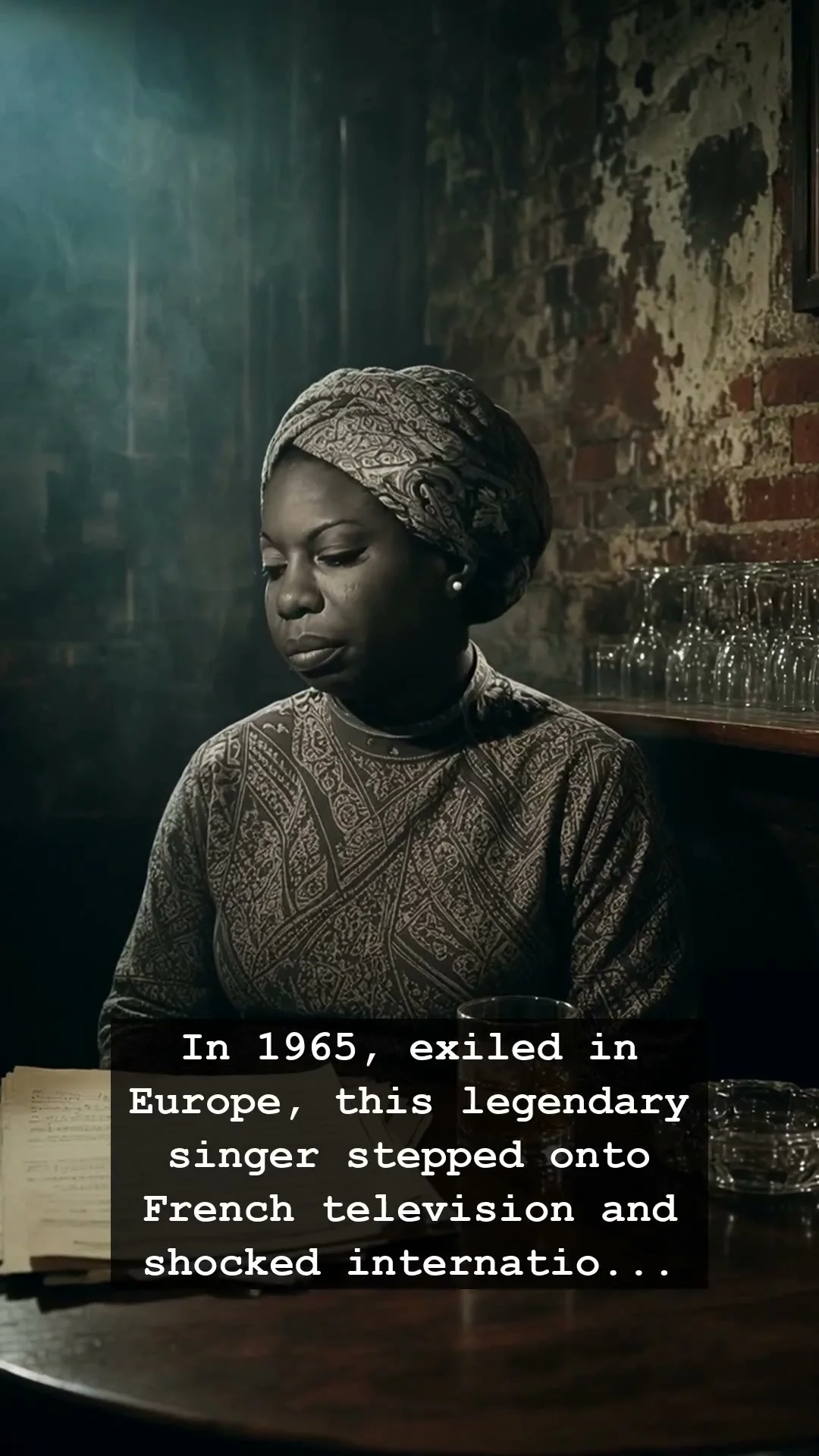
The year was 1965, and the air in Europe felt different—drier, perhaps, but certainly detached from the blistering heat of the American Civil Rights Movement. Nina Simone, a woman whose voice could crack stone and soothe the most restless of spirits, found herself in the middle of a self-imposed exile. To the French public, she was an exotic, sophisticated cabaret enchantress, a jazz darling expected to drift through melodies of love and loss. But the Nina Simone who stepped onto the television stage that night was a woman possessed by a different kind of truth. When she sat at the piano, the audience anticipated velvet tones and smooth jazz arrangements, but what they received was a jagged, visceral explosion of defiance.
Abandoning the polite persona of a lounge singer, Nina Simone unleashed a civil rights anthem that tore through the polished glass of European broadcast television. She did not just perform; she testified. As her fingers hammered the keys with a percussive intensity that felt more like a protest than a musical arrangement, she forced an international audience to confront the carnage and struggle occurring across the Atlantic. It was a shock to the system, a jarring reminder that for the High Priestess of Soul, music was never just entertainment—it was a weaponized expression of her identity, her trauma, and her unyielding demand for equality.
This pivotal moment in 1965 serves as a bridge to understanding the sheer magnitude of Nina Simone as a cultural force. During an era defined by the rise of the Jukebox and the burgeoning influence of televised broadcasts, she defied the industry pressure to stay silent. While many of her contemporaries in the soul and rhythm and blues circuits were navigating the delicate balance of mainstream success, Nina Simone was burning her bridges to build a monument to the truth. Her performance proved that even in the refined, chandelier-lit rooms of Paris, the echoes of the American South could not be silenced.
The drama surrounding her career was often shadowed by the weight of her genius and the heavy price of fame. Beneath the public admiration lay a woman battling intense psychological strain and the isolation of being a pioneer in a world that wanted her to be a symbol, not a person. Yet, every time she sat at that piano, the world stopped. Her ability to channel the raw, unrefined emotions of the human experience into something profoundly elegant is why her music remains timeless. She stood as a solitary giant, often misunderstood, yet always commanding the room.
Decades later, the legacy of Nina Simone resonates with anyone who understands that true art is born from conflict. Whether we look back at the era of Woodstock, the influence of Motown, or the quiet revolutions of the mid-sixties, her voice remains the most distinct. To listen to her records now is to hear the heartbeat of a history that refuses to be forgotten. Next time you drop the needle on a Nina Simone record, listen closely for the tremor in her voice; it is the sound of a woman who risked everything to make sure we would never stop listening.