
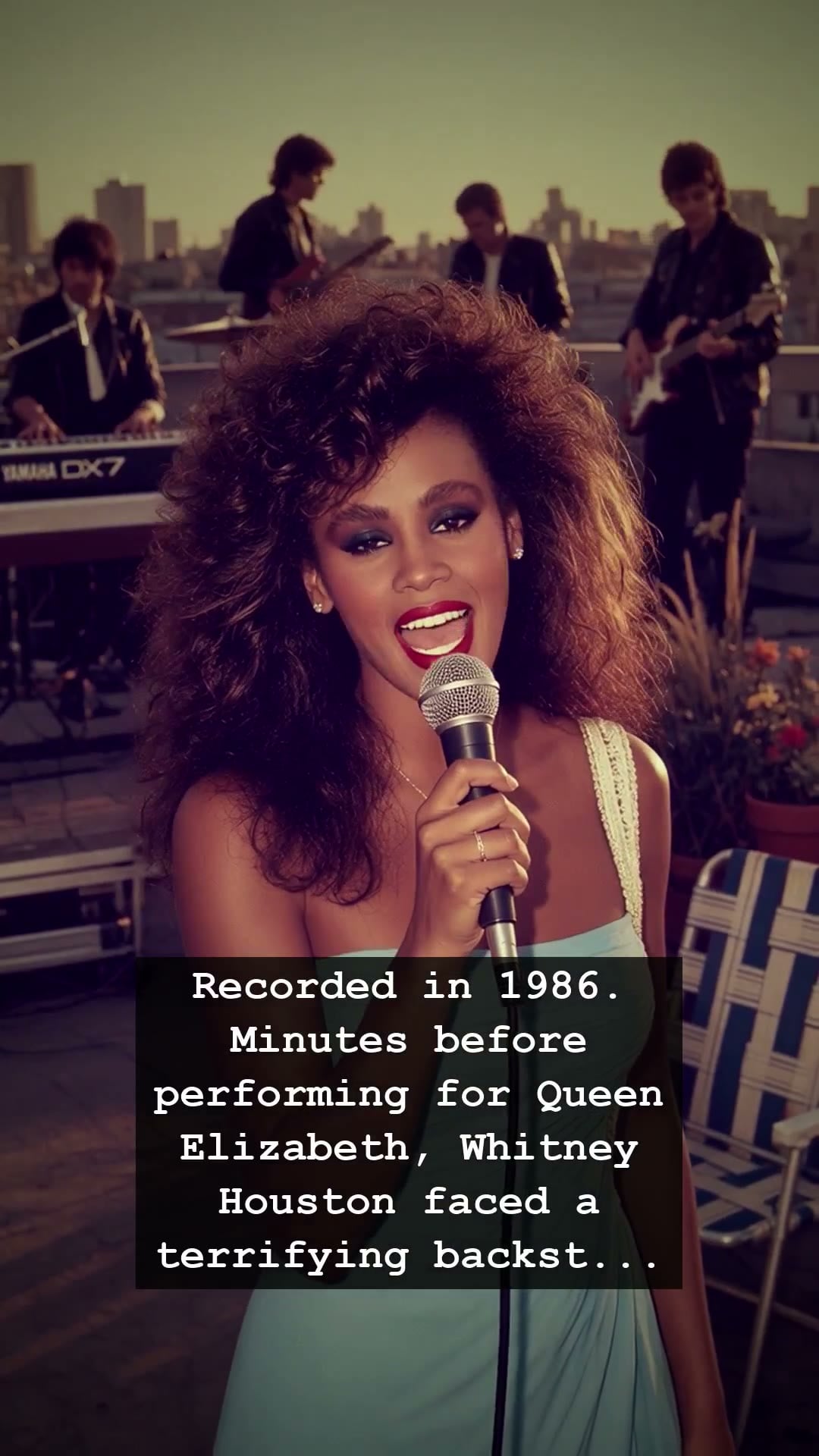
The year was 1986, and the world was falling under the spell of a young, radiant talent named Whitney Houston. Her self-titled debut album had already begun to shift the tectonic plates of the music industry, but on this particular night, the stakes were impossibly high. She was scheduled to perform for Queen Elizabeth II, a moment that would cement her status as a global icon. Yet, in the suffocating silence of the backstage corridor, mere minutes before the house lights dimmed, the pop world nearly witnessed a tragedy. Whitney Houston, the woman who would become known as ‘The Voice,’ suffered a terrifying, paralyzing vocal spasm. It was the kind of physical failure that could shatter a career before it even truly hit its peak.
Imagine the scene: the velvet-draped hallways of the British venue, the scent of expensive perfume mixing with the cold, metallic tang of stage equipment, and the hum of an audience waiting in hushed anticipation for the crown jewel of the evening. For Whitney, the pressure of performing for royalty wasn’t just about the music; it was about the crushing weight of expectation that trailed every rising star in the eighties. As she stood in the shadows, fighting for air as her vocal cords locked tight, she wasn’t the invincible superstar the tabloids were beginning to adore. She was just a young woman terrified that her greatest gift had suddenly abandoned her.
Most performers would have crumbled. The instinct to retreat, to blame a sudden illness or a faulty sound system, would have been the easy way out. But Whitney Houston possessed a rare, steely core that the public often overlooked in favor of her polished image. She took a breath, centered her spirit, and walked toward the stage as if she were walking into a sanctuary. When she opened her mouth, the world didn’t hear a trace of the struggle. Instead, she delivered a performance so flawless and spine-chilling that it reportedly stunned the British royalty into a state of total awe. It was a masterclass in professional grace under unimaginable pressure.
This incident in 1986 remains a poignant window into the life of a legend whose later years were marred by such intense personal turmoil. We often remember Whitney Houston through the lens of her tragic end, but stories like this remind us of the immense strength she carried during her rise. She was navigating a landscape where MTV fame and global superstardom required a level of endurance that few human beings could sustain. That night in London was a testament to a voice that could literally overcome the physical limitations of the body, a moment where pure talent and sheer willpower collided to create history.
Today, decades later, we still reach for our cassette tapes and digital archives to hear that iconic, soaring vocal. Whitney Houston was more than just a pop star; she was the architect of our emotions during the mid-eighties, a performer who could make a stadium feel like a private room. Whether she was singing for a queen or millions of fans around the world, she gave everything she had until there was nothing left to give. Whenever you play one of her records today, remember the girl behind the curtain in 1986, who faced her fear and turned it into the music that would define a generation.