
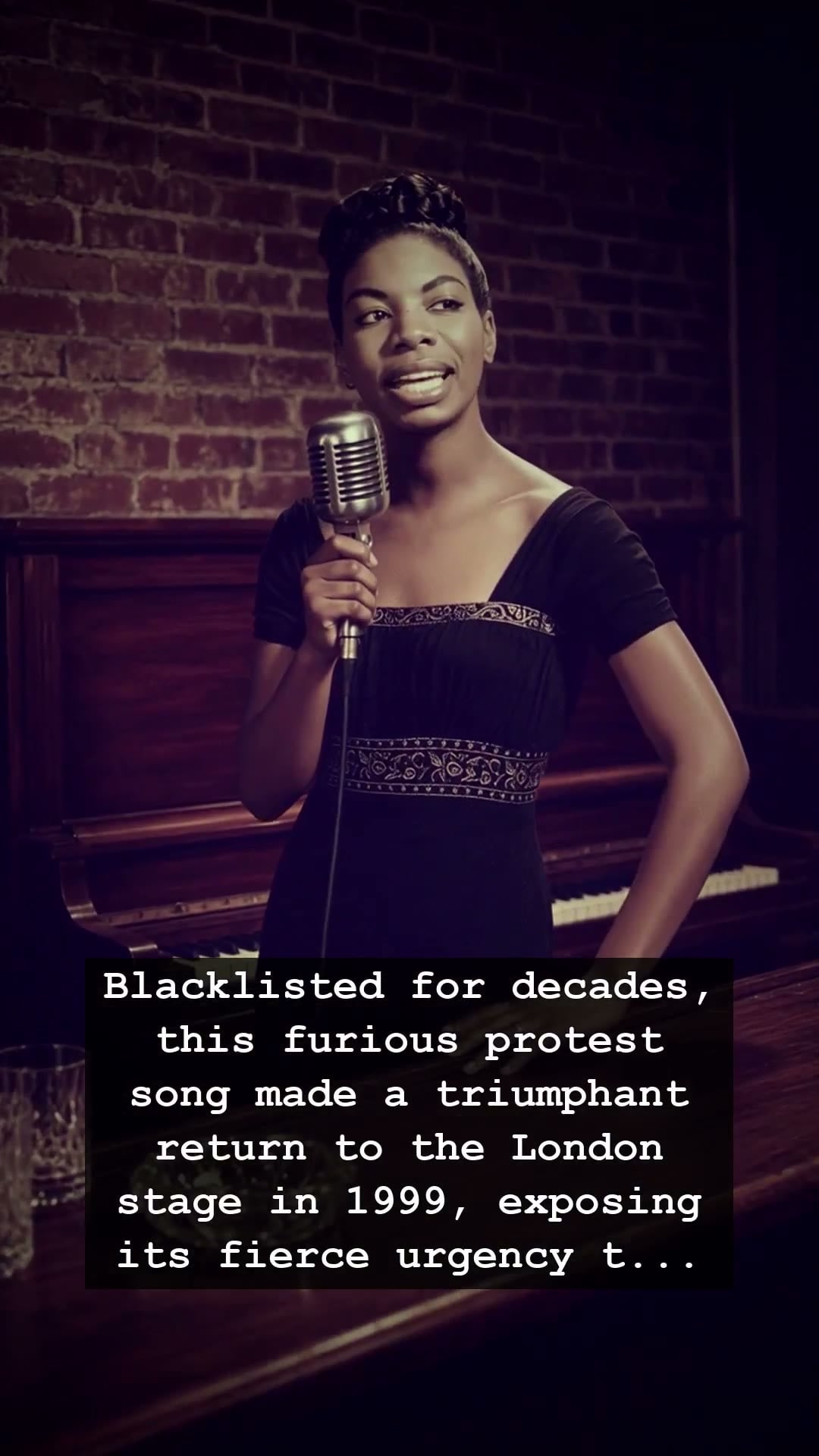
The year was 1999, and the air inside the London concert hall was heavy with a rare, electric anticipation. As the lights dimmed, Nina Simone, the High Priestess of Soul, stepped toward the microphone. She was older now, her movements deliberate, but her gaze held the same piercing fire that had defined her legendary career. When she began to sing, the audience felt a tremor in their bones. This was not just a song; it was a ghost from the past, a furious anthem of justice that had been effectively banned and silenced for decades. As the haunting melody filled the room, a new generation sat in stunned silence, witnessing the raw power of a woman who had dared to speak truth to power when the world wanted her quiet.
To understand the gravity of that night, one must travel back to the turbulent era of the 1960s. During the height of the Civil Rights Movement, Nina Simone transitioned from a jazz club songstress into a ferocious voice for the oppressed. She didn’t just sing songs; she weaponized them. Her protest music became a mirror reflecting the ugliness of systemic racism, a move that alienated mainstream radio stations and record labels across America. She became a target. The industry, fearing the radical honesty in her lyrics, quietly pushed her to the fringes. For years, her most biting work was kept off the airwaves, hidden away as if the truth could be muffled by the sheer force of industry indifference.
Yet, the story of Nina Simone is not one of defeat, but of endurance. Throughout the disco fever of the 70s and the synth-pop gloss of the 80s, her influence persisted underground, passed down like contraband through vinyl collections. She remained a solitary, brooding figure of artistic integrity. While others chased the lights of Studio 54 or the commercial heights of MTV, Nina Simone lived in a state of self-imposed exile, battling the personal demons of her own mental health and the crushing pressure of a public that loved her voice but feared her convictions.
That 1999 performance was more than a comeback; it was a reclamation of history. By singing that forbidden anthem, Nina Simone proved that time does not wash away the urgency of injustice. The song served as a bridge, linking the raw, unpolished spirit of the 60s protest era with the burgeoning awareness of a modern audience. It was a moment of sheer cinematic tension, where the past collided with the present, and the truth, long suppressed, finally demanded to be heard.
Even today, the legacy of Nina Simone resonates with an undeniable urgency. She reminds us that art is never truly neutral; it is a choice to either conform or to challenge the status quo. Her music remains a testament to the fact that when a voice is authentic, it can never truly be silenced, only waiting for the right moment to roar again. As the final notes of that London performance faded into history, she left us with an enduring question: what are we willing to stand for when the world tells us to sit down?