
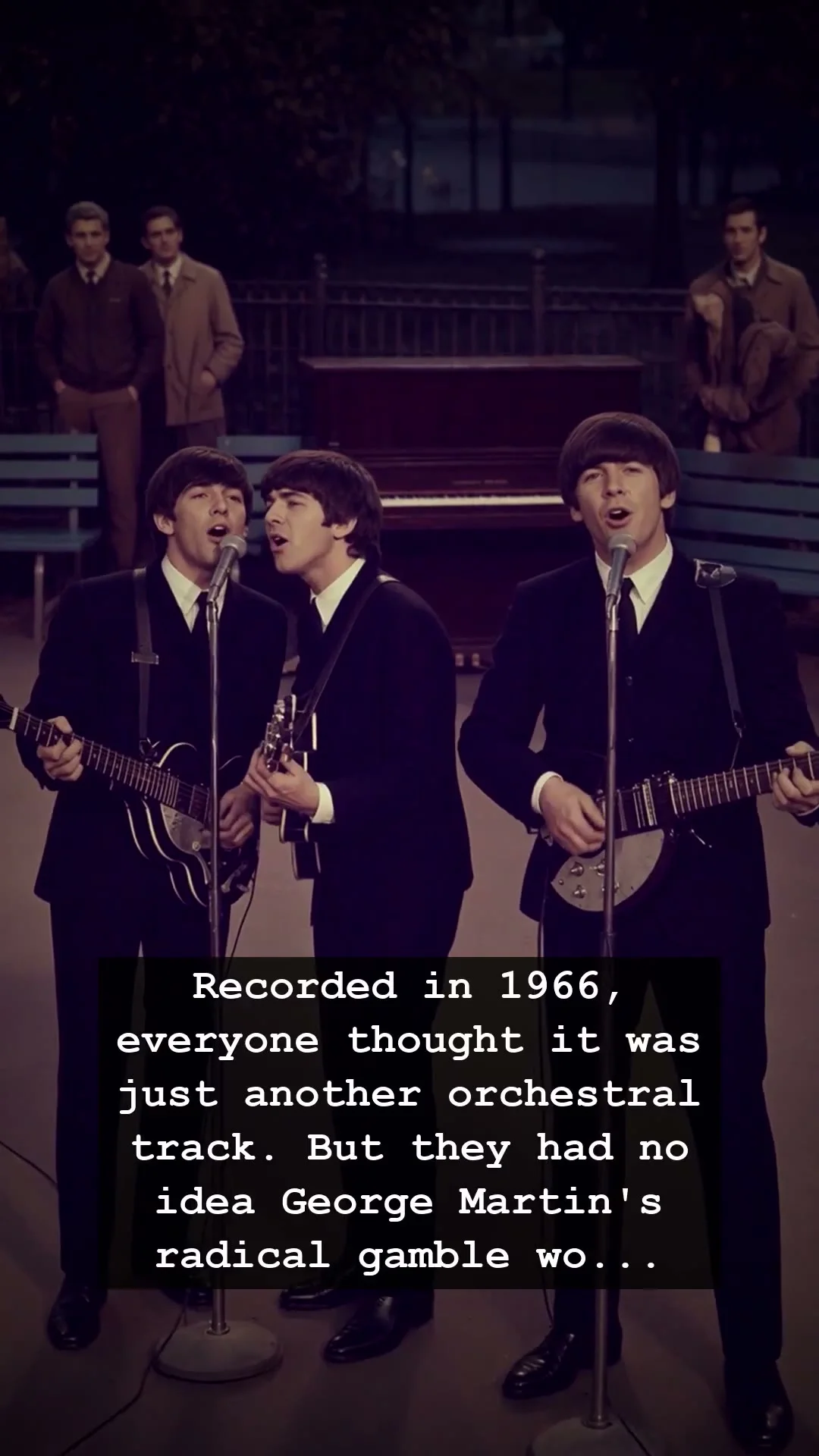
The year was 1966, a time when the world was shifting beneath our feet. While the youth were busy discovering the counterculture, four young men from Liverpool were locked inside the cramped, smoke-filled confines of Abbey Road Studios. They were searching for something that did not yet exist, a sound that would bridge the gap between simple pop melodies and high art. In the center of this frantic creative storm stood George Martin, the calm, sophisticated architect of a revolution that no one saw coming.
At the time, the industry was rigid. Recording artists were expected to churn out safe, radio-friendly hits, and orchestras were reserved for the elite or the traditional. When the band brought him an idea that defied all convention, George Martin could have easily dismissed it as a reckless experiment. Instead, he chose to lean in. He looked at the sheet music, heard the haunting potential of the strings, and decided to gamble his professional reputation on a vision that was, by all 1966 standards, utterly insane for a rock band to attempt.
Everyone expected just another orchestral backing track, but George Martin saw a masterpiece waiting to be carved from sound. He layered the strings with a precision that bordered on the obsessive, forcing the musicians to play in ways that challenged their technical limits. The result was a chilling, cinematic wall of sound that turned the industry upside down. It was the moment that pop music officially grew up. Without the quiet, authoritative guidance of George Martin, the song would have remained a mere sketch rather than the monumental cultural touchstone it became.
To understand the magnitude of this shift, one must recall the era of the Jukebox and the burgeoning influence of the radio. People were used to the predictable structures of early Rock ‘n’ Roll, but this collaboration shattered the ceiling. George Martin brought a level of harmonic sophistication that had never been applied to the electric guitar and drum set before. He became the secret ingredient, the fifth Beatle who could translate the abstract dreams of the band into the tangible magic that defined an entire generation.
Decades later, the legacy of that session still resonates in every studio across the globe. We often talk about the fame of the artists, but we must acknowledge the man behind the glass. George Martin taught the world that production was not just a technical task but a form of artistic expression in its own right. His influence remains woven into the very fabric of the music we hold dear.
As we look back at the golden age of the mid-sixties, it is easy to see why these moments still feel so visceral. They represent a time when the boundaries of creativity were wide open, and anything felt possible if you had the courage to try. Whether you experienced it through a transistor radio or discovered it years later, the work of George Martin continues to remind us that greatness is often born from the boldest, most unexpected gambles.