
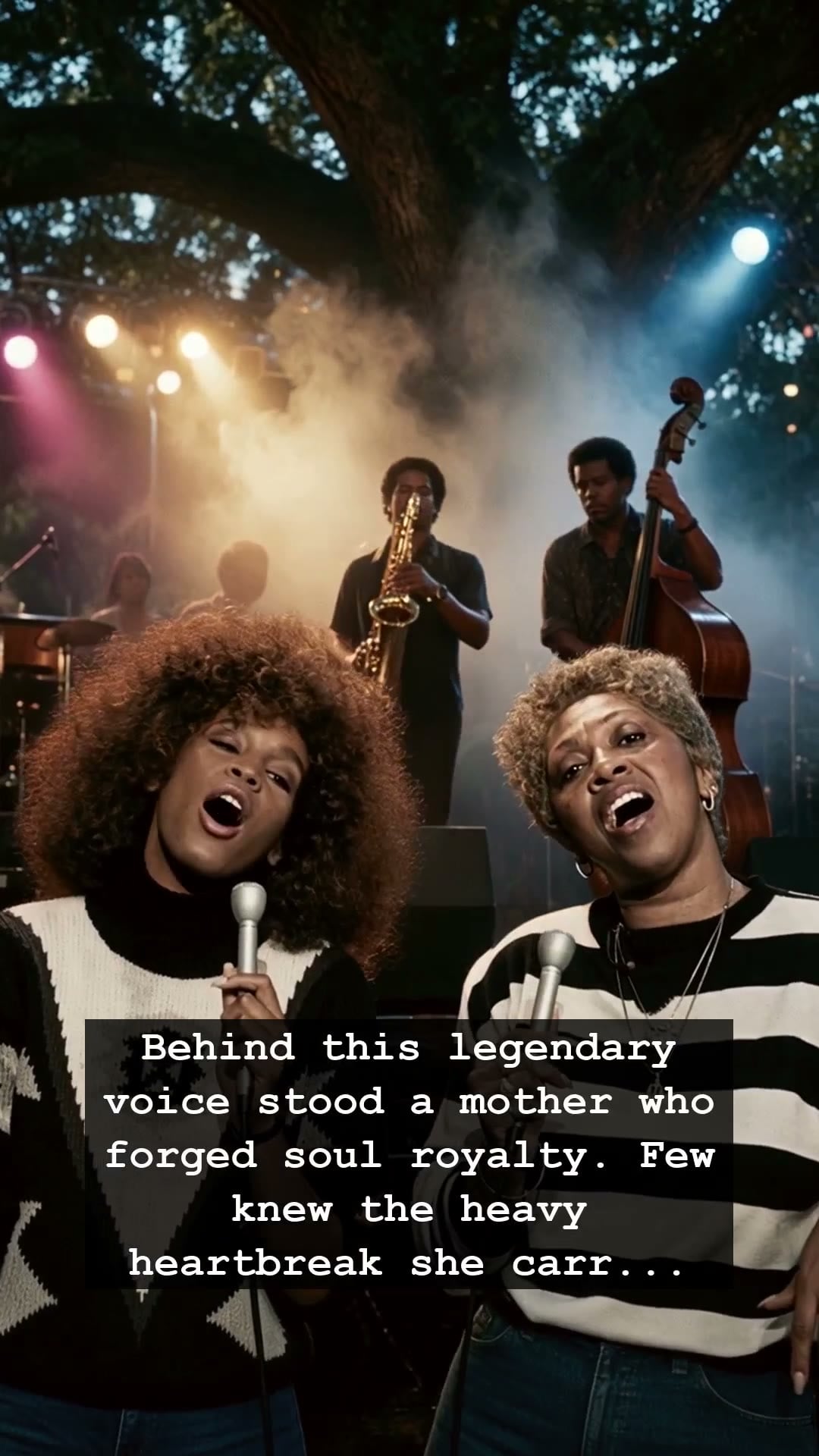
The golden voice that defined an entire generation did not materialize out of thin air. Before the flashing bulbs of the Grammy stage and the omnipresent reach of MTV, there was a quiet, gospel-steeped sanctuary in New Jersey where Whitney Houston first learned the weight of her own instrument. Behind the polished exterior of the 1980s pop icon stood Cissy Houston, a powerhouse vocalist in her own right and the woman who painstakingly forged soul royalty. But as the stadium lights grew brighter, the mother who had built a foundation of faith and discipline found herself standing in the growing shadows of a fame that would eventually consume the very soul she helped nurture.
To understand the magnitude of their bond, one must look back to the era of the soul-stirring Jukebox classics and the rigorous demands of the gospel circuit. Cissy Houston was not just a mother; she was a survivor of the music industry’s harshest realities. She had toured with legends and knew exactly what it cost to give one’s life to the stage. When Whitney Houston began her meteoric rise, Cissy watched with the pride of a mentor and the terror of a mother who saw the cracks in the industry’s glittering facade long before the public did. She poured her wisdom into her daughter, yet the proximity to such massive stardom often creates a unique, suffocating kind of pressure that even the strongest bloodlines struggle to withstand.
Behind the sold-out arenas and the chart-topping records, a silent heartbreak began to manifest. As Whitney reached the zenith of global fame, the pressures of maintaining an impossible image—often fueled by the industry’s addiction to perfection—began to fray the tightly knit tapestry of their relationship. The public saw a mother and daughter duo at the height of professional success, but away from the microphones, there was a desperate battle for normalcy amidst the chaos of fame. Cissy Houston’s internal struggle was profound; she was a woman of unwavering moral compass attempting to guide her daughter through a storm of expectations, substance, and media vultures that circled the Houston name with hungry intent.
These were the days when the Walkman hummed with the sound of I Will Always Love You, a track that would become an anthem for millions. Yet, for Cissy, that song carried a different, more poignant resonance—a reminder of a love that was constantly being tested by the relentless machinery of celebrity. The tragedy was not just in the eventual loss, but in the slow realization that the voice Cissy had so carefully honed was becoming a commodity that belonged to everyone except the family who loved her most. It is a story of artistic brilliance entangled with the darker, hidden costs of stardom that defined the late twentieth century.
Today, we look back at Whitney Houston not merely as a pop deity, but as a human being whose trajectory was forever shaped by the strength and sorrow of Cissy Houston. Their story remains a cautionary tale of the American dream, proving that even the brightest stars are tethered to the earthly heartbreaks of those who raised them. When you listen to those classic tracks today, remember the mother standing in the wings, holding the pieces together long after the music faded.