
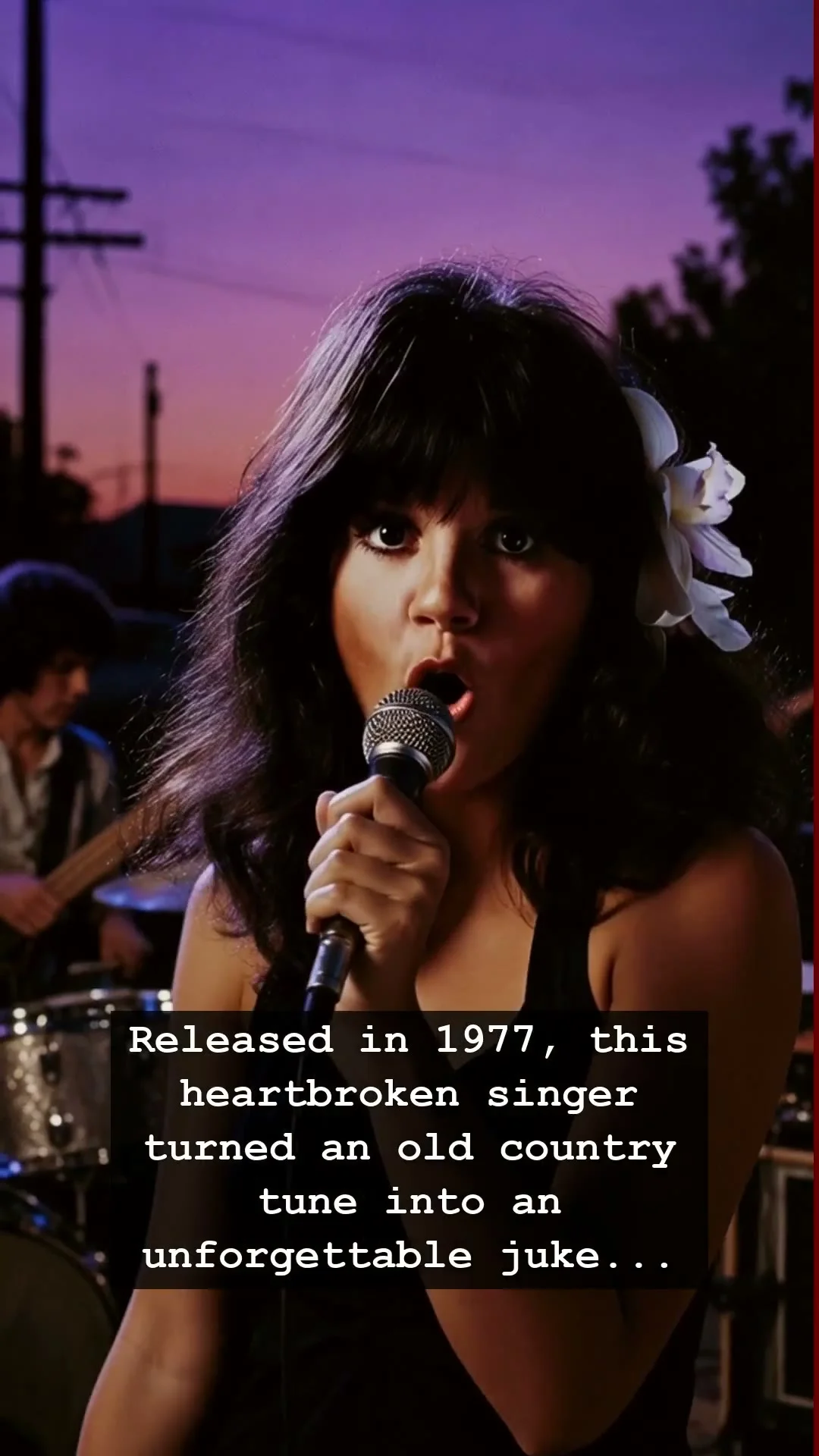
The year was 1977, and the air was thick with the scent of cheap cigarettes and spilled beer in the dimly lit corner bars of America. If you walked into any roadside diner or local pub during that golden era of the jukebox, you were almost guaranteed to hear the soaring, crystalline voice of Linda Ronstadt cutting through the smoke. She had taken an old, overlooked Roy Orbison country song and transformed it into a timeless anthem of longing. That track, Blue Bayou, didn’t just climb the charts; it became the soundtrack for every lonely soul nursing a broken heart while staring at the flicker of neon lights.
Linda Ronstadt was never just another pop star. By the mid-seventies, she was already a powerhouse, a woman navigating a male-dominated music industry with a blend of grit and undeniable vulnerability. When she stepped into the studio to record this track, she wasn’t just performing; she was channeling a lifetime of romantic turbulence. Her voice carried a raw, aching quality that resonated with anyone who had ever felt the sting of displacement or the weight of a love that slipped through their fingers. It was an era when music felt more human, less processed, and infinitely more dangerous.
The magic of the performance lies in the contrast between the sunny name of the place and the profound sadness in her delivery. Linda Ronstadt possessed a rare gift for finding the dark shadows in upbeat melodies. While the rest of the world was beginning to embrace the synthesized sheen of the late seventies, she remained rooted in the soulful, authentic storytelling of a bygone time. She poured her own lived experiences into those lyrics, capturing the exact moment when the pride of success gives way to the hollow ache of being alone in a crowded room.
This wasn’t just a studio success; it was a cultural phenomenon that defined the end of an decade. The song became a staple on the FM radio waves and a permanent resident in every jukebox from coast to coast. For the generation coming of age in the shadow of Vietnam and the political disillusionment of the era, Linda Ronstadt offered a way to process grief. Her performance turned a forgotten country classic into a centerpiece of the American songbook, proving that a truly great voice doesn’t just entertain—it heals.
Decades later, the song still holds that same magnetic power. Whenever the opening notes drift out of a speaker, we are instantly transported back to a world of cassette tapes and long, aimless drives. We remember where we were and who we were holding when Linda Ronstadt hit that final, haunting note. Even now, the emotion feels as fresh as it did on that night in 1977, a testament to an artist who dared to be vulnerable in an industry that constantly demanded toughness. Some songs are merely hits, but others, like this one, are emotional anchors that remind us exactly what it means to be alive.