
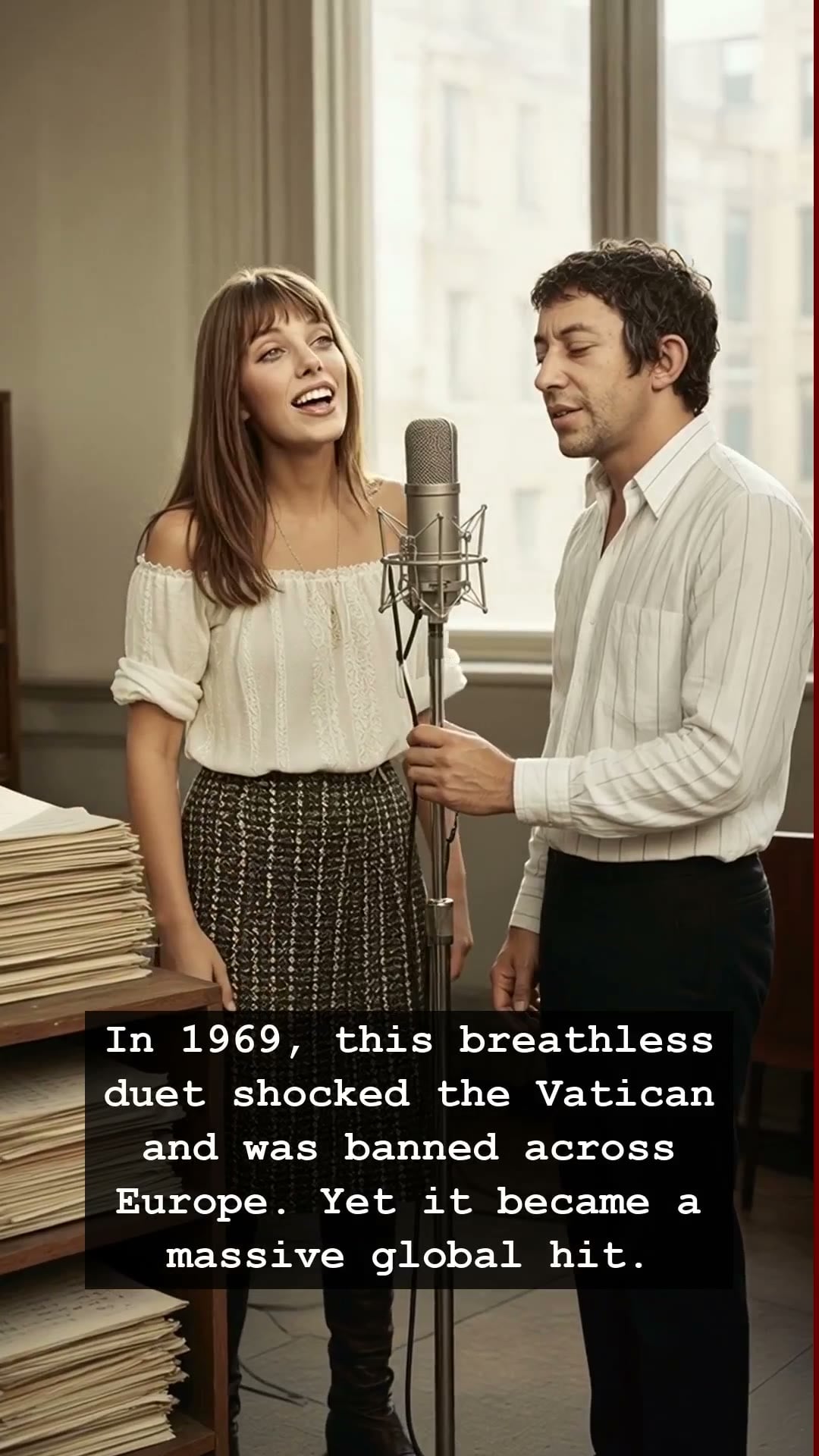
In the sweltering heat of 1969, a whisper turned into a global explosion that shook the foundations of moral decency. When Serge Gainsbourg and Jane Birkin released Je T’aime… Moi Non Plus, they did not just release a song; they unleashed a cultural storm. The track, defined by its heavy, rhythmic breathing and candid exploration of intimacy, was considered so scandalous that it was promptly banned by radio stations across Europe, and even faced the formal condemnation of the Vatican. It was the era of the Jukebox and the emerging sexual revolution, yet even by those rebellious standards, this duet pushed boundaries that society was not prepared to cross.
The story of Serge Gainsbourg and Jane Birkin was a collision of worlds. Serge, the chain-smoking, enigmatic provocateur of French chanson, was the ultimate outsider of the music scene. Jane, the fresh-faced British actress and icon of the swinging sixties, was the perfect muse to his darker, jagged edges. Their chemistry was raw, unfiltered, and deeply magnetic. The recording session itself was whispered to be as intense as the final product, capturing a moment of genuine, fragile intimacy that transcended language barriers. It was a masterpiece of tension, proving that silence and breath could carry more weight than any soaring vocal performance.
Despite the bans and the horrified headlines, the record became an inescapable, inescapable sensation. It climbed the charts globally, haunting the airwaves of discotheques and late-night radio programs throughout the decade. For the generation that came of age in the wake of the Summer of Love, the song represented a bold defiance against the stuffy conservatism of the postwar era. Serge Gainsbourg had succeeded in turning public outrage into an artistic triumph. The controversy only fueled its ascent, making it an essential artifact of 1960s pop culture that refused to be silenced by the establishment.
Looking back, the legacy of Serge Gainsbourg and Jane Birkin is defined by this single, breathy performance. It was a time when pop music had the power to make nations blush, a far cry from the sanitized, digital landscape of today. The song captured a specific kind of European melancholy and romantic recklessness that feels both distant and vividly alive. It reminds us of a world before constant connectivity, when a vinyl record spinning on a turntable could ignite a national scandal and define the spirit of a generation.
Even today, Je T’aime… Moi Non Plus remains a haunting masterpiece. It stands as a testament to the partnership between Serge Gainsbourg and Jane Birkin, two icons who weren’t afraid to shock the world to reveal a bit of the human soul. Whether you remember hearing it on a crackling radio or discovered it years later through the lens of music history, the song’s power remains undiminished. It is a timeless invitation to revisit the danger, the drama, and the beautiful, forbidden sounds of an era we will never quite forget.