
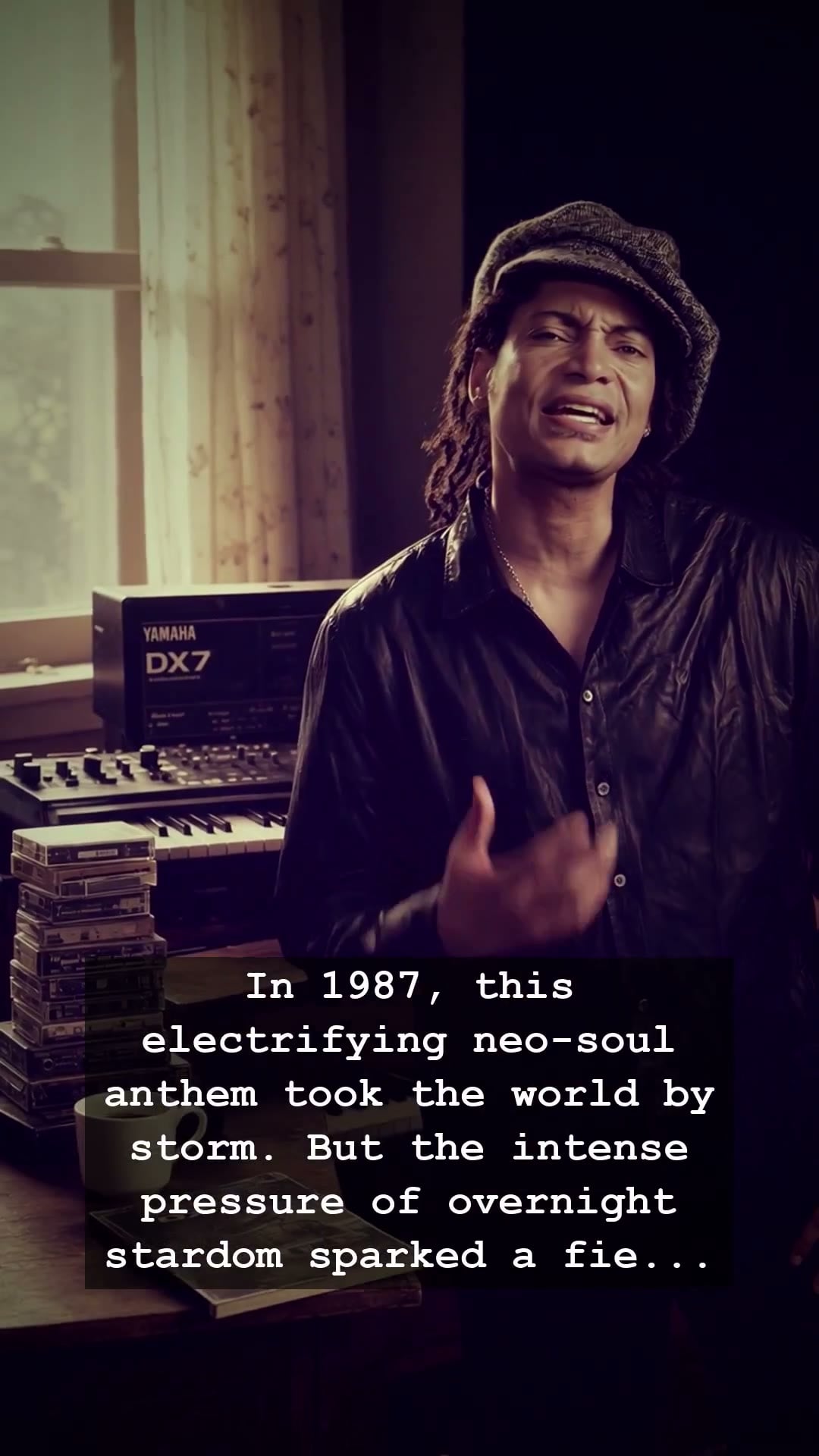
In 1987, the music world was held captive by the raw, kinetic energy of a man who seemed to emerge from nowhere. With the release of his debut album, Introducing the Hardline According to Terence Trent D’Arby, a neo-soul masterpiece took the global charts by storm. His voice was a revelation, a smoky, soulful instrument that felt like it had been tempered in the fires of gospel churches and polished on the streets of New York. For a fleeting moment, the name Terence Trent D’Arby was synonymous with the future of pop music. Yet, beneath the slick production and the chart-topping singles, a storm was brewing—a collision between unbridled ego and a merciless press corps that would change his trajectory forever.
The era of the late 1980s was defined by the dominance of MTV and the rising power of music critics who acted as the gatekeepers of credibility. When Terence Trent D’Arby burst onto the scene, his charisma was undeniable, but his outspoken nature made him an easy target. He didn’t just want to be a star; he declared himself the greatest thing to happen to music since the Beatles. In an industry that demanded humility from its newcomers, this bold audacity acted like a red flag to a bull. The music press, once captivated by his sound, quickly pivoted to tearing down his persona, turning every interview into a courtroom interrogation where his talent was often overshadowed by his sharp tongue.
Looking back, the pressure of overnight stardom was a weight that few artists could carry without faltering. The story of Terence Trent D’Arby is a stark reminder of the dark side of fame in the pre-internet age. While the Walkman was popularizing the consumption of music on the move, the industry was becoming increasingly polarized. Terence Trent D’Arby became the face of a culture clash, caught between his genuine artistic ambition and the cynical expectations of a media establishment that thrived on breaking down the very icons they helped create. The friction was palpable, resulting in public outbursts and a spiraling narrative that painted him as a cautionary tale rather than a visionary.
Despite the drama that defined those volatile years, the music remains pristine, standing as a testament to his undeniable gift. Songs like Wishing Well possess a timeless quality that transcends the specific aesthetic of the late 80s. When we revisit these tracks today, we aren’t just hearing a hit record; we are listening to the sound of an artist grappling with his own identity under the glare of a thousand klieg lights. The tragedy of the situation was never the lack of skill, but the sheer velocity at which the industry consumed, critiqued, and discarded him.
Today, we look back at the career of Terence Trent D’Arby with a sense of lingering mystery. His journey offers a profound look at how the media can build a legend only to dismantle it with the same calculated efficiency. As the years have passed, the noise has finally settled, leaving us to appreciate the true essence of his neo-soul revolution. Whether you were there listening to the radio back in 1987 or discovering his work for the first time, take a moment to listen beyond the headlines. Sometimes, the most beautiful music is found in the stories we were too distracted to fully hear.