
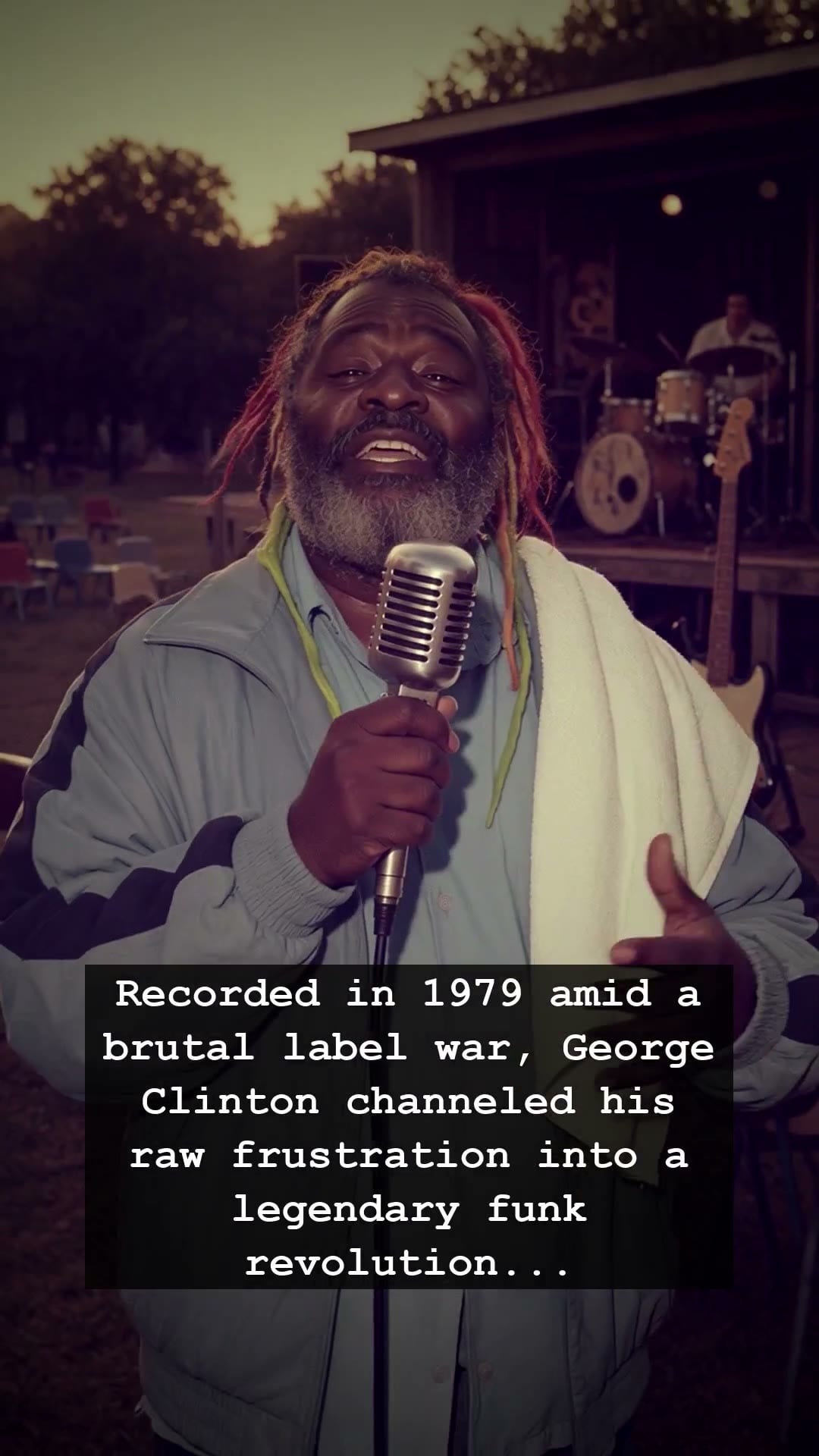
It was 1979, a year when the neon lights of Studio 54 were flickering and the airwaves were crowded with the polished sheen of disco. Yet, behind the velvet ropes and the glitz, George Clinton was suffocating. He was trapped in a relentless legal war, a bureaucratic cage designed to strip away his creative autonomy and lock his royalties into a vault he couldn’t reach. Most artists would have crumbled under the weight of such predatory industry machinations, but George Clinton did something far more dangerous: he turned his fury into a bass-heavy, cosmic manifesto that would change the trajectory of American music forever.
To understand the magnitude of what George Clinton achieved during this chaotic period, you have to picture the scene. The Parliament-Funkadelic machine was more than a band; it was a sprawling, psychedelic circus of talent, eccentric costumes, and legendary stage shows. But off-stage, the dream was turning into a nightmare. With lawyers circling like sharks and his artistic legacy hanging in the balance, the mastermind retreated to the studio. He didn’t reach for a white flag; he reached for a synthesizer. He funneled every ounce of his desperation, resentment, and creative defiance into the grooves of his music, crafting a sound so raw and unapologetically rebellious that it effectively weaponized the funk genre.
This wasn’t just another record; it was a sonic insurrection. George Clinton understood that in an era dominated by the growing influence of MTV and the rigid structures of major labels, the only way to win was to be so undeniably unique that the system couldn’t categorize him. By blending the deep, pocket-driven basslines of R&B with the experimental, mind-bending textures of psychedelic rock, he created a bridge between generations. Listeners who were accustomed to the tighter, safer arrangements of the late seventies were suddenly jolted by the sprawling, nonlinear genius of the P-Funk universe.
The irony, of course, is that the labels trying to silence George Clinton actually pushed him toward his greatest masterpiece. He realized that if he couldn’t own his past, he would simply reinvent the future. This era of his career stands as a testament to the idea that true art often thrives in the shadow of conflict. While his peers were chasing radio hits, Clinton was busy building a mythology that would influence every hip-hop producer and funk aficionado for decades to come. The struggle became the fuel, and the resulting music remains a scorching reminder of what happens when a visionary refuses to be broken by a contract.
Looking back from the vantage point of today, the legacy of George Clinton is impossible to ignore. Whether you are spinning his records on a vintage turntable or uncovering his influence in the samples of a Golden Age hip-hop track, the resonance of that 1979 rebellion is still palpable. He didn’t just survive the fallout; he mastered the art of creative survival. If you are ever searching for a reminder that the best stories are born in the heat of a struggle, just put on a classic Parliament-Funkadelic record and let the funk set you free.