
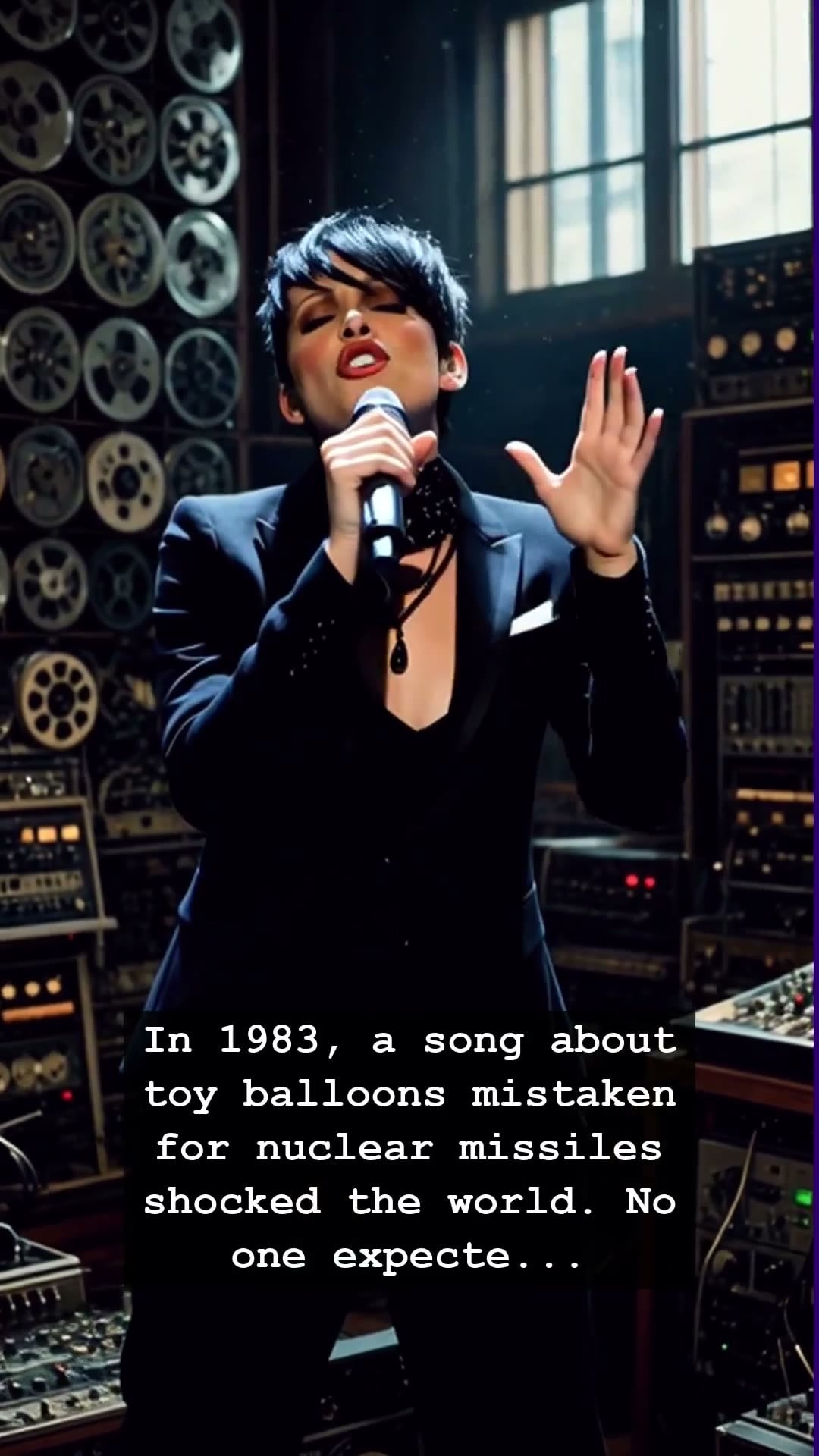
It was 1983, a year when the Cold War frost was at its thickest and the world lived under the persistent, suffocating shadow of the mushroom cloud. In the midst of this global tension, a bright, synth-driven pop melody emerged from West Germany, catching the world completely off guard. The band was Nena, fronted by the magnetic Gabriele Kerner, and their hit 99 Luftballons was about to change the landscape of pop music forever. What listeners across the globe heard was an infectious, upbeat track, but what they were actually singing along to was a haunting nightmare about the accidental triggering of a nuclear apocalypse.
The premise of the song is almost chillingly simple yet profoundly dramatic. It tells the story of 99 red balloons drifting into the horizon, mistaken by a nervous military radar system for an enemy attack. In an era when the fear of the bomb was a staple of daily life, the lyrics struck a raw nerve. Despite being sung entirely in German, the song defied the barriers of the English-speaking music industry. It blasted out of the speakers of Walkmans from Tokyo to New York, becoming an accidental international anthem of protest that resonated far beyond the borders of the divided Germany of that time.
Behind the catchy, neon-soaked production lies a darker truth about the state of the world in the early eighties. The members of the band Nena did not set out to create a global political statement; they were simply capturing the paranoia that permeated their existence. The song acts as a sonic time capsule, perfectly mirroring the era when the threat of destruction was just one technical glitch away. While audiences at MTV were busy dancing to the latest synth-pop sensations, Nena forced them to confront the terrifying reality of their own fragility. It remains one of the most successful instances of a non-English track conquering the charts, proving that true art transcends linguistic boundaries.
Watching Nena perform on television during that period, one is struck by the contrast between her playful, punk-influenced aesthetic and the gravity of the song’s message. The irony was not lost on critics: a song about the end of the world became a party staple. This duality defined the Nena phenomenon. The success of the track turned the band into overnight superstars, catapulting them into the bright, harsh lights of international fame, a place where many artists lost their way amidst the pressure of substance abuse and the crushing weight of public expectations.
Even decades later, 99 Luftballons retains an haunting relevance that few tracks from the era can claim. It serves as a stark reminder of a time when the world stood on a precipice, yet it remains undeniably catchy. Whether you remember hearing it on the radio for the first time or discovered it later as a relic of 1980s pop culture, the song continues to challenge us to consider the fine line between peace and total annihilation. The legacy of Nena lives on, not just in the synths of the past, but in the enduring power of music to make us think while we dance.