
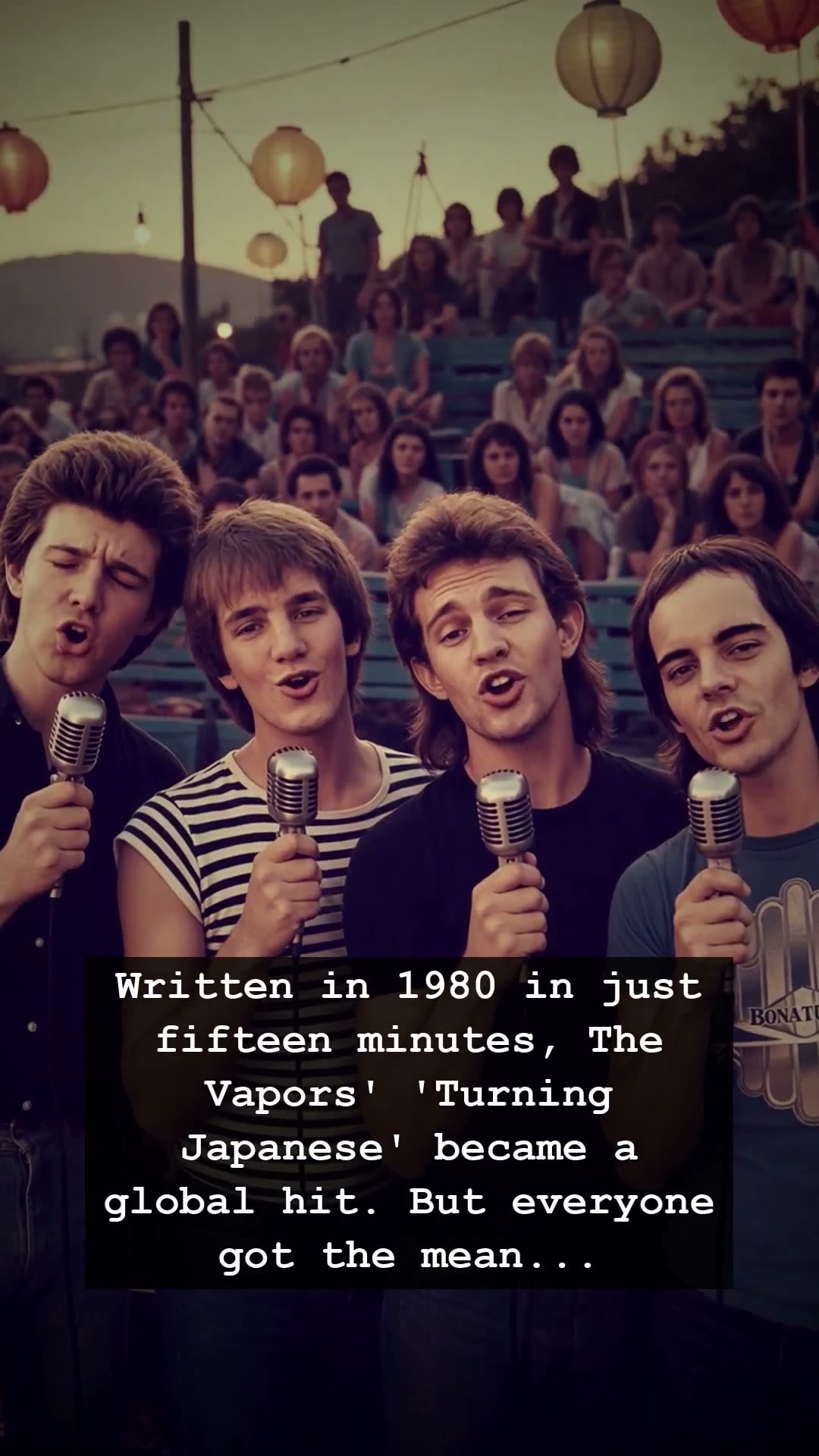
It was 1980, the height of the post-punk explosion, when a track burst out of the speakers of jukeboxes and home stereos that sounded like nothing else on the charts. The Vapors, a band from Guildford, Surrey, delivered a high-octane masterpiece called Turning Japanese. With its frantic, iconic guitar riff and an infectious, driving rhythm, the song seemed tailor-made for the dawn of the MTV era. It hit the airwaves with a ferocity that demanded attention, quickly becoming a global anthem. Yet, for decades, this infectious track has been surrounded by a fog of urban legends and persistent, incorrect theories that have overshadowed the true, deeply personal nature of its songwriting.
Most listeners in the early eighties were quick to slap a label on The Vapors, assuming the song was about something entirely different than what was actually penned. Rumors flew across playgrounds and bars alike, linking the title to everything from illicit substances to cultural stereotypes. In a world where the walkman was just beginning to define how we consumed music in private, these wild rumors traveled fast, embedding themselves into the song’s legacy. However, the truth is far more intimate, grounded in the universal sting of heartbreak rather than any of the sensationalist myths that have plagued the band for over forty years.
The reality is that Turning Japanese was written in a lightning-fast fifteen minutes by the band’s lead singer, David Fenton. In those fleeting, creative moments, Fenton wasn’t writing about international travel or bizarre subcultures. Instead, he was channeling the raw, haunting paranoia that follows a brutal breakup. To Fenton, the title was a metaphor for the physical changes one feels when gripped by the sheer anxiety and mental isolation of a lost love. It was about that moment when your vision feels like it is narrowing, your nerves are frayed, and the world looks completely alien—essentially, feeling like you have turned into someone you don’t even recognize.
Looking back at the musical landscape of 1980, it is easy to see why The Vapors stood out. While the airwaves were crowded with the fading glitz of disco and the burgeoning sounds of new wave, this track possessed a frantic energy that felt quintessentially human. It captured the desperate, jittery feeling of early adulthood, providing a voice for anyone who had ever felt like their life was spiraling out of control. The song remains a masterclass in tension, building up a pressure that never quite releases, much like the emotions Fenton was trying to describe when he first picked up his pen.
Today, the legacy of The Vapors lives on, not just as a one-hit wonder of the eighties, but as a testament to the power of misunderstood art. The song has been featured in countless films and television shows, proving that its appeal transcends its original decade. Behind the catchy hooks and the fast-paced drums lies a story of vulnerability that resonates with anyone who has ever had their heart broken. The next time you find yourself humming that unmistakable riff, remember that behind the myth of Turning Japanese, there was simply a songwriter trying to find his way through the pain of a breakup.