
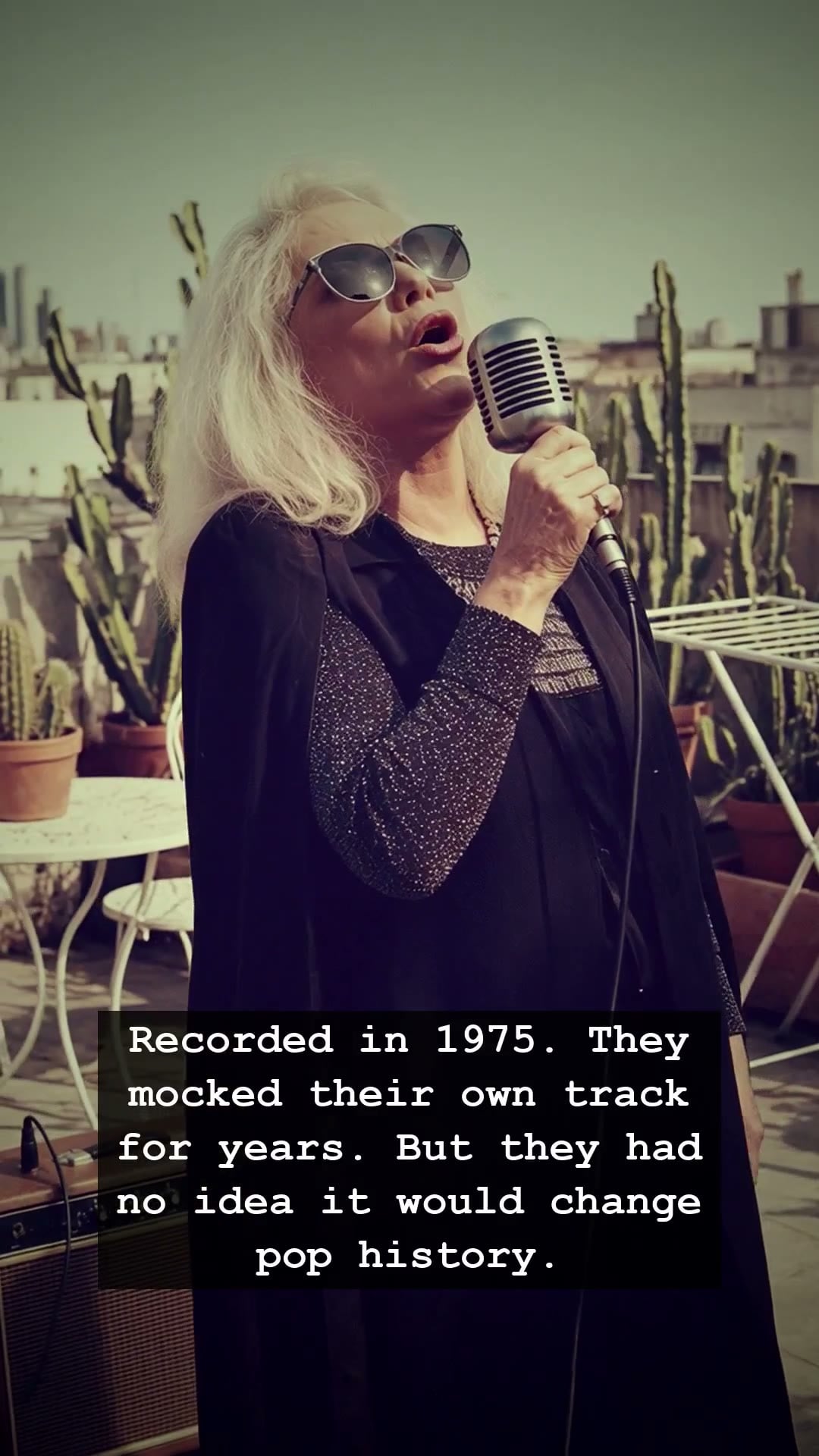
In 1975, the air in the gritty New York club scene was thick with the smell of stale cigarettes and the restless energy of punk. Debbie Harry, with her bleach-blonde hair and icy, effortless cool, was busy crafting a legacy that would soon transcend the dingy walls of CBGB. Yet, during those early days, the band Blondie was experimenting with sounds that felt almost like a betrayal to their purist punk roots. Among their early studio sessions sat a track that the members would openly mock for years, dismissing it as a cheesy departure from the jagged guitar riffs they championed. Little did they know, this ‘accidental’ rhythm would soon become the catalyst that bridged the gap between the underground scene and the polished world of global pop stardom.
At the time, the term ‘disco’ was essentially a dirty word in the rock circles that Debbie Harry navigated. It was seen as the antithesis of the authentic, raw grit of the city streets. But as the decade wore on and the glimmering lights of Studio 54 began to pull the cultural gravity toward the dancefloor, Blondie found themselves at a crossroads. The band members often joked about their foray into the genre, viewing their own experimentation as a cynical, tongue-in-cheek nod to the radio-friendly trends of the late seventies. They played the song with a sense of ironic detachment, never suspecting that the public would fall in love with exactly what they were trying to poke fun at.
Debbie Harry possessed a rare, magnetic quality that could turn even the most ridiculed experiment into a masterclass of cool. When the song eventually hit the airwaves, the backlash from the rock press was immediate, yet the public response was electric. It was the perfect storm of timing and talent. The track offered an infectious, hypnotic groove that invited everyone to the dancefloor, while Debbie Harry delivered vocals that remained rooted in the detached, rebellious spirit of New York punk. By embracing this fusion, Blondie inadvertently rewrote the rulebook of pop history, proving that genres were merely suggestions rather than strict boundaries.
Looking back, it is fascinating to realize that the band’s self-deprecating humor actually helped shape their identity. This skepticism kept them grounded even as they were being catapulted onto the international stage, appearing on MTV and gracing the pages of every major music magazine. The contrast between their punk ethos and the polished, synthesizer-heavy production of their later hits defined the transition from the seventies to the eighties. Debbie Harry became the ultimate icon of this shift—a woman who could stand in front of a jukebox and command the attention of an entire generation without ever compromising her mysterious, enigmatic edge.
Today, the legacy of that 1975 session serves as a reminder that the best music often comes from the friction between where we are and where we are afraid to go. Whether you remember hearing them on a scratchy vinyl record or through the crisp output of a Walkman, the music of Blondie remains a timeless testament to a changing cultural landscape. We still find ourselves swaying to those familiar, accidental rhythms, forever grateful that Debbie Harry and her bandmates didn’t take themselves quite seriously enough to stop the music from making history.