
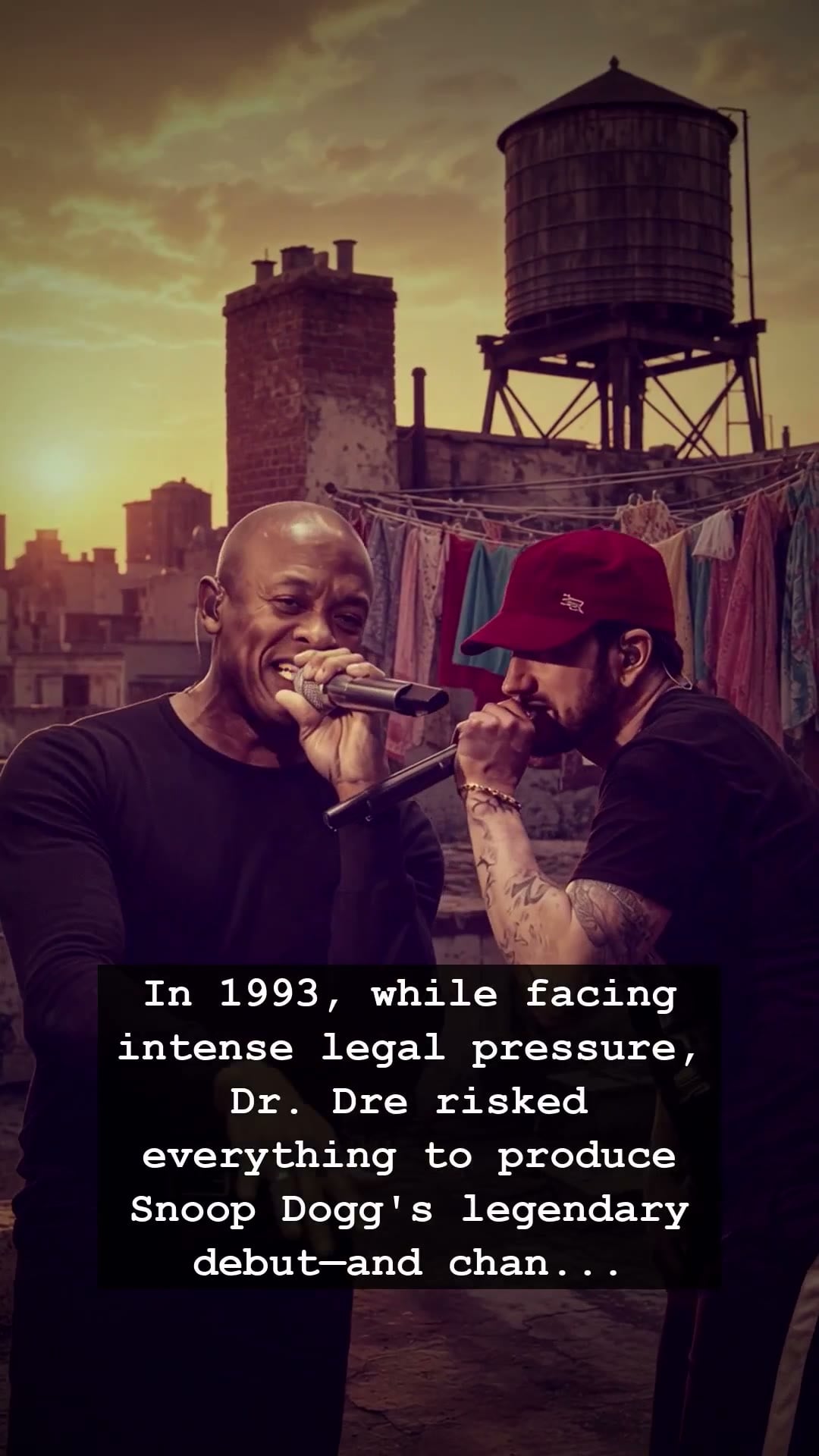
It was 1993, and the air in Los Angeles crackled with an electricity that felt more like a looming thunderstorm than a summer breeze. Dr. Dre, the architect of G-funk, was trapped in the eye of a legal hurricane. With his career teetering on the edge of collapse due to mounting assault charges and the fallout from his volatile exit from N.W.A., most men would have retreated into the shadows. Instead, Dre did the exact opposite. He locked himself inside the studio, channeling every ounce of his suppressed fury, mounting pressure, and artistic perfectionism into the debut album of a young, lanky protégé named Snoop Dogg. The resulting record, Doggystyle, would become the sound of an entire generation, but it was forged in the heat of a personal war.
To understand the magnitude of this moment, you have to remember the era. This was the prime time of the MTV takeover and the rise of the Walkman, where the crisp, deep bass of Death Row Records was shaking the speakers of every customized lowrider on the West Coast. While the music sounded like a hazy, sunny day in Long Beach, the reality behind the glass of the recording booth was anything but relaxed. Dr. Dre was a man obsessed, meticulously layering synthesizers and infectious funk samples until they were perfect. He was betting his entire reputation on Snoop Dogg, a newcomer whose laid-back, melodic flow provided the perfect, dangerous contrast to the darkness clouding Dre’s personal life.
Every hit single that emerged from those sessions felt like a defiant middle finger to the establishment that was trying to silence them. Dr. Dre pushed Snoop Dogg to tap into a lyrical precision that felt effortless, yet carried the weight of the streets. It was a symbiotic relationship; the mentor needed a vessel for his sonic evolution, and the student needed a kingmaker. As they worked, they weren’t just making an album; they were defining the cultural zeitgeist of the early 90s, cementing the West Coast’s dominance in the East-West hip-hop war that was quietly brewing in the background.
Looking back, the success of that project remains one of the most remarkable redemption arcs in music history. Dr. Dre took the chaotic energy of his life and refined it into a diamond-sharp soundscape that remains arguably the most influential production work in the history of hip-hop. He proved that even when the legal system and the media were circling like vultures, an artist’s creative output could be the ultimate shield. It wasn’t just about the chart-topping numbers or the platinum plaques; it was about the raw, visceral proof that genius thrives under the most unforgiving pressure.
Decades later, the legacy of that 1993 collaboration still resonates, reminding us of a time when hip-hop felt truly dangerous and revolutionary. It was a fleeting, lightning-in-a-bottle moment that changed the musical landscape forever. Next time you drop the needle on that record, remember that you aren’t just hearing beats and rhymes—you are hearing the sound of a man fighting for his survival.