
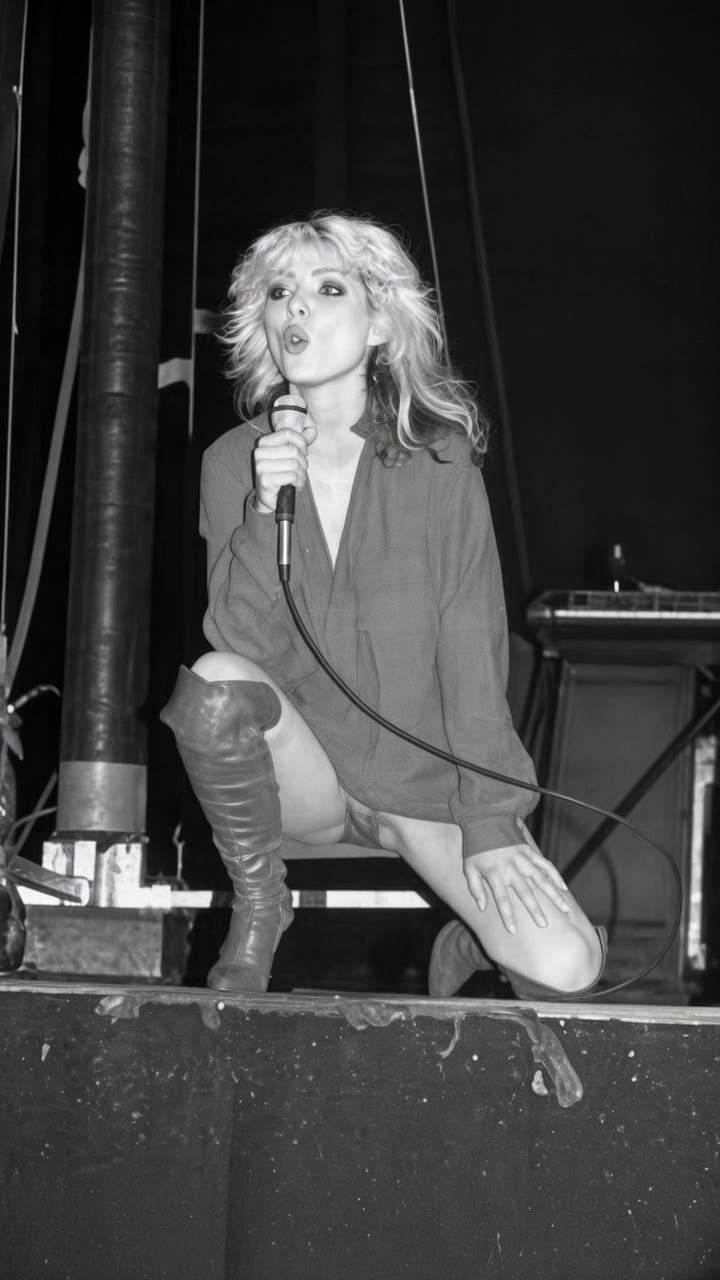
In the grime-streaked, neon-lit streets of 1970s New York, a platinum-haired vision was turning heads. Passersby in the Bowery would often stop dead in their tracks, their eyes wide with disbelief, convinced they had just locked eyes with the reincarnated ghost of Hollywood royalty. It was not Marilyn Monroe, though. It was Debbie Harry, the undisputed queen of CBGB and the mesmerizing frontwoman of Blondie. While the rest of the world was catching the disco fever at Studio 54, Debbie Harry was busy redefining what it meant to be a female rock star in a grit-fueled urban jungle.
To understand the allure of Debbie Harry, you have to transport yourself back to a city teetering on the edge of bankruptcy and brilliance. This was an era when the Jukebox wasn’t just a machine; it was the heartbeat of the bar. Debbie Harry didn’t just sing songs; she wore the aesthetic of the era like a second skin. Her look was a calculated collision of high-fashion glamor and street-level punk defiance. While she channeled the soft, breathy elegance of the fifties screen sirens, her voice cut through the dense smoke of the downtown scene with a sharp, snarling edge that terrified and enchanted in equal measure.
Behind the platinum locks and the iconic red lipstick, however, lay the pressures of a burgeoning musical revolution. Blondie was rising from the underground, struggling to be taken seriously in a music industry dominated by testosterone-fueled rock outfits. Debbie Harry was a master of subversion. She knew that if the public wanted to see a Marilyn Monroe archetype, she could give it to them—but she would deliver that image with the nihilistic punch of a punk rocker. She became a mirror for her audience, reflecting the contradictions of the late seventies: beautiful yet dangerous, commercial yet revolutionary.
The drama behind her rise was as intense as the music itself. The grueling tours, the internal friction of being the focal point of a band that was often dismissed as a mere vehicle for her beauty, and the relentless paparazzi gaze took their toll. Yet, she remained an enigma, rarely letting the mask slip. Those who saw her on the streets of New York in 1978 weren’t just seeing a pop star; they were witnessing a cultural shift. She bridged the gap between the polished perfection of old Hollywood and the chaotic, raw honesty of the post-punk movement that was about to explode into the mainstream.
Decades later, the legacy of Debbie Harry remains untouchable. When we hear the driving bassline of Heart of Glass or the rebellious grit of One Way or Another, we aren’t just listening to nostalgia. We are hearing the sound of a woman who refused to be defined by anyone’s expectations. She reclaimed the blonde bombshell trope and turned it into a weapon of artistic expression. For those of us who long for the days of analog authenticity, she remains the ultimate icon of a New York that no longer exists, reminding us that even the most beautiful stars often carry the heaviest, most complicated stories.