
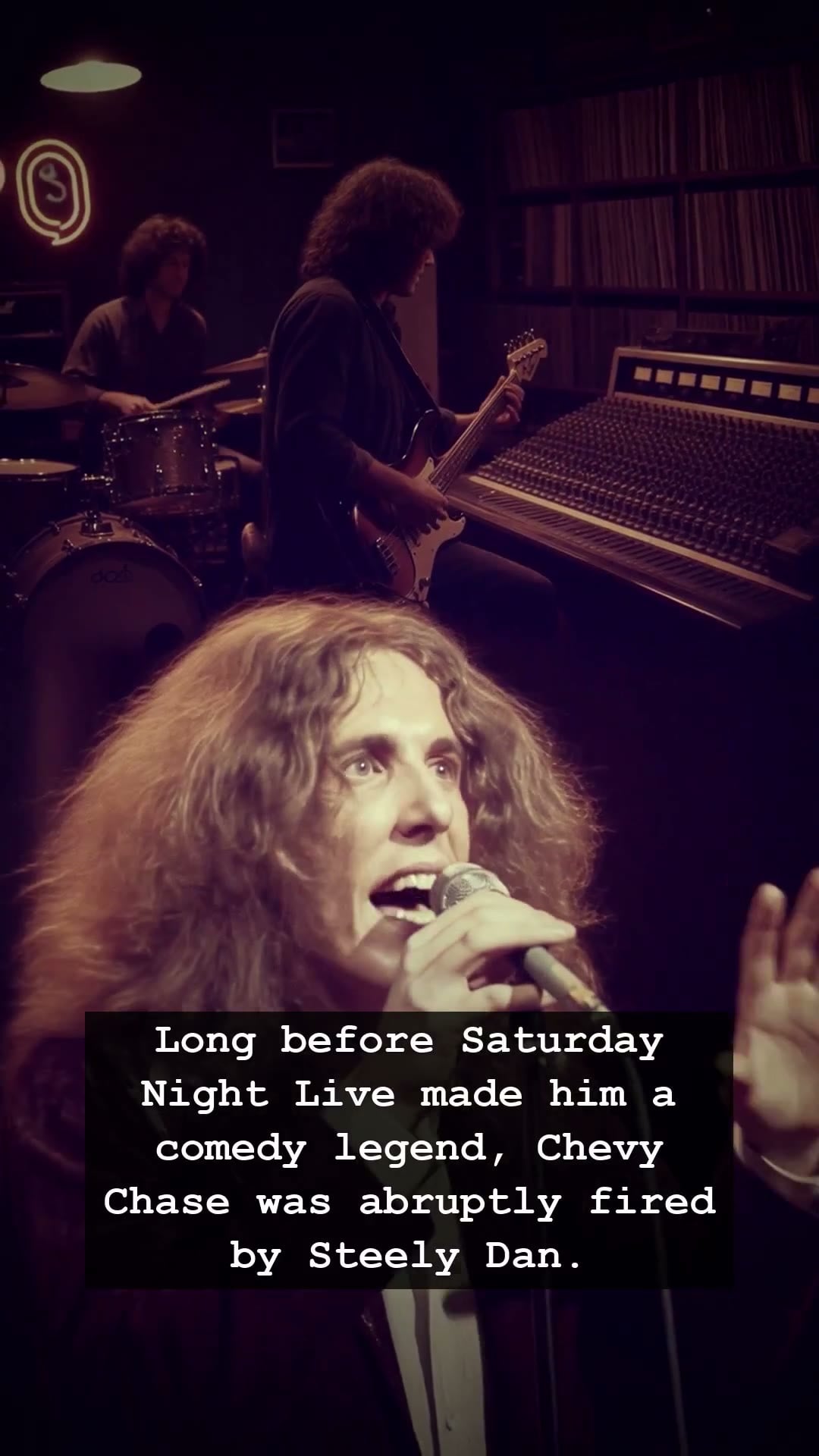
Before the neon lights of Studio 54 and the legendary sketches of Saturday Night Live turned him into a household name, Chevy Chase harbored a very different kind of ambition. In the late 1960s, long before he was a comedic icon, he was simply a musician chasing the quintessential rock and roll dream. He sat behind the keyboards for a budding band that would eventually change the landscape of American music forever: Steely Dan. But in a twist of fate that reads like a forgotten footnote of rock history, his tenure was short-lived, marked by an abrupt departure that steered him toward the soundstage instead of the stadium.
Donald Fagen and Walter Becker, the perfectionist masterminds behind Steely Dan, were known for their uncompromising standards and complex musical structures. During those early days, the band was a melting pot of talent, yet the chemistry needed to survive the duo’s rigorous expectations was elusive. For Chevy Chase, the dream of being a rock star was dismantled when the band leaders decided he simply wasn’t the right fit. It was a cold, professional firing—the kind that cuts deep when you are a young artist convinced you have found your calling. This moment of rejection effectively ended his musical aspirations, but it inadvertently cleared the path for the legendary comedy career that followed.
Imagine the Jukebox of the era—filled with the sounds of Motown and the psychedelic shifts of the late sixties. It was a time when bands were forged in gritty rehearsals and basement studios, long before the polish of the MTV era would redefine fame. Chevy Chase, caught in the transition between these worlds, had to decide whether to continue fighting for a place in the unforgiving music industry or pivot into the unknown. When he was told he was no longer needed in the band, he didn’t just lose a job; he lost the identity he had carefully constructed during those formative years.
This story resonates today because it serves as a reminder of the fragility of success. We often look at icons like Chevy Chase and see only the finished product, never the discarded versions of their past. Had he stayed with Steely Dan, perhaps the sound of the seventies would have shifted, or perhaps he would have faded into obscurity as a mediocre keyboardist. Instead, his failure in the music world became the catalyst for his genius in comedy. It highlights the invisible thread between the heartbreak of a dream denied and the unexpected arrival of true destiny.
Looking back at that era through the lens of nostalgia, it feels like a scene from an unproduced documentary. You can almost smell the cigarette smoke and stale coffee in the cramped rehearsal space where Donald Fagen and Walter Becker finalized the decision that changed everything. Chevy Chase walked away from the piano, leaving his rock star persona behind in the dust. While the world gained a comedic legend, one can’t help but wonder about the songs that might have been, had he held onto his seat for just a little longer. It remains one of those fascinating, humanizing dramas that define the golden age of American entertainment.