
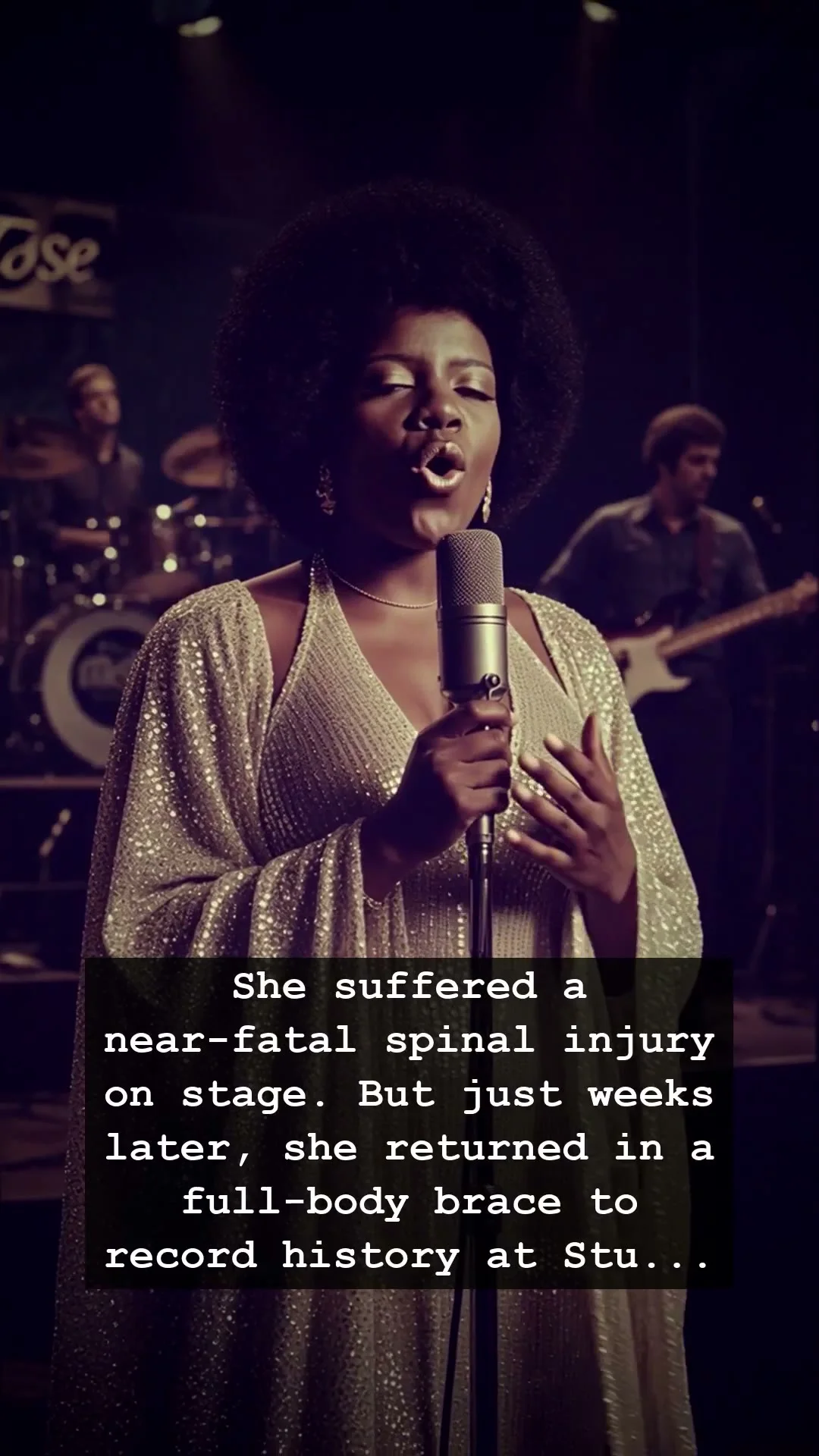
In the golden era of disco, the strobe lights at Studio 54 were meant to distract from the fragility of life, not reveal it. Yet, in 1978, the Queen of Disco, Gloria Gaynor, found herself staring into the abyss of her own mortality. Just weeks before recording one of the most iconic songs in human history, Gloria Gaynor suffered a devastating onstage accident that left her spine fractured. The woman who would soon teach the world about survival was, at that very moment, literally struggling to stand upright. It is a haunting irony that the voice behind an anthem of resilience was vibrating with the physical pain of a near-fatal injury.
Most fans dancing under the glittering mirror balls of the late seventies had no idea that Gloria Gaynor arrived at the recording studio wearing a rigid, full-body steel brace. The pain was excruciating, a constant, sharp reminder of a fall that nearly ended her career and her life. However, when she stepped into the booth to record I Will Survive, the physical agony seemed to fuel the raw, defiant power of her performance. She was not just singing lyrics; she was fighting for her own reclamation. Every note carried the weight of someone who refused to be broken by circumstance, proving that true soul music is born from the deepest wounds.
While the industry was obsessed with the glitz of the disco scene, Gloria Gaynor tapped into something far more ancient and universal. The song became an instant lightning rod for anyone who had ever been discarded, hurt, or pushed to the edge. Studio 54 became the cathedral where this anthem was baptized, turning a personal tragedy into a communal triumph. The production was sharp, the bassline was infectious, and the message was unmistakable. It transformed from a simple disco track into a timeless declaration of independence that echoed far beyond the dance floors of New York City.
Looking back at that transformative year, it is staggering to consider how close we came to losing such a powerful voice. The contrast between the cold, clinical steel of her medical brace and the warm, golden sound of her vocal delivery is a testament to the iron will of Gloria Gaynor. She didn’t just survive the eighties or the era of disco; she transcended them. Her story reminds us that even when the lights dim and the music stops, the resilience of the human spirit is the most enduring record we can ever leave behind.
Even today, whenever those familiar strings begin to swell in a crowded room, we aren’t just listening to a hit record. We are witnessing the echoes of a woman who chose to rise when she could have easily fallen. Gloria Gaynor gave us the soundtrack to our own recoveries, proving that even with a broken back, you can still reach the top of the charts. Next time you hear the opening bars, remember the brace, the pain, and the courage it took to record that masterpiece. It is a story that refuses to fade, just like the song itself.