
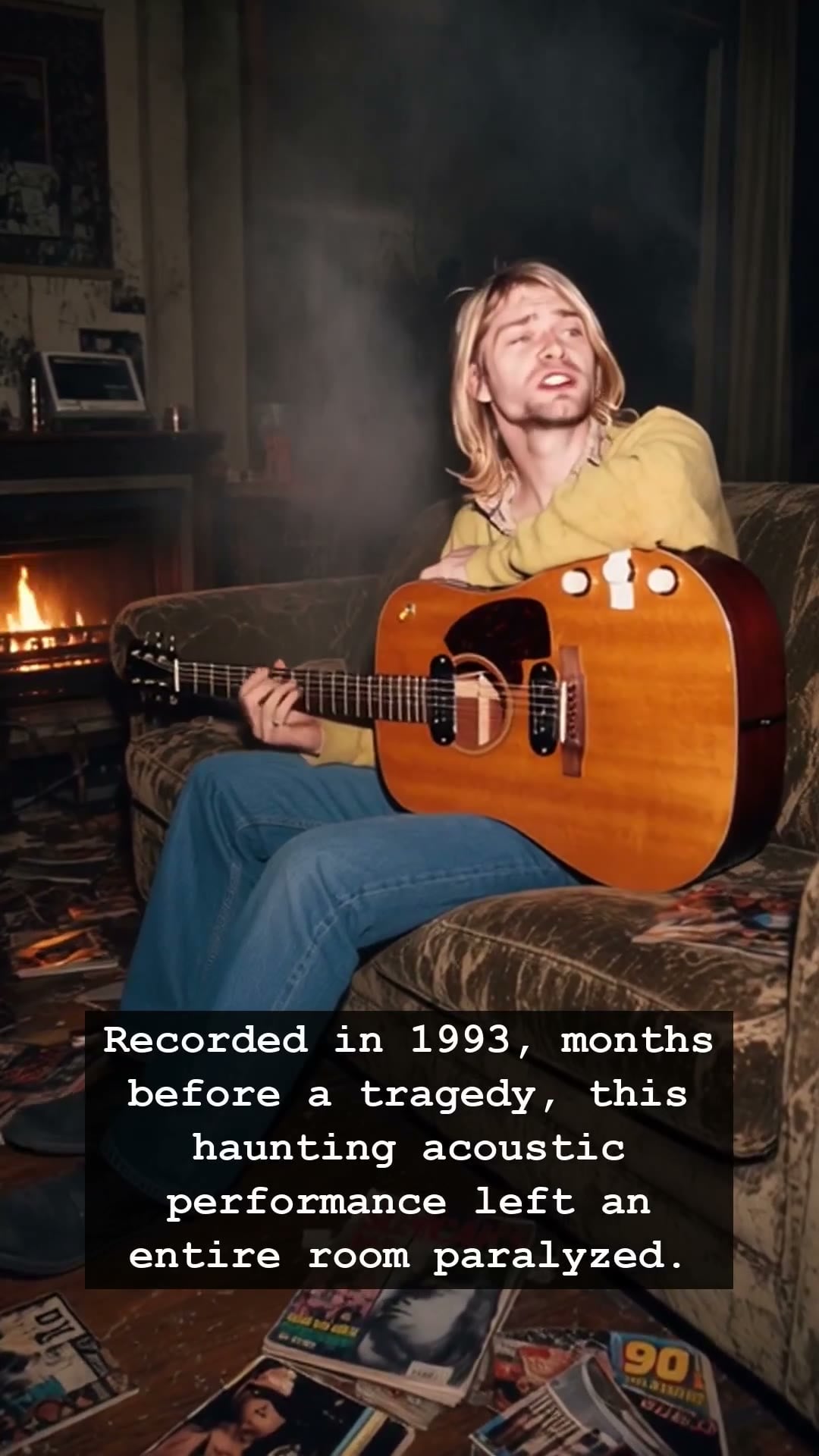
The air in the Sony Music Studios in New York felt heavy on that November evening in 1993. It was a stark departure from the typical, loud, and messy grunge performances that defined the era. Nirvana had arrived to record their MTV Unplugged session, but instead of the usual distorted feedback and angst-filled anthems, we were given a glimpse into the fragile soul of Kurt Cobain. Stripped of the amplifiers and the wall of noise that usually acted as his armor, Kurt Cobain looked small, vulnerable, and profoundly exhausted. It was a performance that would eventually cement his status as a tragic icon of the nineties, though at the time, few realized it was a haunting farewell.
The stage was draped in lilies, candles, and black velvet, resembling a funeral setting that made the audience feel like they were witnessing a wake rather than a concert. Kurt Cobain sat hunched over his acoustic guitar, his voice shifting from a raspy whisper to a raw, throat-tearing scream that seemed to manifest the internal turmoil he had been battling for years. As the session unfolded, the silence in the room became palpable. Every member of the audience sat paralyzed, held captive by a man who seemed to be singing his own eulogy. There was no artifice, no rock star ego; there was only the cold, piercing reality of a genius unraveling in real-time.
Throughout the late eighties and early nineties, Nirvana had shifted the landscape of rock music, moving it from the neon-soaked excess of the eighties into a darker, more introspective space. Yet, the pressure of global fame and the constant intrusion into his personal life weighed heavily on Kurt Cobain. During this Unplugged set, his choices of cover songs—specifically those of the Meat Puppets and the haunting closing rendition of Where Did You Sleep Last Night—revealed a deep sense of longing and displacement. His final note in that last song, a guttural, terrifyingly real scream, still rings through the archives of rock history as one of the most chilling moments ever recorded.
For those of us who grew up with the static of the radio and the grainy footage on MTV, this performance remains a touchstone of raw, unfiltered emotion. It represents the duality of the era: the massive reach of global stardom clashing with the desperate need for human connection and solitude. Kurt Cobain was not just a musician; he was the voice of a generation that felt lost in the transition between decades, and his vulnerability during that 1993 session only magnified the shock that would follow just months later in 1994.
Decades later, the tragedy of Kurt Cobain continues to haunt those who revisit this performance. It serves as a stark reminder of the dark cost of fame and the fragility behind the most legendary voices in rock history. As the final notes faded into the quiet of that studio, a chapter of music history closed forever, leaving behind an echo that refuses to be silenced.