
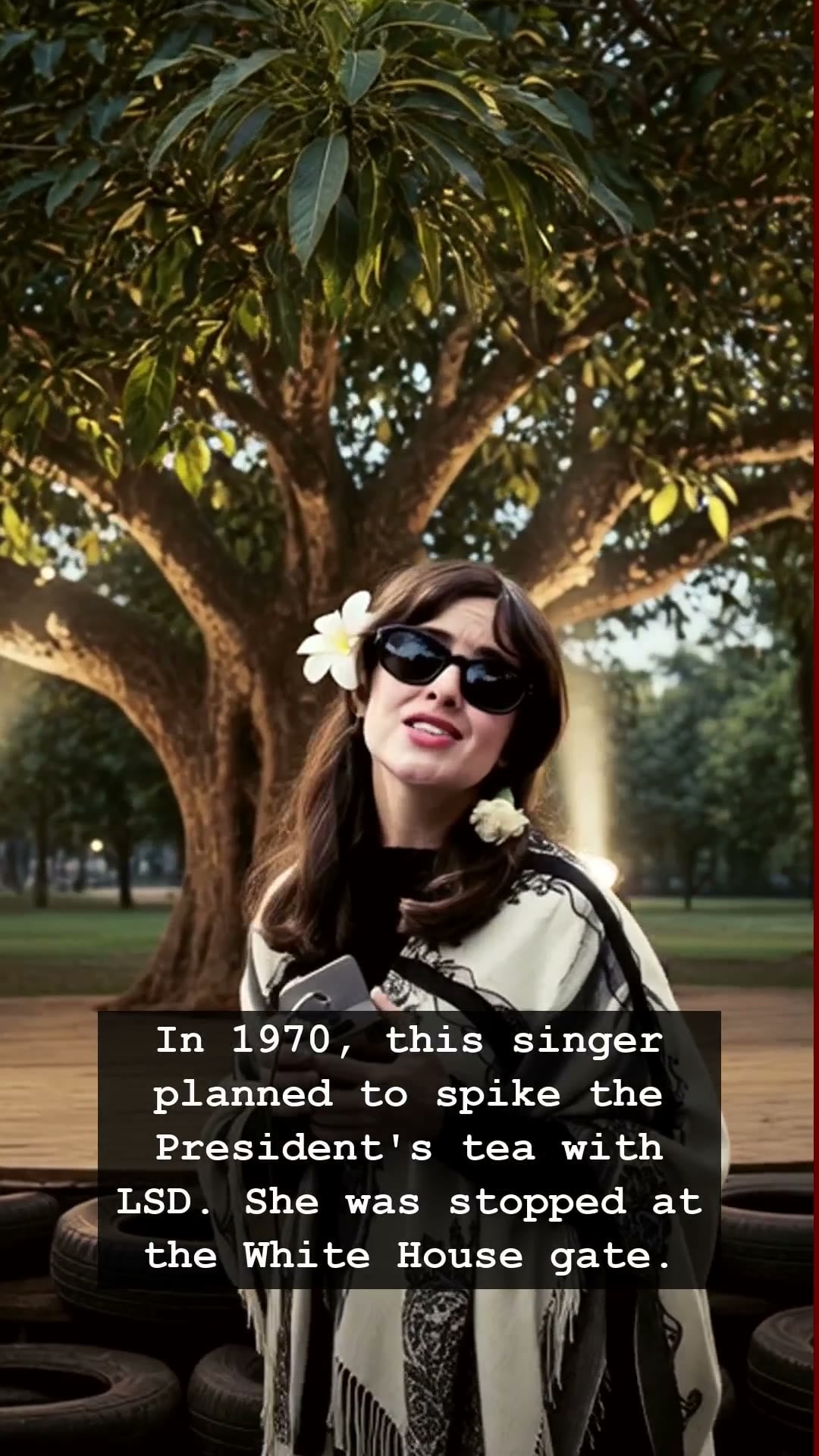
The year was 1970, and the air in America was thick with the scent of burning protest signs and the fading echoes of Woodstock. Amidst the chaos of the Vietnam War, one voice stood out for its piercing, crystalline intensity: Grace Slick. As the formidable frontwoman of Jefferson Airplane, she was the high priestess of the psychedelic rock movement, a woman who carried the counterculture’s rage and rebellion like a velvet-clad weapon. But her defiance reached a fever pitch that year when she concocted a plan so audacious, so chaotic, and so perfectly reflective of the era that it sounds more like a fever dream than history. She intended to slip six hundred micrograms of LSD into President Richard Nixon’s tea.
Imagine the scene: a formal White House garden party, the stiff collars of the political elite, and the calculated, subversive genius of Grace Slick lurking just beyond the gates. It was the ultimate intersection of the suit-and-tie establishment and the acid-drenched revolution. Slick was an alumna of Finch College, and she had been invited to a White House alumni tea. She wasn’t going to waste the opportunity to bring the psychedelic revolution directly to the Commander-in-Chief. She had the substance prepared, a massive dose meant to turn a day of diplomatic pleasantries into a surreal kaleidoscopic experience for the man leading the country through its most divisive conflict.
Security, however, was tighter than a snare drum. As Grace Slick approached the entrance, her reputation preceded her. She was a known firebrand, a symbol of everything the administration feared. Guards stopped her at the gate, perhaps sensing the mischievous electricity in her eyes or simply wary of the counterculture icon. The plan was thwarted before the first drop could hit a porcelain cup. While the history books might downplay the incident, for those who lived through the era of the Jukebox and the rise of experimental consciousness, it remains a defining moment of artistic rebellion. It was a time when musicians didn’t just sing about change; they tried to dismantle the walls of power with whatever tools they had at their disposal.
Grace Slick remained unapologetic, a testament to the uncompromising spirit of the late sixties and early seventies. That moment at the White House gate became a folklore staple among the youth who gathered around record players to hear the haunting, soaring notes of White Rabbit. It captured the desperate, exhilarating frustration of a generation trapped in a cycle of war and disillusionment. Even decades later, when we look back at the shift from the peace-and-love optimism of 1967 to the gritty, cynical edge of 1970, the shadow of Grace Slick looms large. She represented the unvarnished reality of an artist willing to risk everything, including prison, to challenge a world she felt was spiraling into darkness.
Today, we often romanticize the psychedelic era, but the story of Grace Slick serves as a jarring reminder of how real, how dangerous, and how deeply personal the conflict truly was. It was a time when the music was loud, the politics were lethal, and the divide between the establishment and the streets was a chasm that only rock and roll could bridge. As the echoes of that era fade, we are left with the music, the myths, and the enduring image of a woman who almost changed history with a single cup of tea. It is a story that reminds us why we still turn to the sounds of the past to find a bit of that raw, uninhibited truth.