
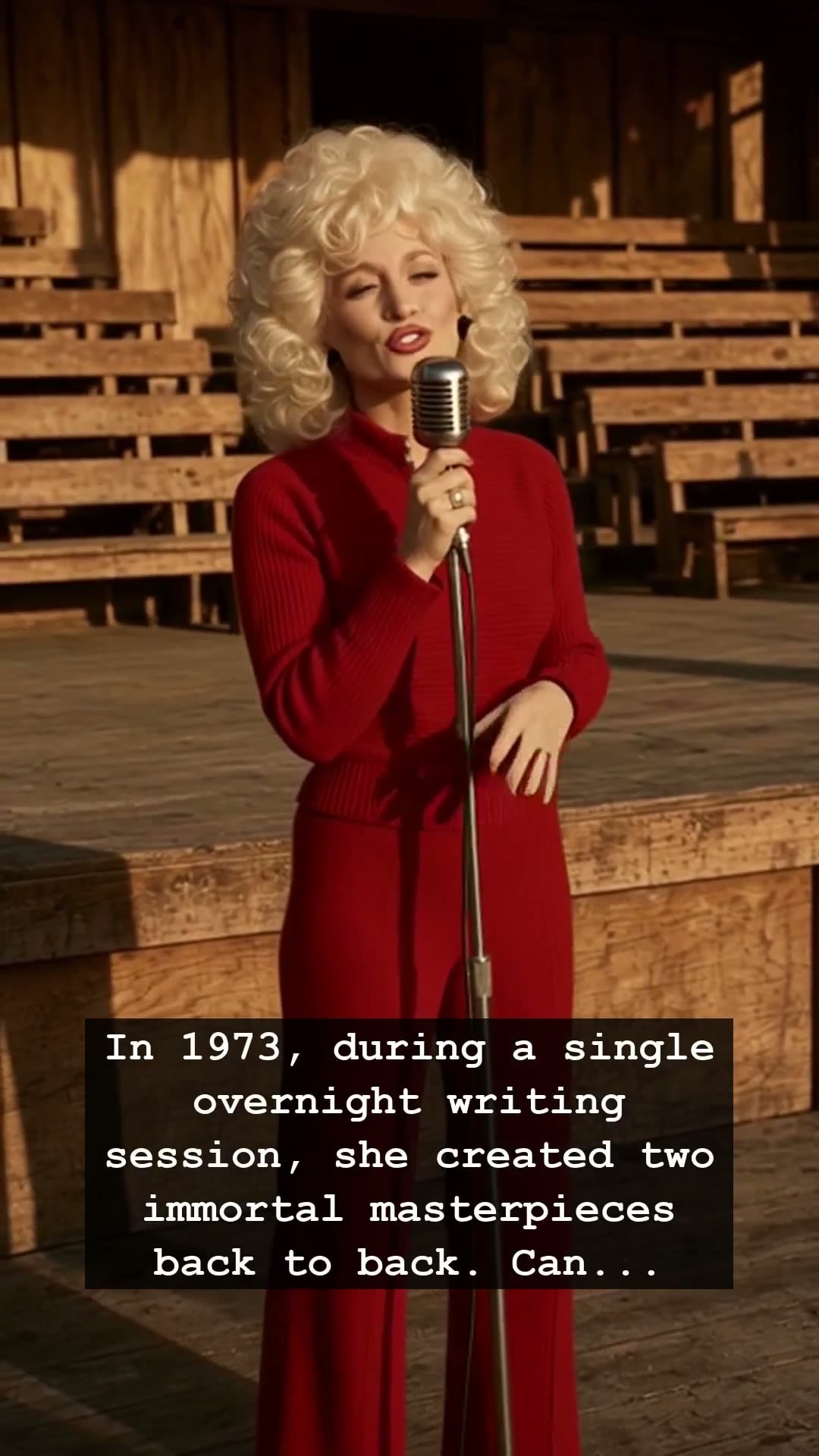
In the golden era of country music, when the hum of a jukebox was the heartbeat of every American diner, a creative lightning bolt struck that would change history forever. It was 1973, a year defined by the shifting cultural tides following the Woodstock era, and Dolly Parton sat alone in the quiet intensity of her room. Most songwriters labor for months to craft a single hit, but in one transcendent, sleepless night, Dolly Parton achieved the impossible. She managed to pen two of the most iconic songs in music history back-to-back: the heart-wrenching ballad Jolene and the fiercely autobiographical I Will Always Love You. It was an astonishing creative burst that continues to leave music historians and fans breathless decades later.
To understand the magic of that night, you have to transport yourself back to the seventies, a time when the analog crackle of a vinyl record felt like a personal confession. Dolly Parton was already a rising star, navigating the rigid, often patriarchal landscape of the Nashville music scene. She was more than just a songwriter; she was a master storyteller who used her rural roots to weave tales of longing, pride, and vulnerability. Jolene, inspired by a red-headed bank clerk who had caught her husband’s eye, became an instant anthem of insecurity and grace. Meanwhile, I Will Always Love You—often misunderstood as a simple breakup song—was actually a bittersweet farewell to her mentor and creative partner, Porter Wagoner. It was a moment of raw, professional, and personal crossroads captured perfectly in melody.
What makes this story so captivating is the sheer humanity behind the legends. While the world would later consume these tracks via the high-fidelity sound of the Walkman or the polished production of MTV’s golden age, the origin of these hits was remarkably stripped-back and intimate. Dolly Parton didn’t have a massive production team or a team of ghostwriters; she had nothing but a notepad, a guitar, and a spirit that was brimming with stories waiting to be told. The fact that two such distinct emotional pillars of American music emerged from the same mind in the same few hours serves as a testament to her genius and the intensity of her life during that pivotal year.
Even today, these songs remain untouchable, transcending genre and generation. Whether they are being performed on a massive stage or hummed quietly in a nostalgic living room, they possess an enduring quality that feels as fresh as it did in 1973. Dolly Parton turned personal heartache into universal catharsis, proving that the deepest pain often produces the most enduring art. Her ability to tap into the collective human experience is what keeps her legacy shimmering, a bright light in the vast history of country and pop music.
Looking back at that night, it is easy to see why Dolly Parton remains an icon. She didn’t just write songs; she wrote the soundtrack for millions of lives, capturing the precise moment where sorrow meets acceptance. It is a reminder that behind every legendary track, there is a human story, a long night of reflection, and the quiet courage to share one’s soul with the world. Next time you hear the opening notes of Jolene, take a moment to imagine that quiet room in 1973, where a legend was busy writing the future of music.