
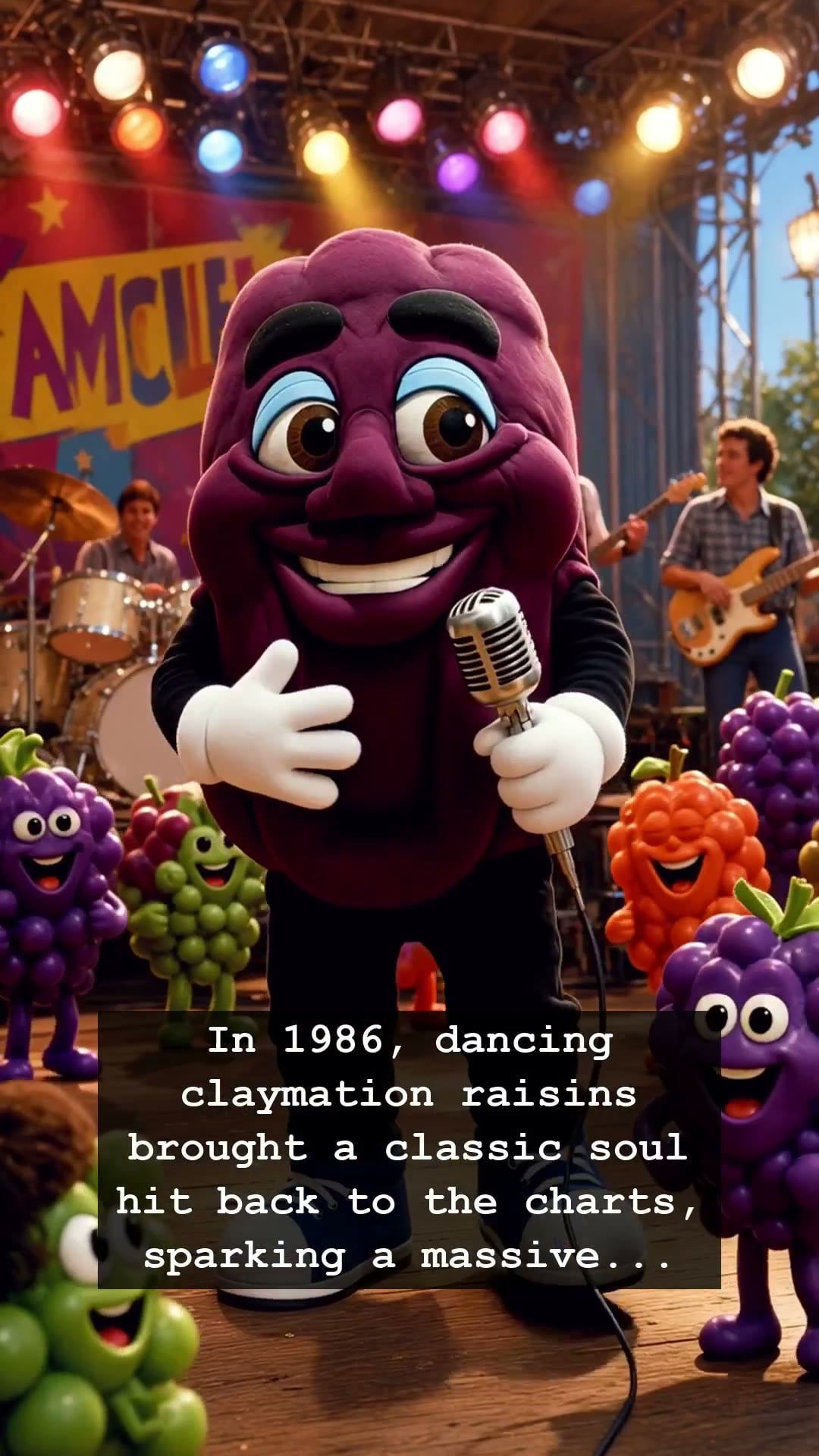
It was 1986, a time when the hum of a Walkman was the soundtrack of youth and the neon glow of MTV was busy reshaping the visual landscape of music. Suddenly, the television screens exploded with something entirely unexpected: a group of wrinkled, singing, dancing claymation raisins. They were not musicians in the traditional sense, but the California Raisins became the most unlikely pop stars in history. Their existence was a bizarre masterclass in marketing, yet they managed to do the impossible by thrusting a forgotten classic soul hit back into the mainstream consciousness, proving that even a piece of dried fruit could command the attention of an entire generation.
The song in question was Marvin Gaye’s iconic 1968 hit I Heard It Through the Grapevine. By 1986, the soulful masterpiece had long since settled into the nostalgia archives, yet the California Raisins revived it with such unexpected charisma that it stormed the Billboard charts once more. This wasn’t just a quirky commercial for the California Raisin Advisory Board; it was a cultural phenomenon that blurred the lines between high-end commercial animation and authentic Motown soul. Millions watched in fascination as these clay characters brought a groove that felt both vintage and refreshingly new to a 1980s audience hungry for novelty.
Behind the whimsical facade of the California Raisins lay a complex web of studio magic and creative tension. The industry was reeling from the post-disco transition, and producers were desperate for ways to capture the attention of a distracted MTV demographic. The decision to use a classic soul track was a gamble, but the sheer aesthetic contrast—soulful, grit-filled vocals paired with soft, malleable clay—created a surreal tension that hooked viewers instantly. It was a bizarre meeting of worlds: the raw, emotional vulnerability of late-sixties soul music and the sterile, high-concept precision of eighties commercial puppetry.
As the craze grew, the California Raisins became more than just a marketing gimmick; they were a legitimate, albeit strange, pop culture force. They spawned lunchboxes, toys, and even television specials, infiltrating the homes of Boomers who remembered the original track and Gen Xers who were discovering the magic of soul music for the very first time. Yet, beneath the commercial success, there was an underlying sense of melancholy for the era. The California Raisins represented a fleeting moment where corporate ingenuity could accidentally stumble upon a beautiful tribute to the masters of the past.
Today, the legacy of the California Raisins remains a testament to the unpredictable nature of fame and the enduring power of a great song. They remind us of a time when the world was smaller, tethered by shared television moments and the communal experience of hearing a familiar beat on the radio. While the era of claymation dominance has long faded, the California Raisins stay etched in our collective memory, a wrinkly, soulful reminder that music—even when channeled through a dancing raisin—never truly dies.