
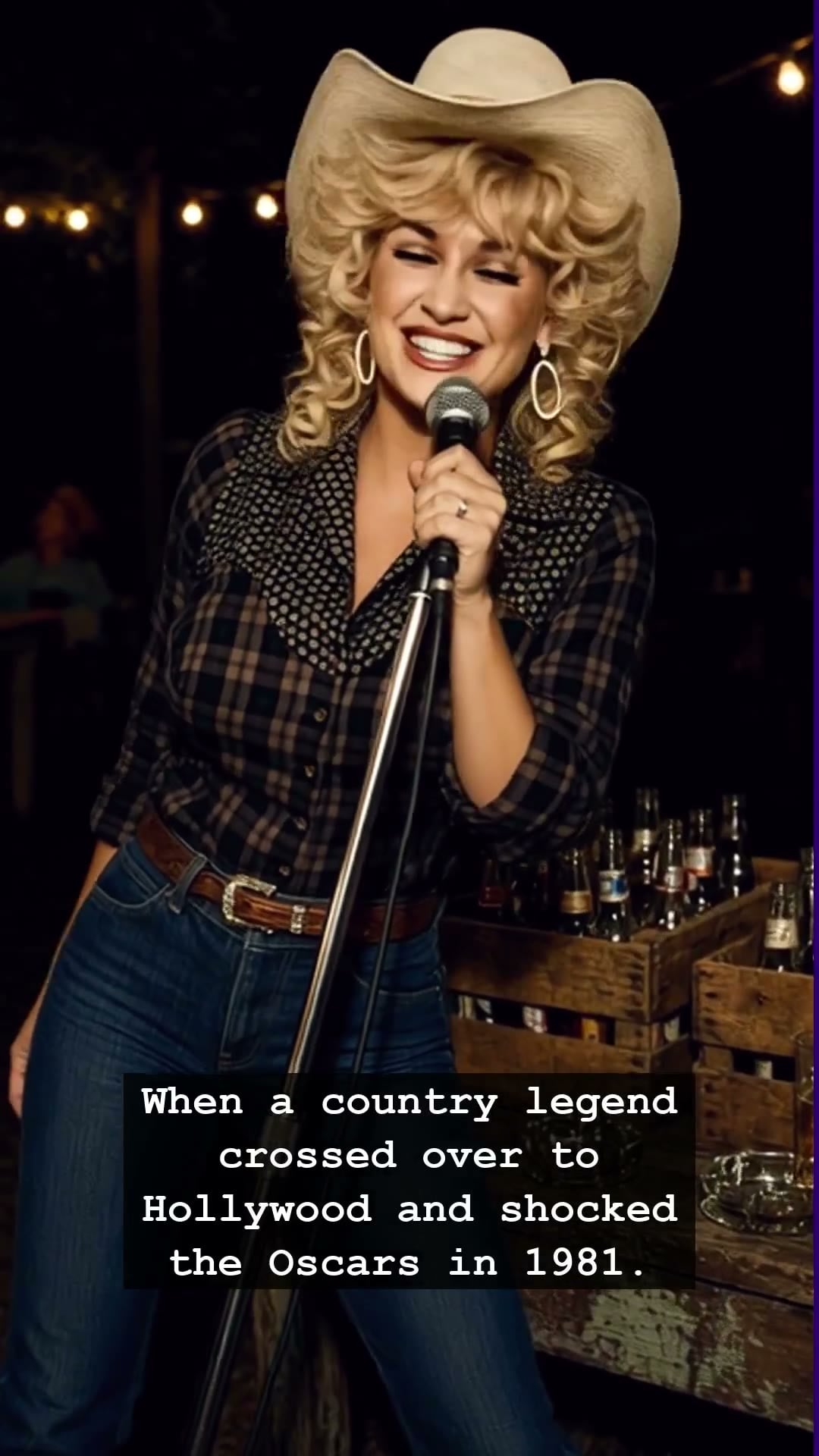
The year was 1981, and the glitz of the Academy Awards was firmly held by the established titans of Hollywood. Into this polished, elite atmosphere walked a woman with a voice as big as her iconic blonde hair, a country queen whose rhinestone-studded wardrobe seemed worlds away from the tuxedoed formality of the Oscars. Dolly Parton had arrived, not just to attend, but to challenge the status quo. She was nominated for Best Original Song for 9 to 5, a workplace anthem that had already become a cultural phenomenon, forever changing the way millions viewed the daily grind of the American office.
To understand the magnitude of this moment, one must look back at the landscape of the late seventies and early eighties. This was a time when the Jukebox in every corner diner was dominated by the twang of Dolly Parton, yet the bridge between country stardom and cinematic respect was rarely crossed. When she stepped onto the screen in the film 9 to 5 alongside Jane Fonda and Lily Tomlin, skeptics were ready to dismiss the country legend as a novelty. Instead, she delivered a performance that was raw, relatable, and deeply charismatic, proving that her talent transcended the boundaries of Nashville’s music row.
The song itself was a masterclass in songwriting, born from the clacking of her own acrylic nails, which she used as a rhythmic percussion instrument to track the melody in her head. While the catchy chorus became a radio staple, the lyrics carried a sharp, biting social commentary on the exploitation of the working class. It captured the exhaustion, the frustration, and the secret solidarity of employees who were finally tired of being pushed around. It was a cry for dignity that resonated far beyond the rural heartland, reaching into the cubicles of bustling cities and the homes of every blue-collar family in America.
The drama behind the scenes was equally compelling. Dolly Parton wasn’t just playing a character; she was channeling the spirit of millions of women who had long been the backbone of the workforce without proper recognition. By earning that Academy Award nomination, she sent a shockwave through the entertainment establishment. It was a pivotal moment where the line between genre-specific fame and true pop culture icon status dissolved. She proved that a girl from the Smoky Mountains could write an anthem for the entire nation, standing tall against the traditional gatekeepers of Tinseltown.
Decades later, the legacy of that song continues to echo. We remember the hair, the outfits, and the sharp wit, but we also remember the fire in her eyes that night in 1981. Dolly Parton did more than just write a hit; she gave voice to the voiceless and proved that true talent eventually demands to be recognized. Even today, whenever that familiar typewriter rhythm kicks in, we are transported back to a time of social change, iconic cinema, and the undeniable power of a legend who refused to be boxed in.