
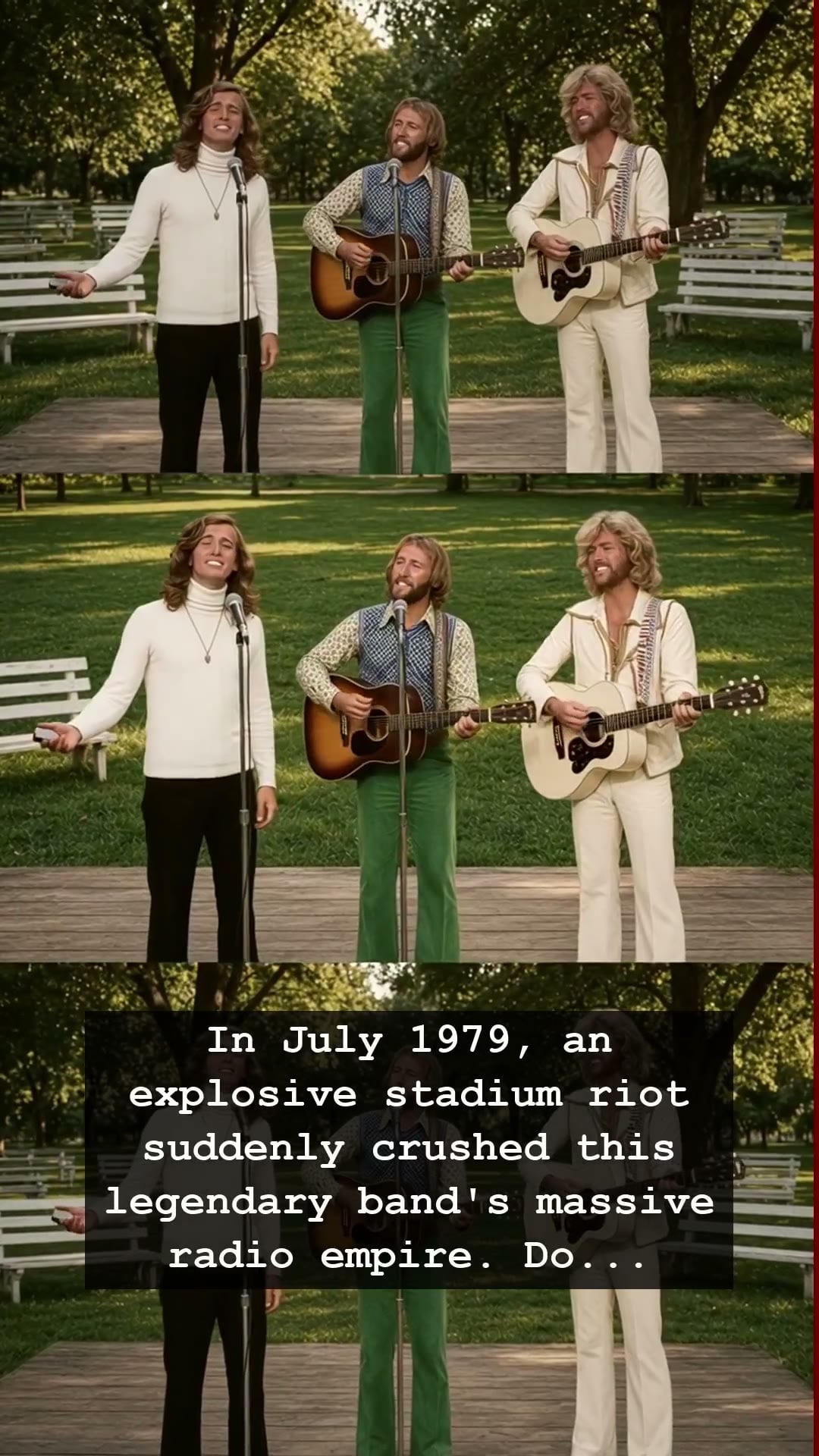
On a scorching July evening in 1979, the Comiskey Park stadium in Chicago was meant to be the epicenter of a musical revolution. Instead, it transformed into a terrifying war zone. As tens of thousands of rock fans descended upon the field to participate in the infamous Disco Demolition Night, the sheer, visceral hatred aimed at a single group reached a boiling point. The Bee Gees, the undisputed kings of the era, found themselves caught in the crosshairs of a cultural purge that would forever alter their trajectory and leave a permanent scar on the face of American pop music.
The Bee Gees were not merely a band; they were a global phenomenon that had effectively soundtracked the late seventies. With their falsetto harmonies and the iconic white suits that defined the Saturday Night Fever era, the brothers Gibb had conquered the charts. They were the architects of a sound that dominated the airwaves, from the intimacy of a local jukebox to the neon-soaked dance floors of Studio 54. Yet, their ubiquity became their undoing. The backlash against disco was fueled by a complex mix of underground resentment and rock-and-roll gatekeeping, and the Bee Gees became the lightning rod for all that anger.
When the crate of disco records exploded on the field that night, it wasn’t just vinyl that shattered; it was the Bee Gees’ absolute grip on mainstream radio. The riot was the manifestation of a ‘Disco Sucks’ movement that had been simmering for years, but the speed at which the industry turned its back on the brothers was staggering. For a group that had penned some of the most sophisticated melodies in history, being effectively blacklisted from American radio overnight was a traumatic, professional heartbreak. The music industry, always fickle and driven by the bottom line, quickly pivoted away, leaving the Bee Gees to navigate the ruins of their own massive empire.
Looking back, the destruction at Comiskey Park feels less like a spontaneous protest and more like a pivotal moment where pop culture lost its sense of nuance. The Bee Gees were unfairly blamed for the commercial saturation of the genre, despite their roots being deeply embedded in soul, rhythm and blues, and songwriting craft. They survived the carnage, eventually reinventing themselves as prolific songwriters for other legends, but the events of 1979 remained a haunting chapter in their biography. It was a cold reminder of how quickly the spotlight can turn into a burning, destructive force.
Today, the legacy of the Bee Gees is finally being viewed with the respect it deserves, untarnished by the vitriol of that night. When we hear the opening notes of Stayin’ Alive or How Deep Is Your Love, we aren’t just hearing disco—we are hearing the enduring resilience of a band that survived their own public crucifixion. Their story is a timeless reminder that while music trends may rise and fall, true artistry is the only thing that eventually rises from the ashes.