
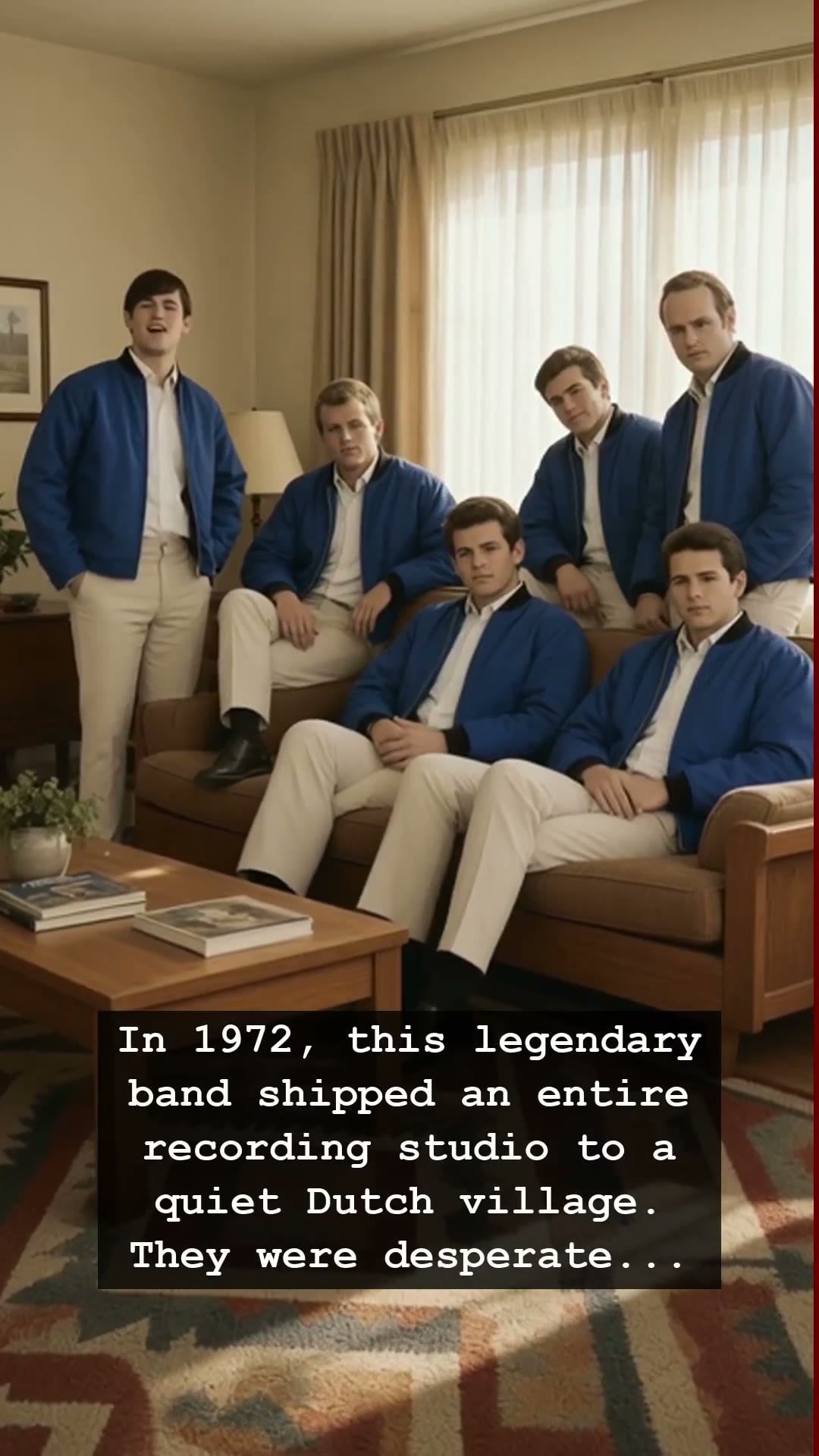
By 1972, the sun-drenched harmonies that once defined the American dream were beginning to fade into a hazy, fractured reality for The Beach Boys. The band was no longer the pristine group of surf-rock icons singing about hot rods and catching waves. They were a collective struggling under the weight of their own legacy, battling internal fractures and the shifting tide of a music industry that had moved on to the grittier sounds of the burgeoning rock era. In a move that defied logic and spoke volumes of their desperation, the band packed up an entire state-of-the-art recording studio and fled across the Atlantic to the quiet, unassuming village of Baambrugge in the Netherlands. They weren’t there for a vacation; they were hunting for a miracle to save their crumbling sound.
The decision to relocate an entire studio to a Dutch farmhouse was the ultimate act of artistic isolation. The Beach Boys were attempting to recreate the creative alchemy that had once made them the architects of the West Coast sound, but the atmosphere in Baambrugge was worlds away from the California sunshine. The air was thick with the scent of wet fields, not salt spray, and the isolation served as a mirror for their own internal discord. Brian Wilson, the visionary genius whose fragile mental state had already cast a long shadow over the band’s trajectory, was drifting in and out of focus, while the other members grappled with the pressure of remaining relevant in a world that favored the emerging sounds of the mid-seventies.
Living and working in this Dutch hamlet, The Beach Boys turned the farmhouse into a makeshift bunker. Cables snaked across ancient floorboards, and the warmth of vacuum tubes glowed against the cold European nights. It was here, far from the pressures of American record executives and the intrusive gaze of the press, that they poured their existential dread into the music. This period of their history is often overlooked, overshadowed by the massive commercial hits of the early sixties, yet it represents a critical turning point. It was an era where the group sought to evolve from a pop machine into a sophisticated artistic unit, despite the chaos threatening to tear them apart at the seams.
For those of us who grew up with the crackle of a jukebox or the hum of a Walkman, the story of The Beach Boys in the Netherlands is hauntingly human. It reminds us that behind every polished melody we cherish, there were real men grappling with insecurity, substance abuse, and the terrifying prospect of obsolescence. The resulting recordings from that Dutch chapter capture a band in transition, sounding both fragile and strangely liberated from the expectations of their past. It serves as a stark reminder that even the biggest legends of the rock and roll era were subject to the same human failures as the rest of us.
Today, when we spin their records, we aren’t just listening to vocal harmonies; we are listening to the echoes of a band that traveled to the ends of the earth to save themselves. That desperate gamble in 1972 didn’t yield a commercial masterpiece, but it remains one of the most intriguing chapters in the history of American music. It underscores why we remain so fascinated by the titans of that golden age. Whether they were performing at Woodstock or hiding away in a foreign farmhouse, their journey remains a part of the soundtrack of our lives. Next time you drop the needle on a classic track, listen closely for the ghosts of the story behind the song.