
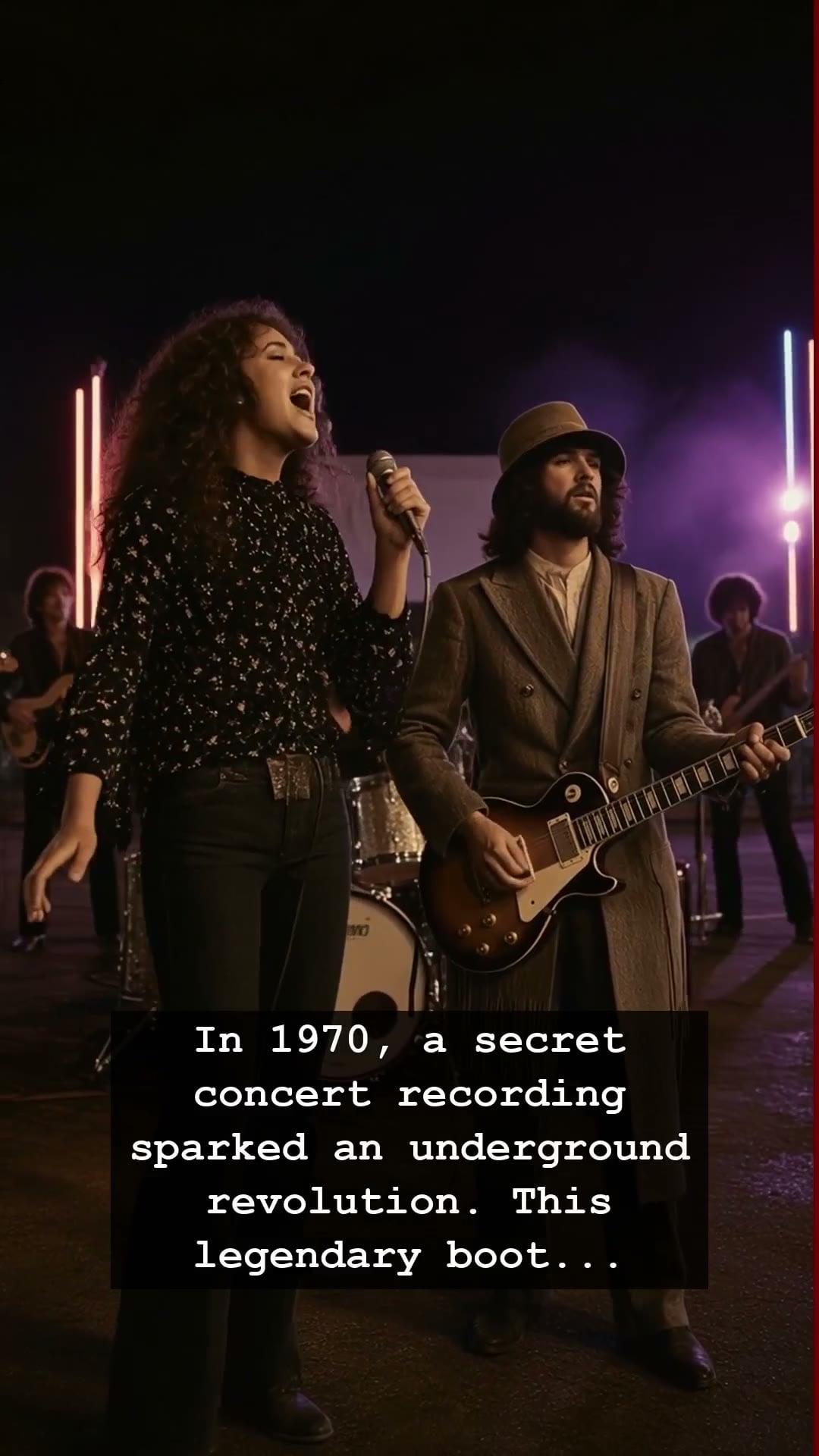
It was 1970, an era defined by the crackle of vinyl and the raw, untamed energy of the concert hall. In the haze of a dimly lit venue, a secret microphone was hidden, waiting to capture a sound that would soon echo through the underground music scene like a sonic earthquake. Led Zeppelin was at the absolute peak of their mystical, blues-infused powers, yet they had no idea that a grainy, unauthorized tape of their performance was being recorded. This was the birth of the legendary bootleg, a piece of music history that would eventually leak into the hands of fans, forever changing the way we consume and appreciate the live genius of rock giants.
At the time, Led Zeppelin was already a force of nature, a band that combined the heavy thunder of Jimmy Page’s guitar riffs with Robert Plant’s banshee wails. But there was something visceral and dangerous about their live shows that the pristine studio albums couldn’t fully contain. The bootleg, capturing a rare live cover and improvised jams, became a holy grail for fans. It wasn’t just a recording; it was a captured moment of lightning. It allowed listeners to feel the sweat, the static, and the chaotic magic of the 1970s rock arena, creating a bridge between the listener and a band that felt almost godlike in their status.
These bootlegs were the original internet leaks, passed from hand to hand in plain paper sleeves, traded in school parking lots and record shop corners. While the industry hated them, the fans treated these tapes like religious artifacts. For Led Zeppelin, these recordings were a double-edged sword. On one hand, they proved the band’s absolute dominance as a live act; on the other, they exposed the raw, unfiltered, and sometimes messy reality of their life on the road. It was a time when the myth was just as important as the music, and these tapes added layers of mystery to a band already shrouded in folklore.
Why does this story still resonate in our modern, streaming-heavy world? It is because we crave the authenticity of that era. Today, every performance is polished and archived in high definition, but back then, you had to be there, or you had to be lucky enough to find that one specific tape. That sense of discovery is what defined the spirit of rock and roll. The Led Zeppelin bootleg culture forced the industry to pay attention to what the audience truly wanted: the unvarnished truth of a band in its prime, caught in the act of reinventing music history.
Even decades later, listening to those crackling, lo-fi tracks brings back the spirit of the Woodstock generation and the grit of the classic rock era. It serves as a haunting reminder of a time when music was an underground rebellion rather than a polished product. Whether or not you were there to trade these tapes back in the day, the legend of that 1970 recording remains a testament to the band’s enduring power. Do you still have your old tapes hidden away in an attic, waiting for one last spin?