
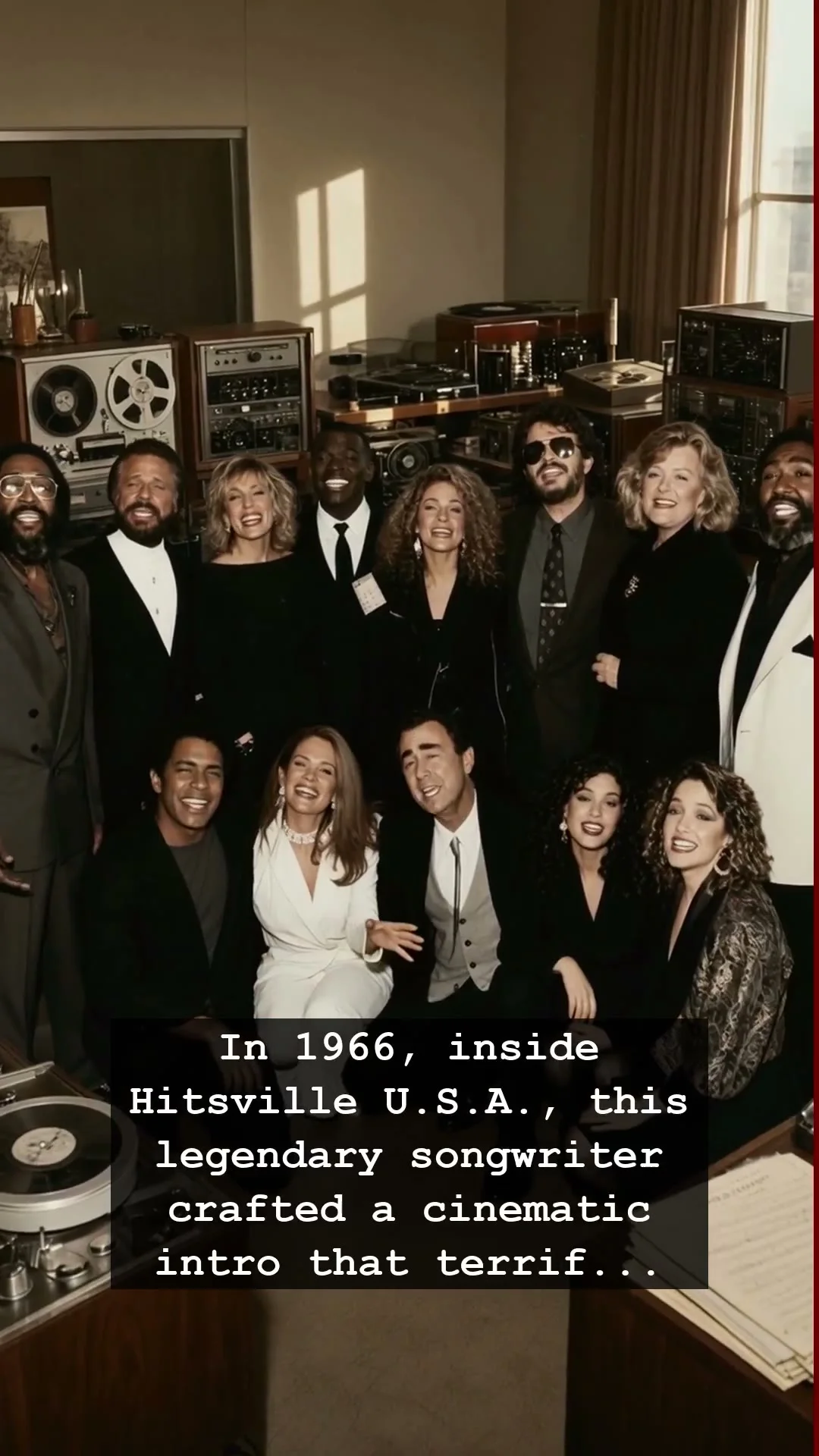
It was 1966, a year where the airwaves were crowded with the changing tides of a cultural revolution. Inside the cramped, holy confines of Hitsville U.S.A., the legendary songwriting mastermind Brian Holland sat at the mixing board, pushing the boundaries of what soul music could possibly sound like. He was part of the untouchable Holland-Dozier-Holland trio, the architects of the Motown sound that kept the world dancing. But on this particular day, Brian Holland was hunting for something darker, something more cinematic, and something that would ultimately send a shiver down the spines of the Motown brass.
He wanted an intro that didn’t just invite the listener into a song, but rather grabbed them by the throat. When he unveiled the frantic, aggressive opening to Reach Out I’ll Be There for the Four Tops, the executives were genuinely terrified. They were used to the polished, upbeat grooves of the Supremes and the smooth harmonies of the Temptations. Brian Holland had stripped away the safety net, opting for a relentless, tension-filled build-up that sounded more like a film score than a radio single. It was a bold gamble that risked everything for the sake of true artistic innovation.
This was the era of the Jukebox and the spinning vinyl record, a time when a three-minute song had to compete for attention amidst the noise of the Vietnam War protests and the blossoming psychedelic movement. Brian Holland understood that to remain relevant, Motown could not simply repeat the same formula. He pushed Levi Stubbs of the Four Tops to his vocal limits, demanding a performance that bled desperation and raw, unvarnished human emotion. It was a departure from the sunshine-filled soul of the early sixties, marking a shift toward something more psychologically complex and physically demanding.
Looking back, the genius of Brian Holland was his ability to capture the anxieties of his generation without losing the accessibility of a pop hit. While the executives feared that the frantic pace would alienate their audience, the public embraced it with open arms. It topped the charts, proving that listeners were ready for a more mature, dramatic expression of love and loss. The track became a cornerstone of the Motown legacy, a testament to the fact that greatness is rarely achieved by playing it safe or listening to the skeptics in the boardroom.
The echo of that 1966 masterpiece still resonates in the halls of music history today. When we listen to it now, we hear more than just notes on a page; we hear the tension of an artist breaking his own rules. Brian Holland did not just write a song that day; he changed the vocabulary of soul music forever, proving that even in the hit-factory system of Hitsville, one man could force a revolution. Next time you hear those opening notes, remember the bravery it took to turn a moment of fear into an eternal sound.