
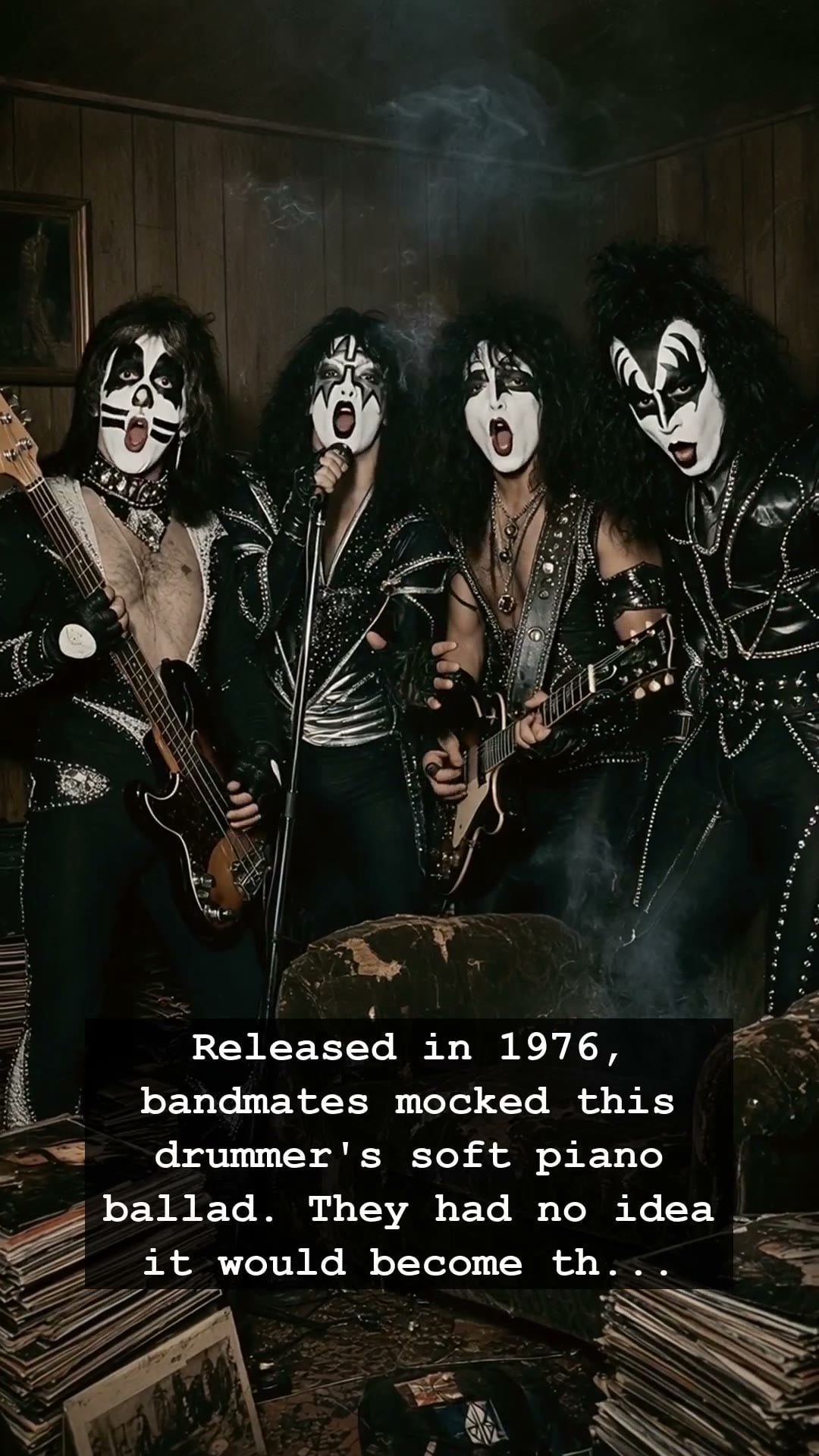
In the mid-seventies, the world of rock and roll was defined by pyro-technics, face paint, and the relentless, aggressive thunder of stadium anthems. When you thought of KISS, you thought of leather, blood-spitting, and the ear-shattering chaos of Detroit Rock City. Yet, hidden amidst the grit of their 1976 album Destroyer was a song that defied everything the band stood for. It was a fragile, heart-wrenching piano ballad titled Beth, a song that would eventually become the highest-charting single of their entire legendary career. But back then, the rest of the band didn’t see a hit; they saw a joke, a soft anomaly that threatened the carefully curated identity of the hottest band in the world.
The drummer, Peter Criss, carried the weight of this song in his heart. While Paul Stanley and Gene Simmons were busy crafting high-octane rock anthems, Criss was dwelling on the isolation of the road. Beth was born from the quiet, lonely reality of being a touring musician—the sound of a receiver held to the ear, listening to a partner wait at home while the neon lights of a faraway city burned out. When he brought the demo to the studio, his bandmates scoffed. They mocked the vulnerability of the lyrics and the stark simplicity of the piano arrangement. To the architects of the KISS brand, it sounded like a betrayal of their heavy metal aesthetic.
Despite the friction, the production genius of Bob Ezrin pushed the track forward. He saw something in the melancholy that the others were too blinded by ego to notice. As the strings were layered over the piano and Peter Criss’s raspy, raw vocals began to take shape, the atmosphere in the studio shifted. It was no longer just a soft ballad; it was a desperate confession. The song captured a universal ache that resonated far beyond the loyal members of the KISS Army. It was the antithesis of the disco era’s glitter, a grounding human moment in a decade defined by excess and artificiality.
When Beth finally hit the airwaves, it caught everyone off guard, climbing the charts with a momentum that the band’s heavier tracks never achieved. For a brief moment, the masks came off, and the public saw the man behind the cat-makeup. It became the anthem for lonely nights and missed connections, finding a permanent home on jukeboxes across America. It is a classic example of how the most authentic art often comes from the friction between a creator’s soul and the expectations of their peers.
Looking back at that era through the haze of the MTV generation that would follow, Beth remains a poignant reminder of human fragility. It proved that even the most bombastic rock icons had stories of longing buried deep beneath the greasepaint. Do you still remember that first time the piano chords drifted through your speakers, grounding you in a moment of pure, unfiltered nostalgia?