
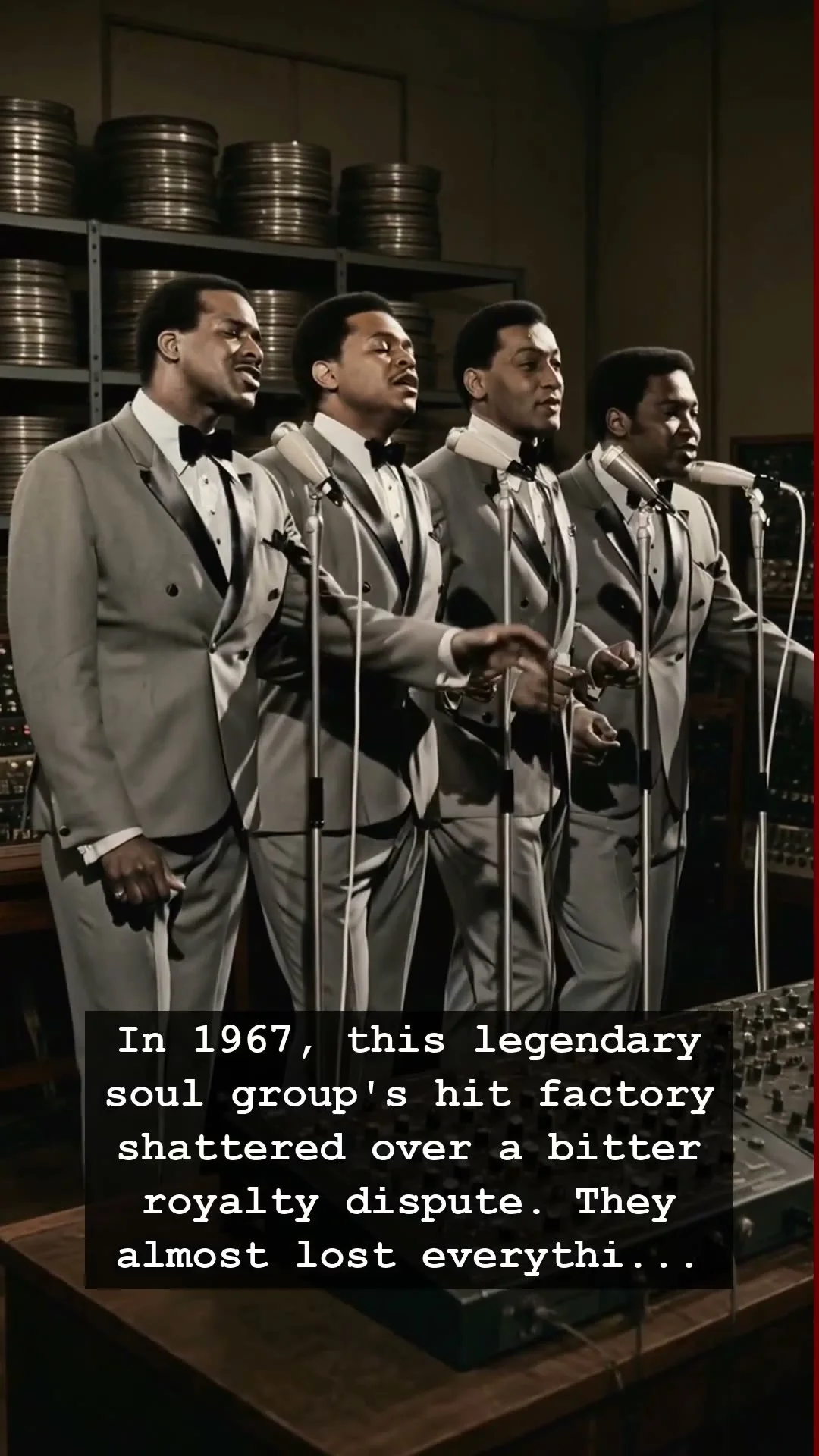
It was the golden era of Detroit soul, a time when the Jukebox in every diner played the soundtrack of a generation. In 1967, The Four Tops stood at the very pinnacle of the music world, their harmonies echoing from radios across America. Yet, behind the polished suits and the seamless choreography, the Motown hit factory was beginning to show cracks that threatened to dismantle the very foundation of soul music. A brutal, behind-the-scenes royalty dispute had erupted, pitting the creative geniuses against the corporate machinery, leaving The Four Tops caught in a storm that almost silenced their legacy forever.
To understand the gravity of the situation, one must look back at the sheer magnitude of The Four Tops during this period. Levi Stubbs, with that signature, gravel-edged baritone that could wring tears from a stone, led the group through a string of hits that felt like immortal hymns of the human condition. When the legendary songwriting trio Holland-Dozier-Holland—the architects of the Motown sound—clashed with Berry Gordy over finances and creative control, it felt like the world was shifting. For The Four Tops, the uncertainty was suffocating. Their masterminds were walking away, and the industry vultures were circling, waiting for the titan to fall.
Despite the chaos, the music did not stop. In the midst of this internal warfare, the group continued to channel their raw, unfiltered emotions into their performances. This period solidified the group not just as entertainers, but as survivors. There is a haunting quality to their 1967 records; you can hear the desperation and the resilience in their voices, a testament to the pressure of living under the harsh spotlight of fame. While other groups disintegrated under similar scandals, The Four Tops maintained a dignity that defined their career. They were the heartbeat of an era that was rapidly changing, surviving the cold realities of the business while keeping their souls intact.
Today, when you listen to those classic tracks, you are hearing more than just a pop song; you are hearing the echo of a struggle. The Four Tops proved that greatness is not merely talent, but the ability to endure. They navigated a landscape of broken contracts and shattered professional relationships, yet their music remained pure. It is this authentic, lived-in depth that allows their songs to transcend the sixties, finding new listeners in every generation who crave something real, something that carries the weight of a thousand untold stories.
As we look back at the legacy of The Four Tops, we are reminded of the price of icon status. It was a time of vinyl, transistor radios, and the constant hum of a restless culture, but the drama was deeply human. The royalty disputes may have faded into the archives of music law, but the melodies they protected have become the bedrock of our collective memory. They survived the storm, and in doing so, they left us a gift that refuses to fade away, echoing through the halls of history long after the dust has finally settled.