
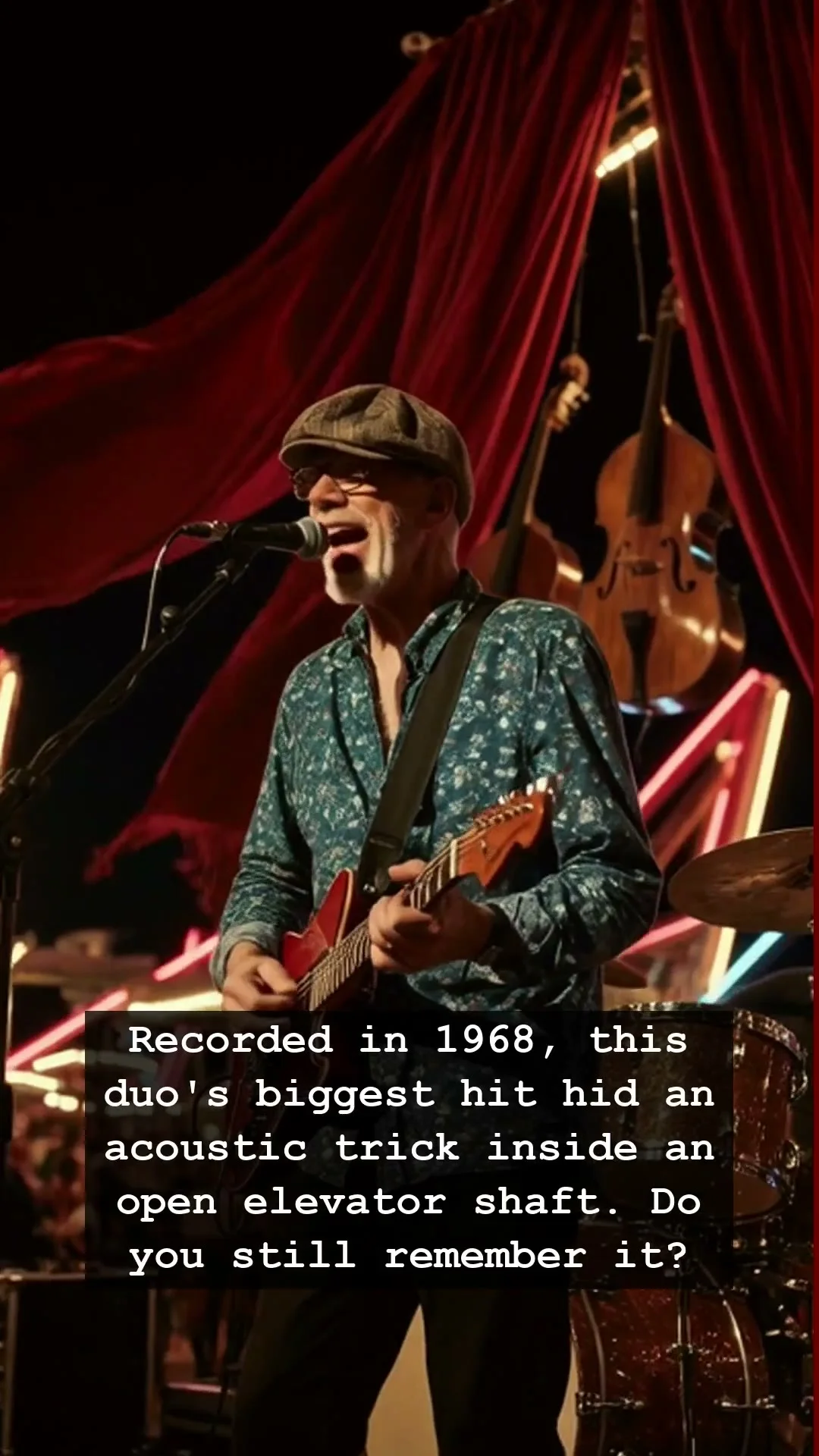
In the golden era of 1968, when the world was shifting beneath the weight of cultural revolution and the Vietnam War, two voices from Queens managed to capture a kind of melancholy that felt both intimate and universal. Paul Simon and Art Garfunkel were the quintessential architects of 1960s folk-rock, yet behind their pristine harmonies lay a perfectionist drive that bordered on madness. Most fans remember the gentle acoustic strums of their legendary hits, but few know the story of a terrifying, ingenious recording trick hidden inside a dark, open elevator shaft. It is a tale that perfectly encapsulates the obsession of a decade defined by the transition from simple analog studio recordings to the complex sonic landscapes that would eventually define the future of pop music.
To achieve the haunting, explosive resonance found in their most celebrated studio sessions, the duo and their producers were not content with standard room acoustics. They wanted the sound of a crash to ripple with a soul-shaking echo that felt like a ghost trapped in the walls. The solution? They dragged a massive drum kit into the cavernous void of an open elevator shaft. As the sticks hit the skins, the sound plummeted into the darkness, bouncing against concrete and steel before returning as a visceral, haunting reverberation. It was a risky, industrial approach to an acoustic masterpiece, proving that Simon and Garfunkel were far more experimental than their button-down shirts and folk-poet personas suggested.
This sonic manipulation occurred at a time when the music industry was being radically transformed. While the mainstream was still tethered to the jukebox, the underground was moving toward the psychedelic textures that would lead to Woodstock. Simon and Garfunkel existed in a strange middle ground; they were commercially safe enough for the radio yet artistically daring enough to hide avant-garde production tricks in plain sight. They were not merely songwriters; they were sonic sculptors working in the shadow of giants, crafting records that required the patience of a saint and the precision of a clockmaker.
Yet, this pursuit of perfection often came at a cost. The creative friction between Paul Simon’s relentless perfectionism and Art Garfunkel’s ethereal, soaring vocal style was the engine of their success and the root of their inevitable fracture. Their story is a classic case of the price of fame, where the beauty of the song often masked the simmering resentment and personal turmoil brewing behind closed studio doors. Like the echo they captured in that elevator shaft, their relationship was a series of bounces and clashes—beautiful in its complexity, yet fragile in its integrity.
Decades later, when we hear those iconic chords on a weathered vinyl record, we aren’t just listening to a melody. We are hearing the echo of an elevator shaft in 1968, the culmination of two men trying to capture a feeling that was slowly slipping away. Simon and Garfunkel remains a pillar of American music, a reminder that behind every smooth harmony lies a story of chaos, obsession, and the restless human desire to create something that lasts forever. Do you still feel that echo, or has the silence of the modern age finally drowned it out?