
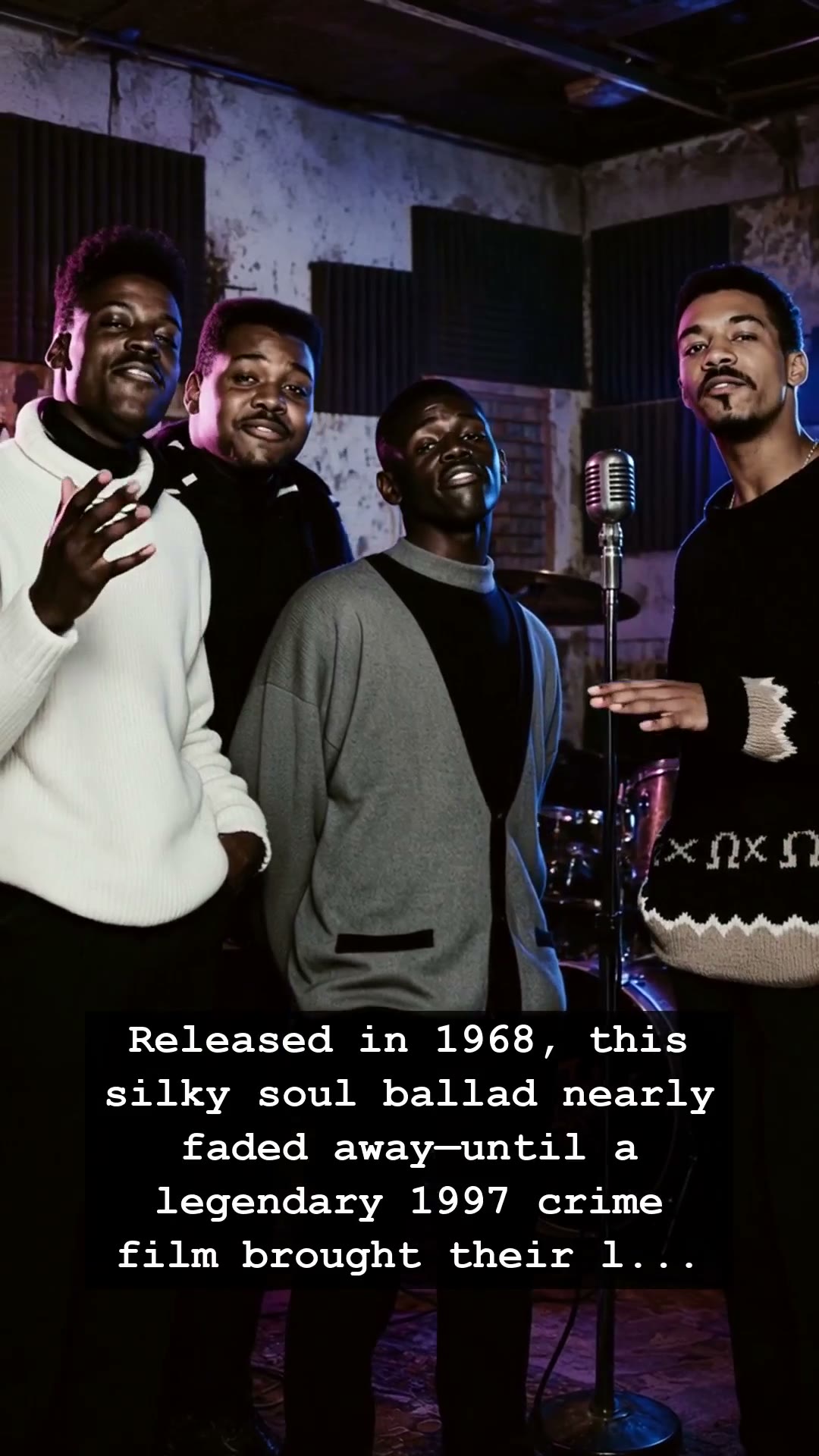
In the golden era of 1968, before the digital age fragmented our listening habits, soul music wasn’t just heard; it was felt in the marrow of your bones. Amidst the swirling velvet textures of the Philadelphia sound, The Delfonics emerged as architects of pure, unadulterated romance. Their voices, led by the ethereal falsetto of William Hart, captured a fleeting vulnerability that defined the late sixties. Yet, even with their chart-topping success, the sands of time are cruel. For years, their most haunting masterpiece, La La Means I Love You, lingered like a ghost in the corners of dusty record shops, nearly fading into the shadows of history while the world shifted toward the neon lights of Studio 54 and the rhythmic pulse of the disco era.
Then came the tectonic shift of 1997. It is rare for a song to be granted a second life, but when Quentin Tarantino’s crime masterpiece Jackie Brown hit the silver screen, everything changed. As the opening credits rolled, the silk-smooth harmonies of The Delfonics didn’t just provide a soundtrack; they became a time machine. Suddenly, a new generation was not just hearing a song from 1968; they were being transported to an era of jukeboxes, vinyl grooves, and raw, soulful emotion. The revival wasn’t just a nostalgic nod—it was a visceral reminder that true artistry, no matter how much time passes, remains timeless.
Behind these lush arrangements lay the brilliant, often turbulent genius of Thom Bell and the internal dynamics of The Delfonics. Life in the soul circuit during the late sixties was a pressure cooker of ambition, demanding schedules, and the crushing weight of fame. While their vocal harmonies suggested an effortless glide, the reality was a meticulous, high-stakes game of production and performance. The Delfonics managed to blend the doo-wop traditions of the past with a sleek, orchestral sophistication that would eventually pave the way for the smooth soul of the seventies.
There is something profoundly human about the way their music resonates today. In a world now dominated by synthetic beats and rapid-fire consumption, the analog warmth of a Delfonics record feels like a sanctuary. When you listen to the delicate phrasing and the swelling string sections, you are hearing the heartbeat of a bygone America. It is a testament to the fact that soul music, when crafted with such deep sincerity, acts as a bridge between the Boomers who lived it and the Millennials who discovered it through the cinematic lens of the nineties.
Even now, the legacy of The Delfonics remains as polished as the day it was pressed onto vinyl. Their ability to turn a simple confession of love into a symphonic experience is a feat few have replicated. Whether you are dusting off an original LP or letting the track loop on a modern playlist, the magic persists. Music is a living, breathing archive of our collective memories. As long as those falsettos continue to soar, the heart of the soul era will never truly stop beating.