
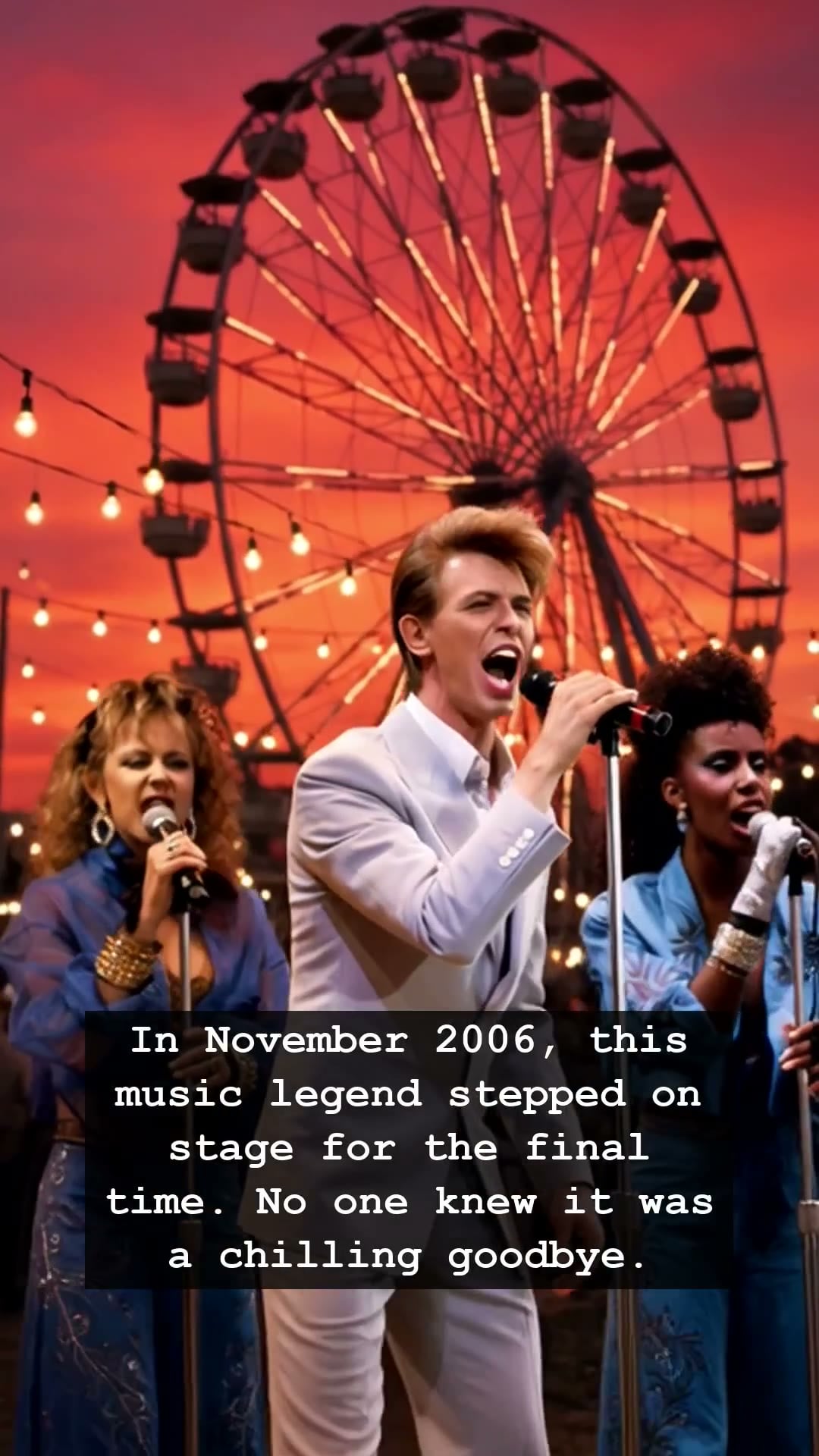
It was November 2006 at the Hammerstein Ballroom in New York City. The air was thick with the scent of expensive perfume and the hum of anticipation, a quintessential atmosphere for a charity gala. David Bowie, the man who had painted the moon and danced with stars, stepped onto the stage. He was there to perform a few tracks with Alicia Keys, appearing lean and dapper, his voice still carrying that unmistakable, haunting resonance. Little did the mesmerized crowd know, this wasn’t just a guest appearance; it was a ghost dancing in the spotlight. The audience cheered for the legend, unaware they were witnessing the final live performance of David Bowie’s storied career, a chilling, accidental farewell that would remain sealed in history for years to come.
For decades, David Bowie had been the ultimate chameleon of rock. He was the Ziggy Stardust who brought extraterrestrial glam to the dusty stages of the seventies, the Thin White Duke who navigated the cocaine-fueled haze of Los Angeles, and the soul-searching artist of the eighties. Throughout the era of the Walkman and the neon-soaked rise of MTV, David Bowie was the north star for misfits and dreamers alike. Yet, as the new millennium approached, the spectacle began to fade. The relentless grind of touring, the physical toll of decades of artistic rebirth, and perhaps a quiet desire for domestic peace led the icon to retreat from the very thing that defined him: the stage.
Looking back at that night in 2006, there is a profound, almost spiritual weight to the footage. David Bowie delivered his parts with a subtle, understated elegance that felt like a quiet curtain call. There were no pyrotechnics, no costume changes, and none of the theatrical artifice that had defined his legendary tours of the past. It was just a man and his voice, blending with the piano. For a generation raised on his chameleonic shifts, this sudden silence following his departure felt like the end of an epoch. It was the moment the jukebox finally stopped spinning, leaving us with a memory that feels more like a sacred relic than a concert highlight.
After that night, David Bowie slipped into a life of relative seclusion. While he would eventually return to the studio to gift us his final, earth-shattering album Blackstar, the stage remained empty. He chose to protect his privacy, trading the glitz of Arena Rock for the quiet solitude of Manhattan. Fans spent years speculating, hoping for a surprise comeback tour, but David Bowie had already made his choice. He had given the world everything he had, and in that understated final performance, he had silently decided that the show had reached its natural, poignant end.
Today, we look back at David Bowie not just as a musician, but as a master of narrative. His final bow serves as a testament to the power of artistic grace. He didn’t fade away amidst a scandal or a public breakdown; he exited on his own terms, leaving us to wonder, to search, and to listen closer to the records he left behind. Even years later, the echo of that 2006 night reminds us that legends never truly leave; they simply step into a different kind of light, leaving us to cherish the magic they once shared.