
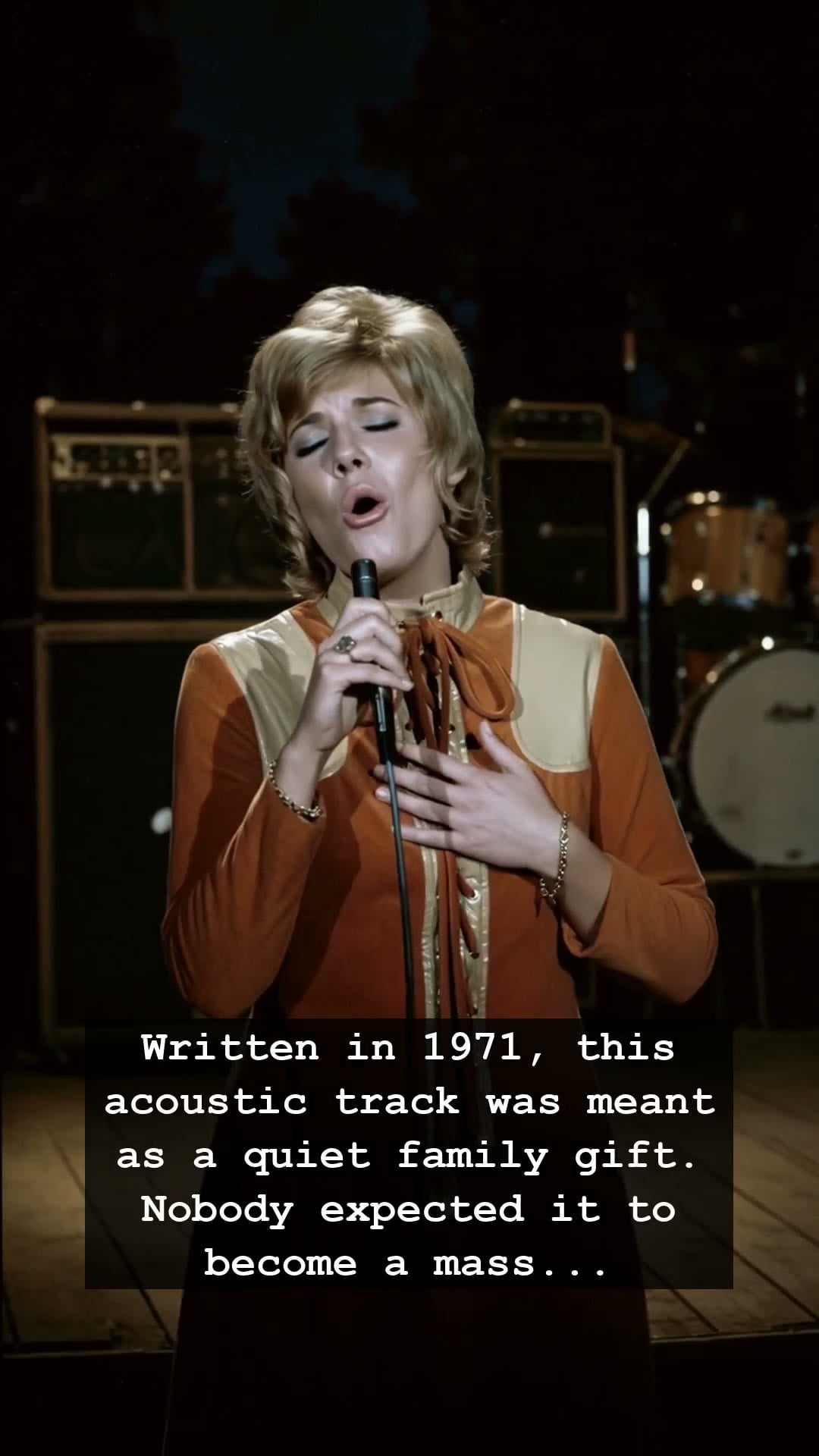
In the early 1970s, the airwaves were often dominated by the grit of rock and the rising pulse of disco, but nestled deep within the acoustic warmth of the era, a quiet lullaby was born. Kenny Loggins, long before he became the king of the soundtrack anthem, was a young songwriter with a heart full of gentle melodies. In 1971, he penned a tender, acoustic track intended solely as a private family gift—a song written to welcome his newborn nephew into the world. He never imagined that this intimate gesture would eventually evolve into a soaring, chart-topping masterpiece that would capture the hearts of millions across a generation.
The song, Danny’s Song, was never meant for the limelight of the arena rock stage or the neon-drenched floors of Studio 54. It was a rustic, fragile composition meant to be heard in a living room, not over the crackling speakers of a vintage jukebox. Yet, the music industry has a way of turning the most personal confessions into universal anthems. When the legendary Canadian songstress Anne Murray heard the demo, she recognized something profound in its simplicity. Her decision to record the song in 1972 changed everything, transforming a quiet family tribute into a Grammy-nominated sensation that defined the adult contemporary sound of the decade.
Watching Anne Murray perform the song on television became a staple of the American living room. Her voice, rich and impeccably clear, added a level of sophistication that elevated Loggins’ original folk-inspired writing. It was a marriage of artistic sensibilities that bridged the gap between the singer-songwriter movement and mainstream pop success. For those who grew up in the era of the Walkman and the slow-dance at high school proms, Anne Murray’s version remains a sonic time capsule, transporting listeners back to a period where melody mattered more than heavy production and heartfelt lyrics were the gold standard.
The success of the song created a unique bond between Kenny Loggins and Anne Murray, forever linking their musical legacies. It is a classic tale of industry serendipity, where a song originally crafted for a nursery became a staple of radio airplay. The track resonates today not just for its melody, but for the story of its origin—a rare moment where an artist’s private emotion was shared with the world and became a shared human experience. It serves as a reminder of how the music of the 1970s was often built on such personal foundations.
Even decades later, hearing the opening chords of Danny’s Song evokes a powerful sense of nostalgia for a simpler musical landscape. It stands as a testament to the fact that the most enduring hits are rarely those calculated for profit, but those born from genuine love and familial devotion. As we look back on the golden age of American music, the collaboration between Kenny Loggins and Anne Murray remains a shining example of how a small, quiet song can change the course of pop history forever.