
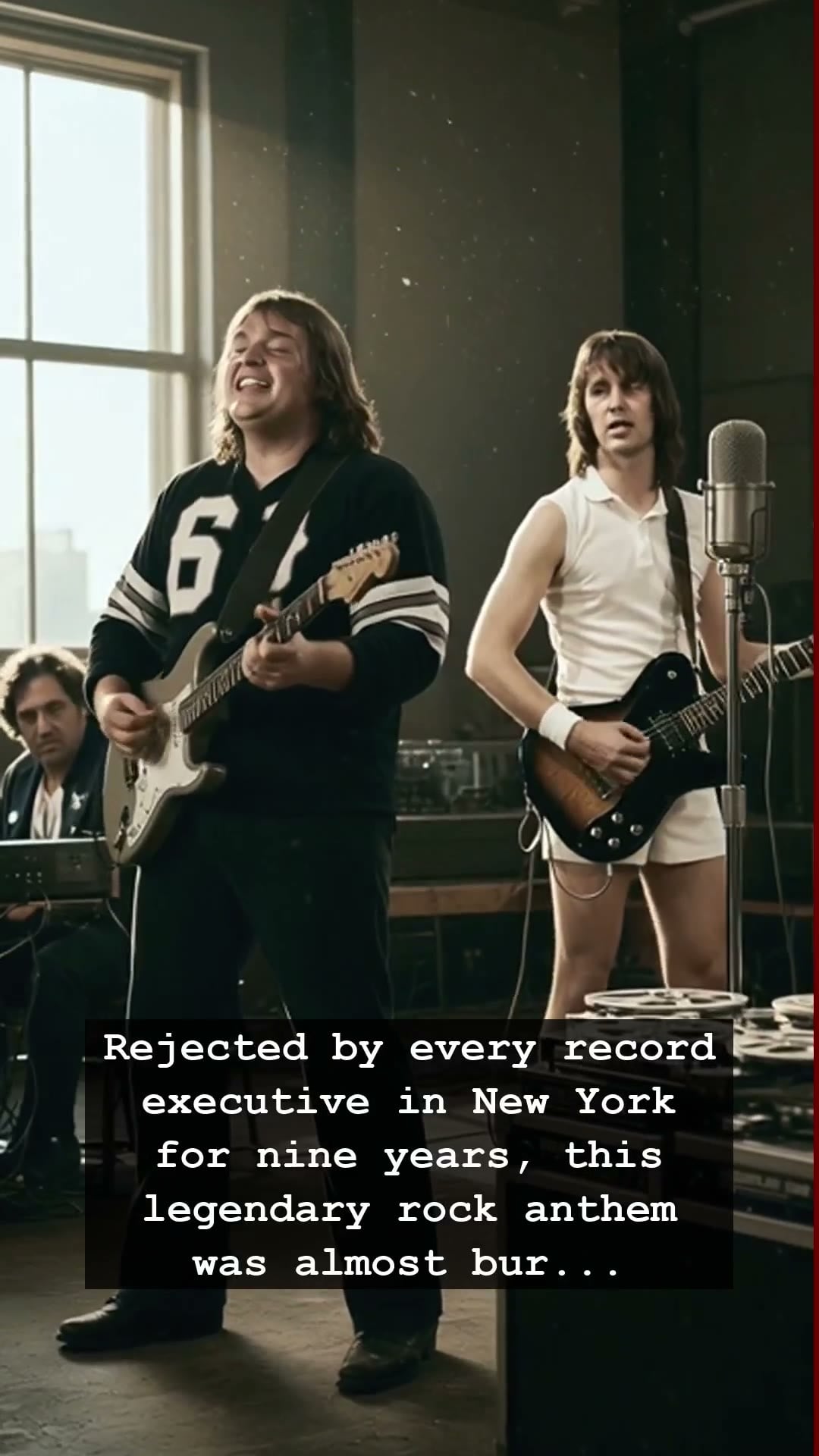
Imagine sitting in a cramped, smoke-filled office in mid-1970s New York. You are holding a master tape that defies every genre label, a sprawling, operatic masterpiece that blends Broadway bombast with hard-hitting rock and roll. You play it for a seasoned record executive, expecting a nod of approval. Instead, you are met with cold indifference and a door slammed in your face. This was the grueling reality for Meat Loaf and songwriter Jim Steinman for nine agonizing years. They were told it was unplayable, too long, too theatrical, and simply not rock enough for the radio stations of the era. They were rejected by every major label in the city, left to wonder if their vision would ever see the light of day or if it was destined to be buried in the archives of forgotten failures.
The song that suffered this rejection was the title track of Bat Out of Hell, a record that would eventually become one of the best-selling albums in human history. Meat Loaf, born Marvin Lee Aday, was a force of nature—a man whose physical stature matched his gargantuan, soul-baring vocal performances. Throughout the mid-70s, he and Steinman were constant outcasts, struggling to find a place for their epic storytelling in a musical landscape that was rapidly transitioning from the fading psychedelic dream to the polished sounds of the disco era. They lived through the grit of the industry, often penniless and fueled only by a desperate belief in their own grandiose creation.
The magic finally happened when they bypassed the conventional gatekeepers, finding an unlikely champion in Todd Rundgren, who saw the raw, pulsating brilliance beneath the chaos. When Bat Out of Hell was finally unleashed in 1977, it didn’t just climb the charts; it obliterated them. The music was a sonic departure from the sleek, calculated hits of the time, feeling instead like a runaway train fueled by angst, desire, and pure, unadulterated drama. Audiences, tired of the sterile pop machine, flocked to the anthemic power of Meat Loaf, finding a voice that articulated their own hidden rebellions and heartbreaks.
Looking back, the story of Meat Loaf serves as a haunting reminder of how fragile musical history truly is. If just one person hadn’t taken that leap of faith, the thunderous piano intros and the sweeping, dramatic crescendos of Bat Out of Hell might have remained a ghost story of the industry. It stands as a testament to the fact that genuine artistic expression is often rejected before it is revered. The legacy of Meat Loaf lives on, not just in the millions of vinyl records still spinning on turntables worldwide, but in the memory of a man who refused to shrink his vision to fit into a box.
Decades later, when the needle hits the groove, the passion remains just as volatile and intoxicating as it was in those dark New York studios. Meat Loaf proved that you do not need the industry’s permission to become a legend; you only need the courage to be heard. Do you still remember where you were the first time you heard that opening roar?