
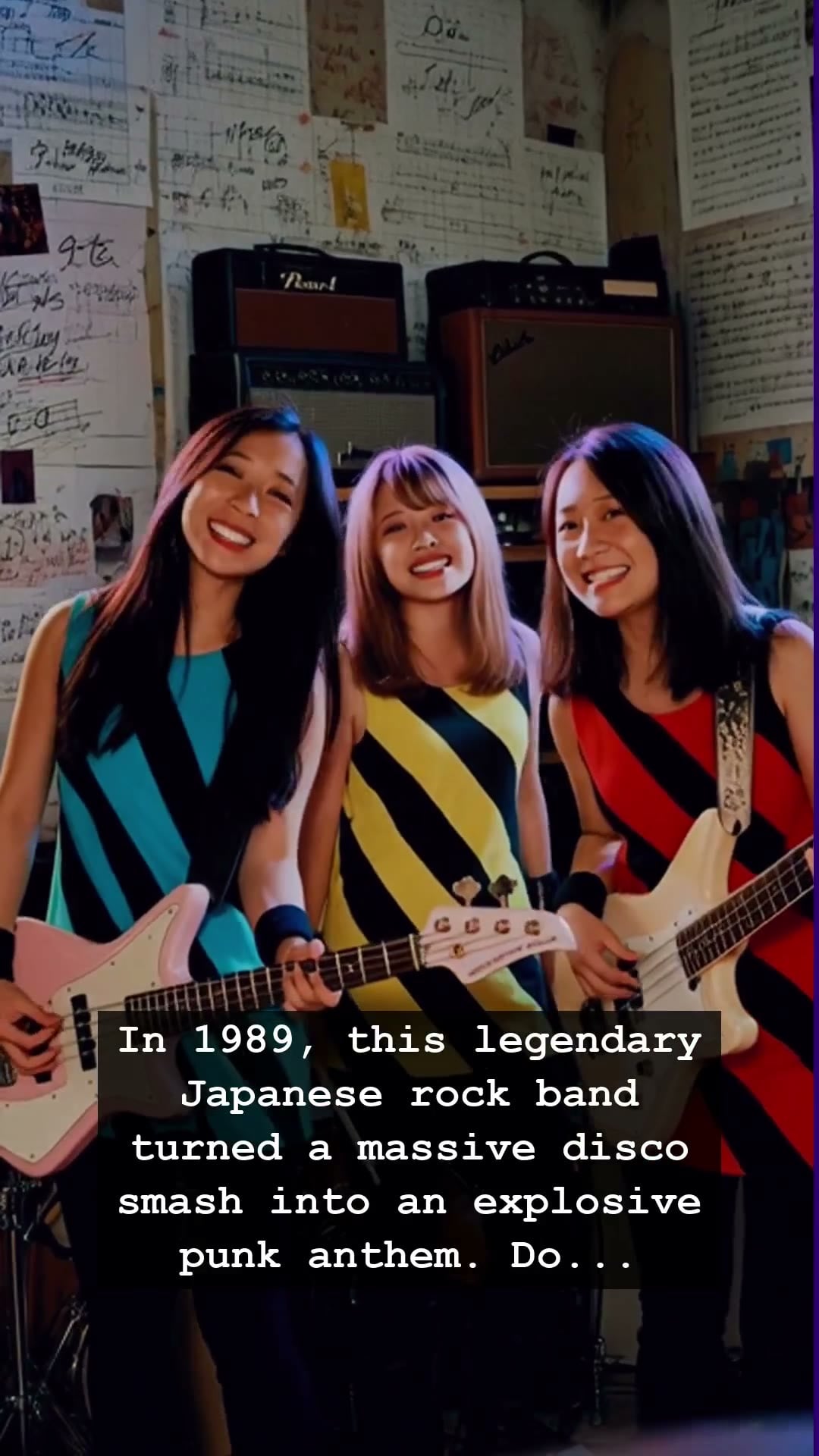
The year was 1989, and the airwaves were still vibrating with the polished, neon-soaked legacy of the disco era and the fading echoes of studio excess. While the mainstream was fixated on the calculated perfection of pop charts, a trio of sisters from Osaka was quietly orchestrating a sonic collision that would change the trajectory of alternative rock. Shonen Knife, a band that radiated raw energy and unpretentious charm, didn’t just play music; they possessed a unique ability to dismantle the grandeur of Western classics and rebuild them into something kinetic, jagged, and profoundly alive. Their choice to cover a massive hard rock disco smash was a stroke of genius that defied every expectation of the time.
Imagine the scene in a cramped, humid rehearsal space, far removed from the glitz of Studio 54 or the massive arenas of the late eighties. Shonen Knife stripped away the heavy production and the over-layered synthesizers that defined the era. In their hands, a track once destined for high-production clubs became a gritty, high-octane punk anthem. This was not a tribute; it was a reclamation. By injecting the pure, distilled adrenaline of Japanese punk into a song already ingrained in the global psyche, they created a cultural bridge that connected the underground scene of Japan to the burgeoning alternative world of the West.
It was a moment that felt like a secret revelation. When listeners first heard the familiar hook twisted through the lens of Shonen Knife, it felt simultaneously nostalgic and revolutionary. It forced an entire generation of fans to look past the surface-level polish of eighties radio. Why did it work so well? Because the band approached their heroes with both a deep reverence and a total lack of fear. They weren’t intimidated by the monolithic stature of the original recording; they simply wanted to play it their way, with the relentless pace of their home-grown punk sensibilities driving every chord.
Looking back, this intersection of disco-infused rock and punk experimentation captures the transitional spirit of the late twentieth century. This was the era of the Walkman and the slow death of the Jukebox, a time when music felt tactile and discovery happened in the dusty corners of record stores. Shonen Knife stood at this crossroads, offering a sound that was playful yet undeniably fierce. Their influence would eventually ripple outward, catching the attention of icons like Kurt Cobain and helping to pave the way for the riot grrrl movement and the alternative rock explosion that dominated the nineties.
Today, the legacy of that 1989 project remains a testament to the power of reinvention. Shonen Knife proved that even the most cemented hits could be shattered and reformed into something entirely new. It is a reminder of a time when music was an act of discovery, a raw exchange of energy that crossed oceans without the need for a viral algorithm. As you listen back to those distorted, high-energy tracks, you can still feel the electric spark of a band that dared to change the conversation, one riff at a time. It is a classic story of how a small group of artists can redefine the classics and leave a permanent mark on the history of rock and roll.