
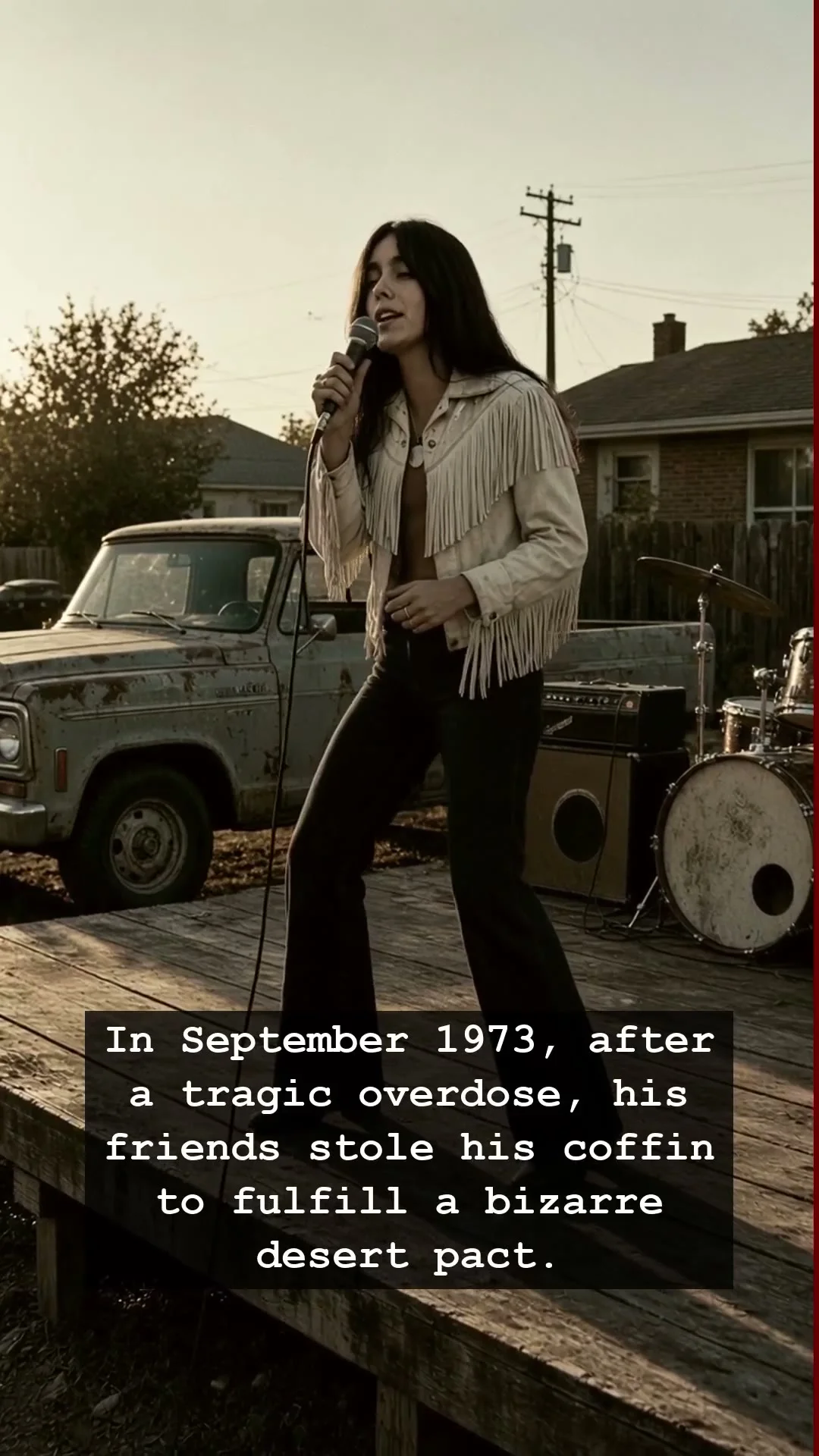
In September 1973, the air in the California desert was thick with a strange, heavy silence. Gram Parsons, the pioneer of cosmic country and the man who bridged the gap between the Rolling Stones and the soulful twang of the Appalachian mountains, had just passed away at the age of twenty-six. His death, triggered by a lethal overdose in a lonely Joshua Tree motel, was a tragedy that shook the music industry. But the true scandal was only just beginning. While the world mourned the loss of a musical visionary, his closest friends decided that a formal burial was no place for a free spirit who lived by the light of the desert moon.
They executed a plan that reads like a dark scene from a cult classic film. After snatching his coffin from the tarmac at Los Angeles International Airport, they drove a borrowed hearse into the heart of the Joshua Tree National Monument. It was a bizarre pact made in the heat of their shared creative journey: Gram Parsons had often joked that if he were to die, his remains should be cremated under the stars he loved so much. His friends, fueled by grief and a frantic, drug-addled devotion, decided to honor that wish in the most harrowing way imaginable. They doused the coffin in gasoline and ignited it, leaving the charred remains to be discovered by the authorities the next morning.
To understand the gravity of this act, one must look back at the era. This was a time when the Jukebox was the heartbeat of every dive bar, and the landscape of American music was shifting from the psychedelic haze of the late sixties into the introspective, weary soul of the seventies. Gram Parsons was the architect of this shift. He didn’t just play music; he created an aesthetic that defined the alt-country sound, blending the vulnerability of heartbreak with the outlaw spirit of the road. He was the muse for legends, the man who brought grit to the glamour of the Sunset Strip.
Yet, behind the brilliance of his harmonies, there was the inevitable dark side of stardom. The pressures of the road, the relentless isolation of touring, and the crushing weight of fame had worn him down. The funeral scandal was, in many ways, the final, messy exclamation point on a life that refused to follow the rules. It remains one of the most talked-about anecdotes in rock history, a moment where reality became indistinguishable from the myths these artists were actively constructing.
Even decades later, the story of Gram Parsons continues to resonate because it feels like a remnant of a lost, untamed age. Today, we listen to his records on digital streams, but his ghost still lingers in the dry, cracked earth of the California desert. When you hear his voice, crackling with a weary honesty that feels as real today as it did in the days of vinyl, you aren’t just listening to a song; you are catching a glimpse of a fleeting, beautiful, and deeply broken era of American music. His legend remains alive, not just in his chords, but in the enduring mystery of his final, defiant exit.