
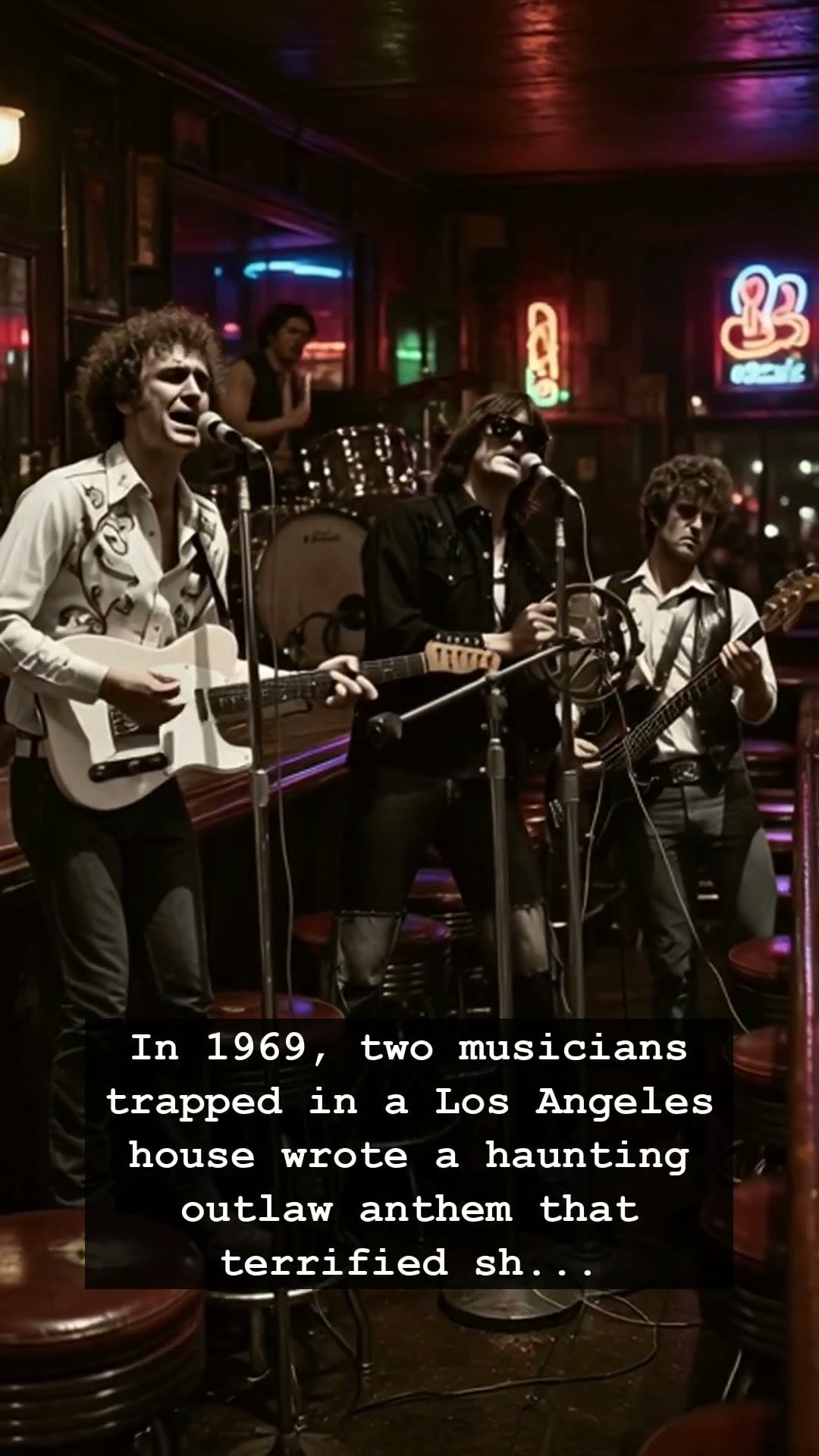
It was 1969 in the hazy, sun-bleached hills of Los Angeles, a time when the counterculture was beginning to crack under the weight of its own excess. Inside a smoke-filled house that felt more like a sanctuary than a home, two men were quietly dismantling the foundations of the music industry. Gram Parsons, the troubled visionary of country-rock, and Bernie Leadon, a man whose guitar strings held the echoes of a vanishing American frontier, were trapped in a creative vortex. They weren’t just writing a song; they were crafting a manifesto of defiance that would soon terrorize the suits in boardroom offices who couldn’t understand why rock music needed the soul of a lonely fiddle.
Gram Parsons was a man defined by a restless, cosmic wandering. With his expensive suits and an even more expensive appetite for self-destruction, he looked at country music not as a stagnant tradition, but as a bloodline to be reclaimed. Alongside Bernie Leadon, who brought a technical brilliance and a deep, grounded understanding of bluegrass, the pair bridged a divide that most artists were too scared to touch. They were the architects of a sound that was too country for the rock clubs and too rock for the Grand Ole Opry. This tension was the fuel that burned through their writing sessions, resulting in raw, haunting melodies that felt like a secret whispered in the dark.
Those nights in Los Angeles were thick with the smell of spilled whiskey and the weight of artistic frustration. Gram Parsons and Bernie Leadon were channeling their disdain for the shallow, hit-factory mentality of the era. The music industry executives were pushing for polished pop, but these two were obsessed with the grit of reality. Every chord struck by Bernie Leadon carried a weight of melancholy, while the tortured beauty of the vocals delivered by Gram Parsons turned simple lyrics into something spiritual and, at times, terrifyingly honest. They were building an outlaw anthem that didn’t ask for permission to exist; it simply demanded to be heard.
As the golden era of the 1960s faded into the cynical seventies, the legacy of this collaboration became clear. You can hear the fingerprints of their partnership in the later emergence of the Eagles and the broader Southern Rock movement that would eventually dominate the airwaves. Yet, the specific spark ignited by Gram Parsons and Bernie Leadon remained unique, a snapshot of a moment when the cosmic country sound was still young, dangerous, and untamed by commercial success. It was the sound of artists who preferred the truth of a broken heart over the safety of the Billboard charts.
Decades later, the echo of that 1969 session still resonates in every garage band that dares to mix genres. When you put on an old record and hear the slide of a guitar or the crack in a voice that sounds like it has seen too much, you are hearing the ghost of that Los Angeles house. Gram Parsons and Bernie Leadon didn’t just write a song; they dared to change the landscape of American music forever. Do you still remember the feeling that anthem gave you when it first cut through the static of your radio?