
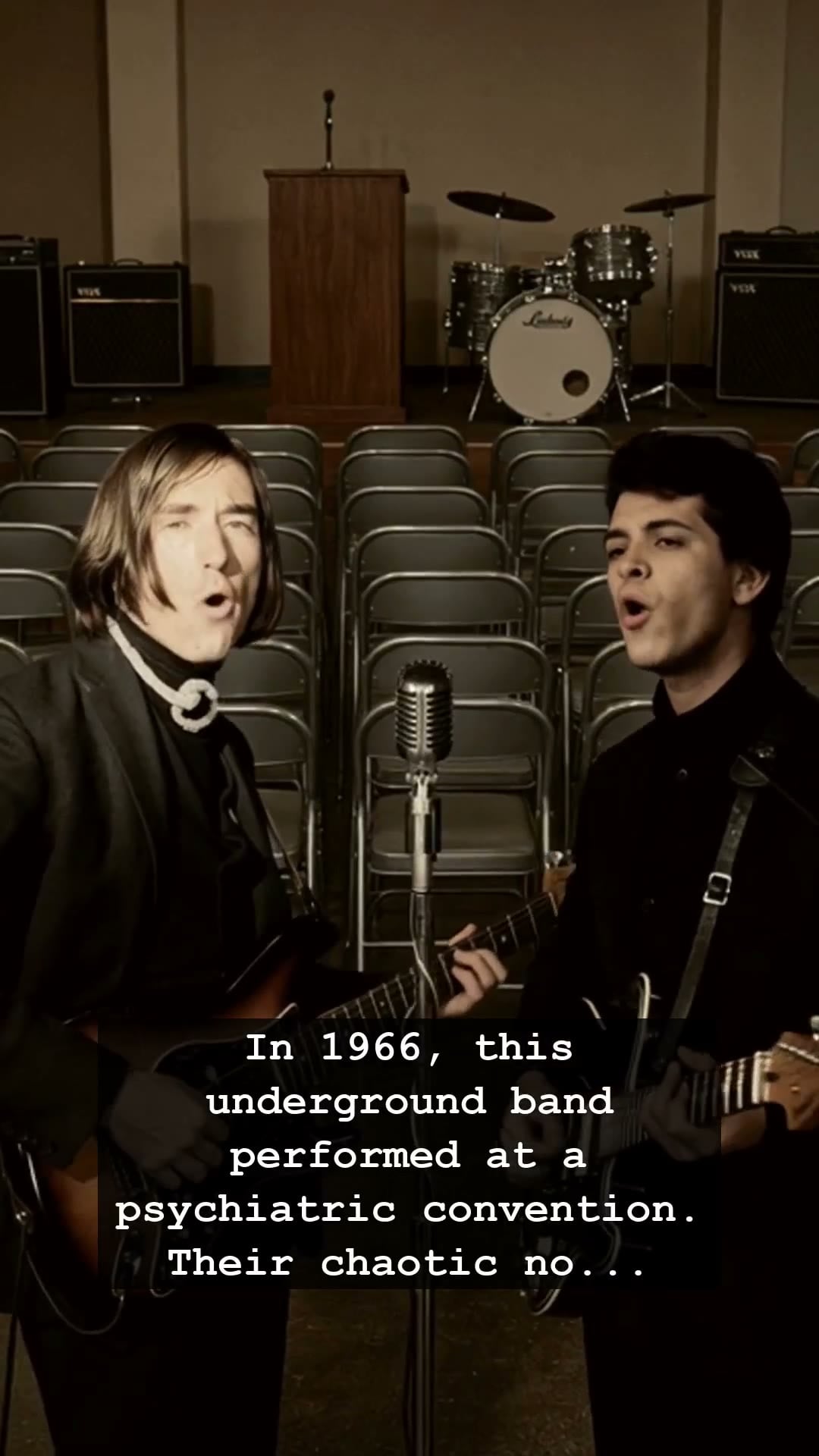
Imagine a cold January afternoon in 1966. A prestigious medical convention in New York City is underway, filled with conservative psychiatrists gathered to discuss the latest in human behavior. Suddenly, the air is pierced by a wall of screeching feedback, rhythmic dissonance, and a lyrical intensity that felt like a direct assault on the senses. This was not a medical demonstration; it was the arrival of The Velvet Underground. Before the band became the darlings of the avant-garde or icons of the New York art scene, they were a terrifying enigma to the establishment, performing for a room of doctors who were visibly scandalized by the sheer sonic chaos unfolding before them.
The Velvet Underground, led by the enigmatic Lou Reed and the haunting avant-garde violist John Cale, had been handpicked by Andy Warhol to provide the soundtrack for the underground culture of the era. Their sound was a far cry from the melodic harmonies that dominated the radio waves at the time. While most of America was tuning into bubblegum pop, this group was experimenting with drone-like structures, lyrical narratives about the darker fringes of street life, and industrial soundscapes. To those psychiatrists, the band did not sound like music; they sounded like a manifestation of the very psychological unrest the doctors spent their careers studying.
This specific performance remains one of the most jarring clashes between traditional society and the encroaching counterculture of the mid-sixties. As the band unleashed their chaotic, feedback-drenched compositions, the doctors sat in silence, paralyzed by a mixture of confusion and genuine alarm. It is a moment that perfectly captures the friction of the 1960s—a period where art was not just meant to entertain but to disturb, to challenge, and to force a confrontation with the uncomfortable realities of modern life. It was the birth of a legend, forged in the fires of artistic rebellion.
Decades later, the legacy of The Velvet Underground resonates far beyond the confines of that psychiatric convention. They provided the blueprint for what would eventually become punk rock, shoegaze, and indie music. Their willingness to embrace the harsh, unpolished edges of human emotion made them a cornerstone of musical history. They were the sonic equivalent of a flickering film reel in a dusty archive, reminding us that true artistry often begins with a refusal to conform. The band proved that if you want to leave a mark on history, you sometimes have to be willing to scare the establishment.
Today, when we spin an old vinyl record or recall the era of the Jukebox and the burgeoning avant-garde scene, we often forget how truly dangerous music once felt. The Velvet Underground were pioneers of the uncomfortable, transforming the trauma and grit of their surroundings into a sound that felt dangerous to hold. They were the shadows behind the Technicolor dream of the mid-century, and they taught a generation that silence is never the only option. As we look back, we realize those doctors were not just hearing noise; they were witnessing the sound of the future knocking down the door. It was messy, it was loud, and it was undeniably, tragically beautiful.