
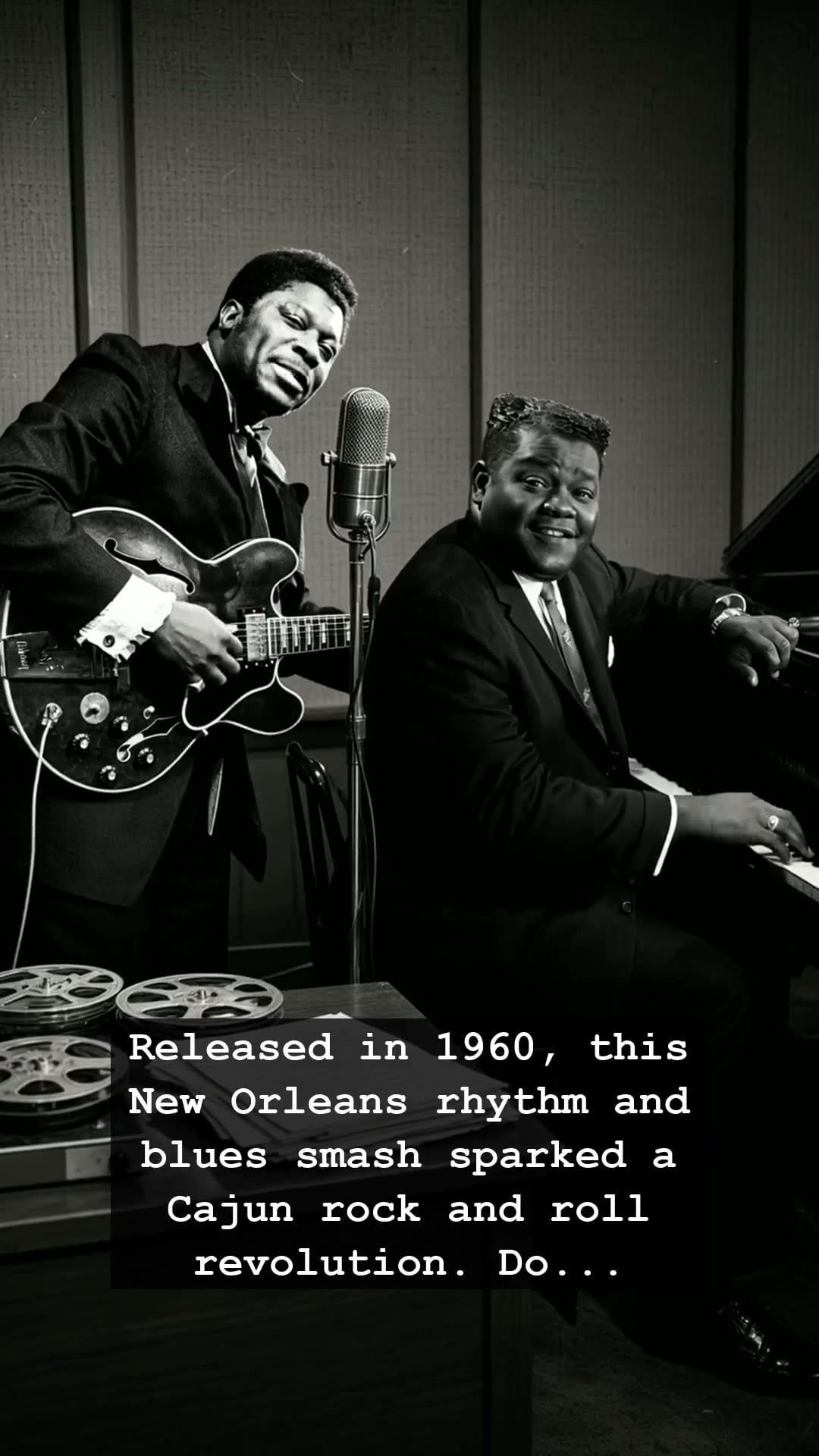
The year was 1960, and the airwaves were humming with a new kind of tension. While record executives in New York were obsessing over polished pop melodies, a man from the humid, jazz-soaked streets of New Orleans was busy cooking up a rhythm that would shake the foundations of the industry. Fats Domino, the gentle giant of the piano, didn’t just play music; he lived the rhythm of the bayou. When he released his smash hit that year, the world wasn’t ready for the swampy, Cajun-infused grooves that would soon ignite a rock and roll revolution across America. It was a sound that felt like a warm, late-night rain on a tin roof—impossible to ignore and even harder to forget.
Fats Domino was never the kind of performer who sought the limelight through scandal, yet he found himself at the epicenter of a cultural shift. In the era of the burgeoning Jukebox culture, his tracks were the fuel that kept the nights alive. His signature style, characterized by that infectious, rolling piano triplet, turned every dance floor into a frenzy. Behind the scenes, however, the industry was baffled. They couldn’t understand how a man from the Crescent City could capture such raw, unfiltered soul and package it into a track that felt like it had existed for a hundred years. It was an artistic triumph that bypassed the stiff suits and reached straight into the hearts of the youth.
Those who grew up in the shadow of the fifties remember the feeling of hearing a Fats Domino record for the first time. It was the sound of a country in transition, shifting from the conservative lull of the post-war years toward the vibrant, chaotic energy of the coming decade. Whether you heard it crackling through a tabletop radio or spilling out of a neon-lit diner, his music was the soundtrack to a generation finding its voice. His success proved that you didn’t need to be a polished celebrity to conquer the charts; you just needed to be authentic, soulful, and undeniably gifted.
Beyond the melodies, the story of Fats Domino is one of quiet resilience. Amidst the swirling drama of the music business, where artists were often chewed up and spat out by studio executives, he remained a steady anchor. He brought the distinct flavors of New Orleans—the spice of the swamp and the weight of the blues—into the living rooms of suburban America. His influence can still be traced through the evolution of rock and roll, leaving an indelible mark on every artist who dared to pick up a piano or a guitar in his wake.
Today, when we spin those old records, the crackle of the vinyl brings us back to a simpler, more melodic time. Fats Domino remains a titan of the American musical landscape, a reminder that the best music doesn’t just entertain; it captures the essence of a place and time. As we look back at the glory days of the mid-century, let his legacy serve as a testament to the power of the groove. Next time you find yourself craving a dose of real history, let his timeless rhythm transport you back to the golden age of rock and roll.