
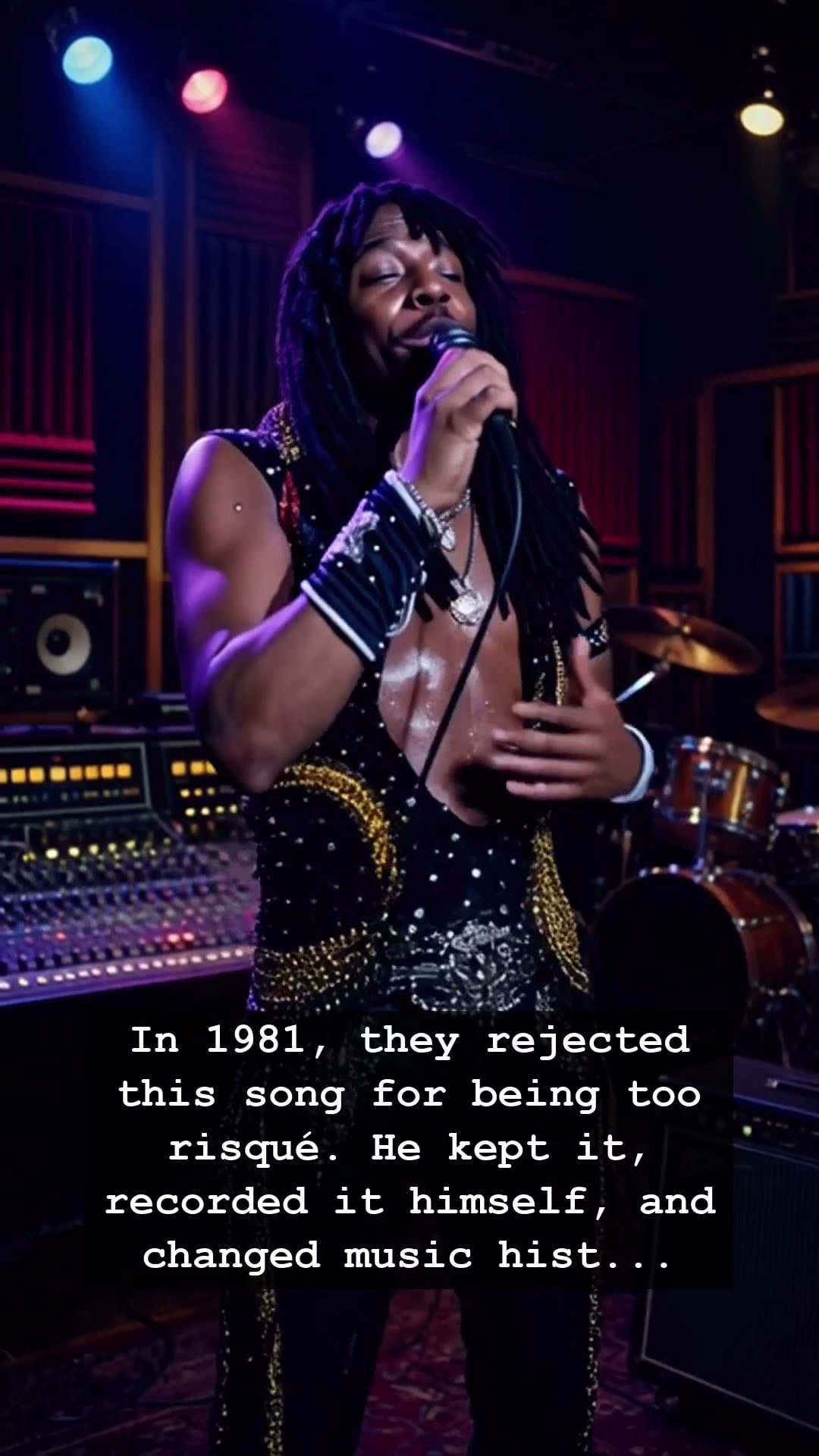
It was 1981, and the air in the Motown recording studios was thick with the scent of hairspray and the relentless, driving pulse of the funk revolution. A legendary group, known for their polished harmonies, sat in a dimly lit control room, listening to a demo that would soon become one of the most polarizing tracks in history. The groove was relentless, the bassline was unapologetically gritty, and the lyrics were, by their pristine standards, far too risqué to touch. They passed on the song, unknowingly handing the keys to a musical legacy to the one man who could turn an outcast rhythm into a global phenomenon: Rick James. Little did they know, the rejected track would soon become the definitive dance anthem of a decade.
Rick James was never a man to play by the rules of polite society or industry expectations. At the height of the disco era and the transition into the synth-heavy eighties, he was a force of nature, often living life with the same frenetic, high-octane energy found in his music. When Rick James took that rejected recording back into his own hands, he didn’t just polish the edges; he sharpened them. He brought the raw, unfiltered essence of the streets directly into the studio. The track, which would eventually be titled Super Freak, was more than just a song—it was a manifestation of a liberated cultural movement that was pulsing through the veins of every club from Studio 54 to the smallest underground discos across the country.
When the song finally hit the airwaves, the reaction was immediate and electric. The bassline alone, a slinking, repetitive hook that seemed to worm its way into the listener’s subconscious, shattered the boundaries of what radio was comfortable playing. Rick James had created a monster of a hit, a song that blurred the lines between funk, rock, and pop. It was loud, it was brazen, and it was undeniably cool. The rejection from the mainstream group had ironically cleared the path for Rick James to define his own sound, cementing his place as the undisputed King of Punk-Funk.
The cultural impact of that moment reverberates even today. It was a time when the Walkman was changing how we consumed music and the rise of MTV was about to turn visual performance into a mandatory art form. Rick James walked that thin line between brilliance and excess, but in the heat of 1981, his instincts were razor-sharp. He captured the raw tension of a generation caught between the dying embers of the disco era and the neon-lit promise of the future. The rejection was the best thing that could have happened to the track, allowing it to remain authentic to its creator’s vision.
Today, listening to those opening chords still triggers a surge of nostalgia for a time when music felt dangerous, transformative, and impossibly infectious. Rick James left behind a complex legacy, one filled with as much personal drama as musical genius, but his contributions to the funk landscape remain untouchable. That single, rejected groove stands as a testament to the idea that sometimes the best songs are the ones that are just too bold for the mainstream to handle at first. Decades later, the beat refuses to die, continuing to pull us onto the dance floor, reminding us that true legends are often born from the things the world wasn’t quite ready for yet.