
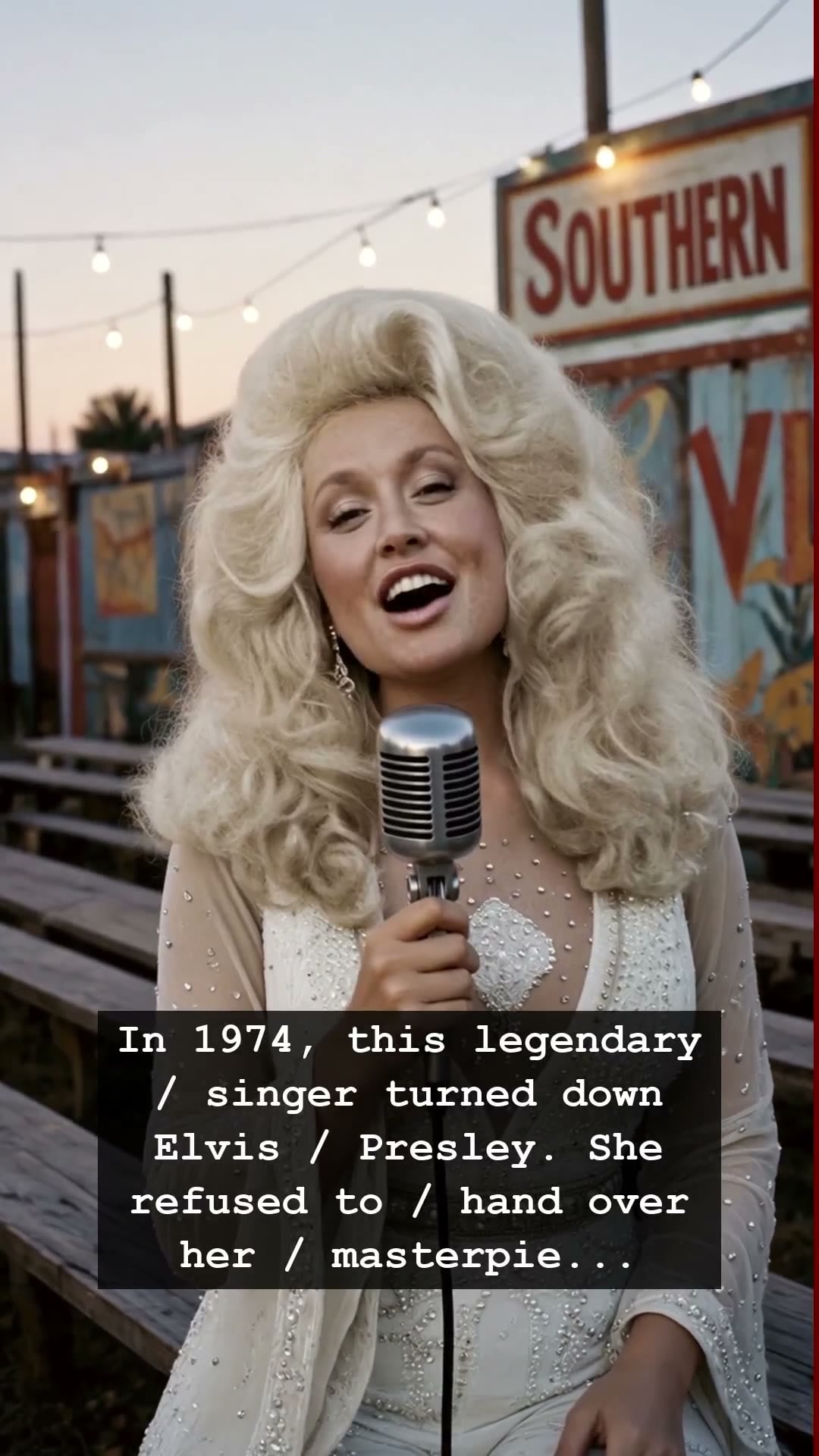
The year was 1974, and the air in Nashville was thick with the weight of ambition and the scent of expensive hairspray. For any artist in the country music scene, a call from the King himself, Elvis Presley, was considered the ultimate golden ticket. Elvis had set his sights on covering a soulful, deeply personal track that had been climbing the charts. He wanted to record his own version of I Will Always Love You, a masterpiece penned by the rising star Dolly Parton. But there was a catch that would alter the trajectory of music history forever: Elvis demanded half of the publishing rights to the song as a condition for recording it. In an era where musicians were often treated like expendable commodities, this was a standard power play by Colonel Tom Parker, but it was a bridge too far for Dolly.
Standing in her modest office, Dolly Parton faced a heart-wrenching crossroads. To let the King of Rock and Roll record her song would have meant global superstardom, an explosion of radio airplay, and a massive influx of cash. However, it also meant signing away a piece of her creative soul and her family’s financial future. She famously recalled sitting in her office, clutching the letter, and fighting back tears as she realized she had to walk away from the biggest icon in music. She refused to hand over her masterpiece, choosing to protect her legacy rather than chasing the blinding, temporary light of an Elvis-endorsed hit. It was a cold, calculated, and courageous decision that proved Dolly was not just a songwriter, but a fierce businesswoman in a man’s world.
The 1970s was a decade defined by the grit of the jukebox and the glamour of the stage, but behind the rhinestones lay a cutthroat industry. Dolly Parton understood that a song was more than just a melody; it was her life insurance policy. By declining Elvis, she kept her rights intact, and decades later, her decision proved prophetic when Whitney Houston took the song to stratospheric heights in the 1990s. The song became a universal anthem of love and loss, echoing through stadiums and living rooms across the world, long after the glitz of the seventies had faded into memory.
Looking back, this moment remains one of the most significant standoffs in the history of American music. It reminds us that behind every timeless ballad lies a story of negotiation, sacrifice, and the unwavering belief in one’s own worth. While the rest of the world was mesmerized by the neon lights of the era, Dolly was building an empire on her own terms. Her refusal to bow to the industry’s demands didn’t just save a song; it defined the integrity that has sustained her career for over half a century. Next time you hear those iconic opening notes, remember the woman who stared down the King and held her ground, forever changing the rhythm of the music business.