
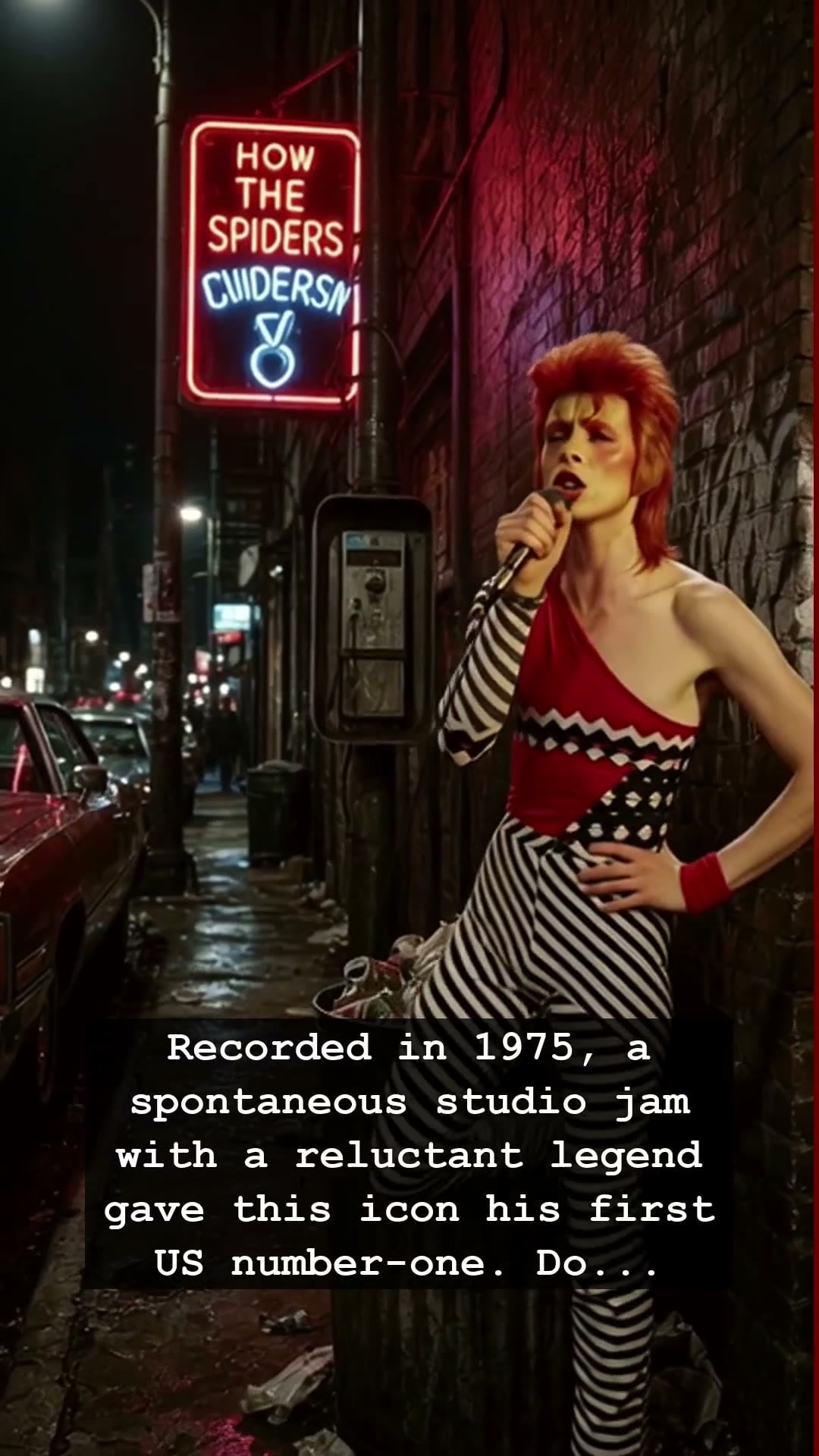
The year was 1975, and the air in New York City was thick with the scent of cheap perfume, cigarette smoke, and the frantic energy of a shifting musical landscape. David Bowie, the chameleon of rock, was holed up in a studio, desperately trying to reinvent himself yet again. He was tired of the artifice, looking to shed his Ziggy Stardust skin for the raw, drug-fueled textures of what would become the Young Americans era. It was during these feverish, late-night sessions that a spontaneous jam session between two reluctant legends changed the course of pop history forever. David Bowie and John Lennon, two titans of the industry, found themselves staring at each other across the console, bridging the gap between British invasion icons and the emerging sound of blue-eyed soul.
As the tape rolled, the atmosphere was charged with a palpable tension. Lennon was supposedly just there to hang out, but David Bowie had other plans. In a stroke of accidental brilliance, a funky, stuttering guitar riff began to emerge from the haze. It was raw, unpolished, and completely unlike anything Bowie had tackled before. What started as an aimless, midnight improvisational session quickly morphed into Fame, a track that would eventually propel David Bowie to his very first American number-one single. It is the kind of rock and roll serendipity that feels almost impossible in today’s over-produced, digital-first music industry.
The song itself was a biting critique of the hollow nature of celebrity, a topic David Bowie knew all too well as he navigated the treacherous waters of fame and addiction. While the world was caught up in the glitz of Studio 54 and the rising influence of MTV, this collaboration stood as a stark reminder of the isolation that comes with such monumental success. The song’s sharp, rhythmic guitar chops and Bowie’s soulful, urgent vocals captured the restlessness of a generation caught between the idealism of the sixties and the cynical disillusionment of the late seventies. It resonated deeply with listeners who felt that the dream was starting to fray at the edges.
Looking back, the story of this collaboration serves as a poignant time capsule. It represents a brief moment where the past and future of rock collided in a dimly lit studio, leaving behind a legacy that continues to influence synth-pop and alternative acts today. For those of us who remember the crackle of a Walkman or the feeling of waiting for a favorite song to be played on the radio, this track feels like a homecoming. It serves as a reminder of an era where legendary musicians relied on instinct and chemistry rather than algorithms.
Decades later, the haunting hook of that song still echoes through the halls of rock history. It remains a testament to the fact that sometimes, the most enduring art is born not from careful planning, but from the messy, chaotic, and beautiful collisions of creative souls. David Bowie would go on to shape music for generations to come, but that 1975 night remains a peak of his legendary, ever-evolving career. Do you remember where you were the first time that iconic, funky riff hit your speakers?